
Comparing rate-of-fire hardware on headline price is a reliable way to overspend. A cassette that looks expensive against a selector kit may include parts the cheaper option requires you to buy separately, and the gap can close entirely once the missing pieces are added. This is what each category should actually contain.
Full cassettes
A complete drop-in fire control group should arrive as a self-contained module with anti-walk pins and the screws that retain them. Better packages add a selector. A flagship listing such as the rare breed triggers frt-15l3 typically includes the trigger group and anti-walk pins, and states clearly whether a selector is in the box.
Anti-walk pins are the item to check hardest. Standard trigger pins migrate under sustained firing, and pin walk in a rifle with an accelerated reset causes stoppages and worse. If a cassette does not include them, add the cost of a set to the comparison.
Selector-based kits
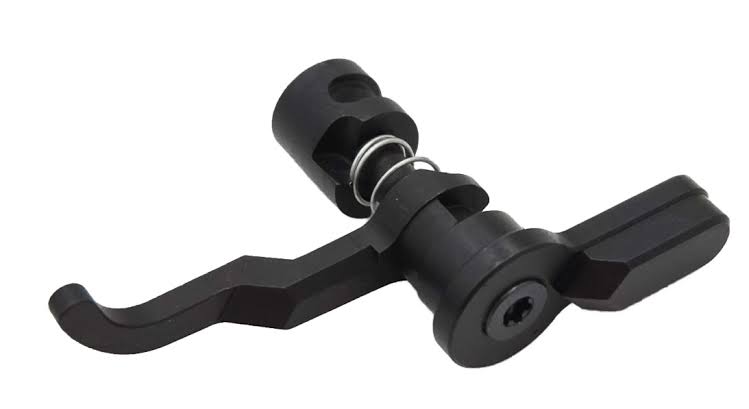
These contain the selector and usually a detent and spring, and they deliberately do not contain a trigger, because the design retains the one already fitted. That is the source of their price advantage and also of their main risk: compatibility with the existing trigger is on the buyer.
Better listings publish a compatibility list and include fitting hardware. An as designs arc fire trigger kit and an atrius super selektor install kit that ship with the correct detent spring save a separate order for a part costing almost nothing but stopping the job entirely if missing.
Complete packages
Some vendors assemble everything into a single box: trigger group, ambidextrous selector, anti-walk pins. An frt trigger ar15 3 position package of this kind costs more at the checkout and frequently less overall, because every part is known to work with every other part.
For a first build this is usually the right choice. For someone with a parts bin and a known-good trigger, it is not.
Platform-specific modules
HK roller-delayed cassettes should include the correct selector for the frame type and any required Allen keys, since these guns need specific tooling. An mp5 sd frt or standard MP5 module should state grip frame compatibility explicitly on the listing.
AK kits are the simplest of all: typically a single selector component, because the design works with stock fire control parts. A 3 position ak frt kit that arrives as one machined part is not missing anything — that is the entire product.
Pistol modules vary. A freedom finger triggers tx22 module for the Taurus TX22 is a complete trigger assembly requiring no host fitting. An advanced reset technology kit for Gen 4 Glock frames replaces the factory trigger group and may require removing aftermarket connectors or disconnectors first, which is worth knowing before starting.
What is never included
No kit in any category includes the bolt carrier group or buffer, and on an AR-15 build both are effectively mandatory. A full-auto-profile carrier and an H2 buffer are the difference between hardware that works and hardware that frustrates. Budget for them from the start rather than discovering the requirement after the first range trip.
Nor does any kit include a replacement for the factory trigger group it displaces. Keep the original parts in a labelled bag; refitting them is the fastest route to compliance when travelling into a state where these devices are prohibited.
Comparing honestly
Add the cost of anti-walk pins, a selector if not included, a detent spring, and a buffer and carrier if the rifle does not already have the right ones. Then compare. Budget listings in the ar super safety category often remain the cheapest option even after that exercise, but sometimes they do not, and a package deal wins.
Catalogues that list ar15 frt products with full contents stated per item make this comparison possible. Ones that do not are asking the buyer to guess, and the guess is usually wrong in the vendor’s favour.
Information only — not legal advice. Forced reset triggers are lawful under federal law following the May 2025 Department of Justice settlement, but fifteen states and the District of Columbia prohibit them outright and Florida and Virginia are legally contested. Verify the law in your state before purchasing or possessing any rate-of-fire device.