
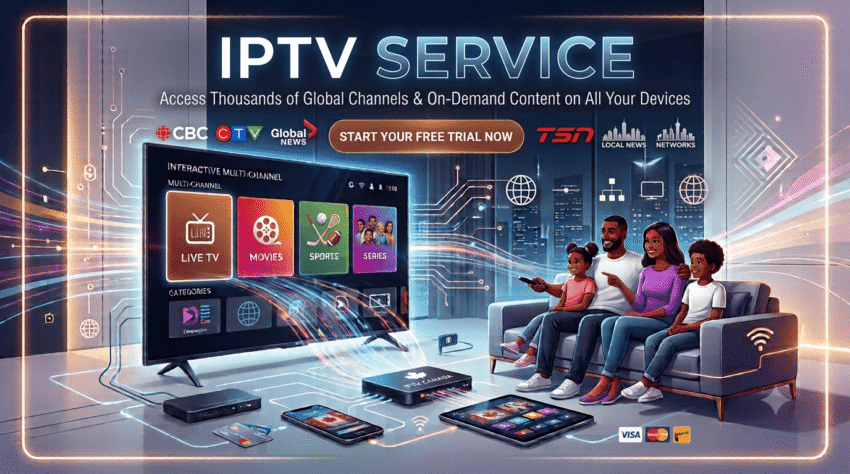
Internet-based television has changed the way people access entertainment at home. Instead of depending entirely on traditional cable or satellite packages, viewers can use an IPTV Service to receive television content through an internet connection. This approach can provide flexibility, convenient access, and support for a range of compatible devices.
However, choosing an IPTV service requires some research. Providers can differ in content, streaming quality, device compatibility, customer support, pricing, and subscription terms. Understanding these differences can help you select an IPTV Plan that fits your viewing habits and budget.
What Is an IPTV Service?
IPTV, or Internet Protocol Television, refers to the delivery of television programming through internet networks. Unlike conventional broadcast methods, IPTV uses an internet connection to transmit content to compatible devices.
Depending on the provider, an IPTV Service may offer live television, video-on-demand content, electronic program guides, catch-up features, and other viewing options. The exact features vary from one service to another.
It is important to remember that IPTV is a delivery technology, not a guarantee of specific programming. Each provider must have the appropriate rights to distribute the content it offers.
Why the IPTV Plan Matters
An IPTV Plan determines the services and features available to a subscriber. Plans may differ according to subscription length, pricing, content selection, device support, simultaneous connections, and other conditions.
A monthly plan may be suitable for someone who values flexibility. A longer subscription can be convenient for a viewer who has already tested the service and is satisfied with its performance.
Before choosing a plan, consider how frequently you watch television and which features you actually need.
Evaluate Content Selection
Content should be one of the first things you examine when comparing an IPTV Service. Think about the categories you watch most often instead of focusing only on the total number of channels.
Some viewers prefer live television, while others spend more time watching movies, series, documentaries, news, or international programming. An appropriate IPTV Plan should provide access to content that matches your interests and is legally distributed in your region.
A large channel list is not necessarily valuable if most of those channels are irrelevant to your household.
Check Streaming Reliability
A reliable connection is essential for internet television. Buffering, freezing, and interruptions can negatively affect the viewing experience.
Streaming performance depends on multiple factors, including the provider’s infrastructure, your internet connection, network congestion, Wi-Fi strength, and the device being used.
When evaluating an IPTV Service, look for clear technical information rather than relying only on promotional statements. Your own internet setup should also be capable of supporting the quality you expect.
Device Compatibility
One advantage of internet-based television is the possibility of watching content across different compatible devices. Depending on the service, supported platforms may include smart TVs, streaming devices, computers, smartphones, and tablets.
Before purchasing an IPTV Plan, confirm that your preferred device is supported. Also check whether a specific application is required.
If several people in your household want to watch simultaneously, investigate the provider’s rules concerning multiple connections. Some plans may restrict the number of simultaneous streams.
IPTV Service and Internet Speed
Your internet connection plays an important role in IPTV performance. Higher-quality video generally requires more bandwidth, and multiple users sharing the same network can increase demand.
If other people are streaming, gaming, downloading files, or attending video meetings while you watch television, the available bandwidth may decrease.
For a stationary television, an Ethernet connection can provide a stable alternative to Wi-Fi. If you use Wi-Fi, placing the router in a suitable location can help improve the connection.
Look for a Simple User Experience
A good IPTV Service should be easy to navigate. Viewers should be able to locate channels, search for programs, browse categories, and access available on-demand content without unnecessary complexity.
An electronic program guide can be especially useful because it provides information about scheduled programming in a familiar television-style format.
Before committing to a long-term IPTV Plan, consider whether the platform is comfortable and practical for your everyday use.
Customer Support Is Important
Technical questions can arise during installation or regular use. For this reason, customer support should be part of your evaluation process.
Look for providers that clearly explain how customers can request assistance. Helpful documentation, setup instructions, and responsive support can make it easier to resolve common issues.
A provider that is difficult to contact may become frustrating if you encounter a technical problem.
Compare IPTV Plan Pricing
Cost is another major consideration, but the cheapest plan is not automatically the best value.
When comparing an IPTV Plan, look at the complete subscription cost and determine exactly what is included. Check the duration, renewal conditions, cancellation policies, and any restrictions that could affect your usage.
A transparent IPTV Service should make pricing and subscription conditions easy to understand before you make a purchase.
Consider Long-Term Value
A good IPTV Plan should provide value over the period you use it. Rather than selecting a package based solely on promotional pricing, consider reliability, content, compatibility, support, and overall convenience.
For new users, a shorter subscription can provide an opportunity to evaluate the service before making a longer commitment. Once you are confident that the service meets your expectations, you can consider other available options.
Verify Legitimacy and Content Rights
Consumers should always research an IPTV Service before subscribing. IPTV technology itself is legal, but the provider must have the appropriate rights to distribute copyrighted programming.
Look for clear business information, transparent terms, and reasonable explanations about the service. Be cautious when a provider makes unrealistic promises or provides little information about its content rights and operating practices.
Common Mistakes to Avoid
One of the biggest mistakes is choosing a service solely because it advertises a huge number of channels. Quantity does not necessarily mean better quality.
Another mistake is ignoring device compatibility. A plan may look attractive but be unsuitable if it does not work with your preferred television or streaming device.
It is also important to read subscription terms carefully. Understanding renewal, cancellation, refunds, and connection limits can prevent unpleasant surprises later.
Final Thoughts
Choosing the right IPTV Service is easier when you focus on your actual entertainment requirements. Consider the available content, streaming reliability, device compatibility, internet requirements, customer support, pricing, and subscription terms.
The right IPTV Plan should offer useful features at a price that makes sense for your household. Take time to compare options, verify that the provider is authorized to distribute its content, and make sure your equipment and internet connection are suitable.