
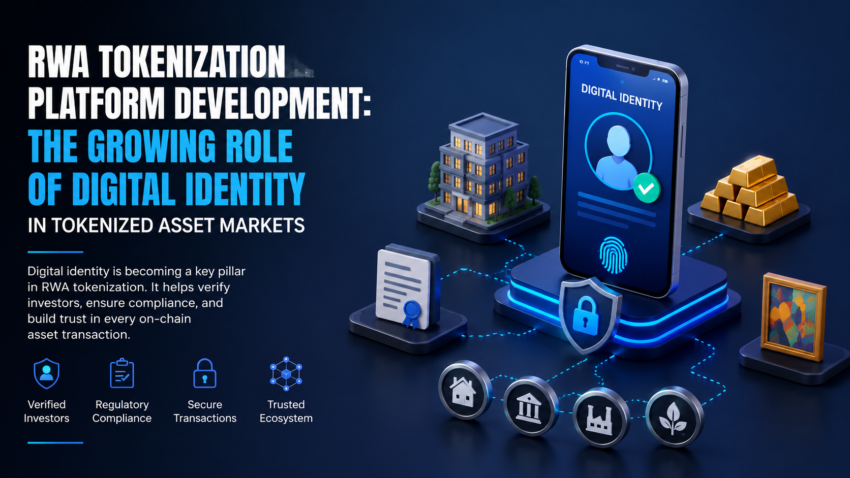
Real-world asset tokenization is moving beyond the initial task of putting property, funds, commodities, private credit, and other assets on blockchain networks. As tokenized markets grow, businesses are beginning to focus on what happens after an asset has been issued. Investor records, distributions, reporting, compliance checks, corporate actions, redemptions, transfers, and asset-related updates all require ongoing management. This area is commonly referred to as asset servicing.
For businesses considering RWA tokenization platform development, asset servicing presents a significant technology opportunity. Issuing a token may be the starting point, but maintaining the connection between an on-chain token and its underlying asset can involve much more operational work. Platforms that address these activities can become part of the long-term infrastructure used by issuers, investors, fund managers, custodians, administrators, and other financial participants.
The growing interest in asset servicing also changes how an RWA platform can be designed. Instead of focusing only on token creation and trading, businesses can develop systems that manage the complete lifecycle of tokenized assets. This article examines why asset servicing is becoming increasingly important and what technology functions can form part of an RWA tokenization platform.
What Asset Servicing Means in Tokenized Markets
Asset servicing refers to the activities required to manage an asset after it has entered the market. In traditional finance, these activities can include income collection, dividend processing, investor communications, reconciliation, reporting, corporate actions, tax documentation, and record management.
With tokenized assets, many of these activities involve both conventional financial systems and blockchain infrastructure. For example, an investor may hold tokens representing a share in a property fund. Rental income could be collected through traditional banking channels, calculated by an administrator, and then distributed to eligible token holders through blockchain-based payment processes.
This creates a technology requirement that sits between traditional asset administration and digital assets. An RWA tokenization company can address this requirement through software that connects asset records, investor information, smart contracts, payment systems, compliance workflows, and blockchain networks.
Why Asset Servicing Matters More as Tokenized Assets Increase
When only a small number of assets are tokenized, manual processes may appear manageable. As the number of assets and investors increases, however, asset administration becomes more complicated.
Consider a platform that manages 100 tokenized properties. Each property can have different ownership structures, rental income, valuation schedules, reporting requirements, and investor agreements. Managing these details manually can create operational delays and reconciliation problems.
A well-planned RWA tokenization development strategy can place asset servicing directly into the platform architecture. This allows asset information and investor activity to be recorded and processed through connected workflows rather than handled separately across multiple systems.
The opportunity is therefore not limited to token issuance. Businesses can create technology around the continuous management of tokenized assets, creating recurring platform activity long after an initial token sale.
Method 1: Automating Investor Record Management
Investor administration is one of the areas where tokenized markets can generate frequent operational activity. Platforms need to maintain information about token holders, wallet addresses, ownership percentages, transaction history, eligibility status, and distribution records.
An RWA tokenization platform can connect investor records with blockchain transactions. When tokens move between approved wallets, the platform can update ownership records while maintaining relevant compliance information.
This does not mean every investor activity should happen automatically. Certain actions may require manual review, especially where regulatory rules or unusual transactions are involved. Instead, the software can organize routine activities while sending exceptions to administrators for review.
Such functionality becomes particularly useful for private markets, real estate funds, private credit instruments, and other assets where ownership records need regular maintenance.
Method 2: Managing Income and Distribution Events
Many real-world assets generate income. Properties can produce rental revenue, debt instruments can generate interest, and investment funds can distribute returns.
Tokenized platforms can connect these financial events with eligible token holders. The system can calculate each investor’s share according to token ownership, investment terms, record dates, and other rules.
For example, if a tokenized property distributes quarterly rental income, the platform can identify eligible holders, calculate their respective amounts, record the distribution event, and initiate payment instructions.
Smart contracts may be used for parts of the process, while traditional banking infrastructure may handle fiat payments. This combination makes asset servicing an important technical layer within RWA tokenization platform development.
Method 3: Connecting Off-Chain Asset Data With Blockchain Records
A token represents rights or interests connected to an underlying asset, but much of the asset’s information may remain outside the blockchain.
Property valuations, rental agreements, invoices, legal documents, financial statements, insurance information, and custody records can all exist in conventional databases or document systems.
A platform can create data connections between these systems and blockchain records. For instance, an updated property valuation could be reflected in an asset management dashboard while the relevant information remains connected to the tokenized asset record.
This connection helps administrators monitor whether the digital representation continues to correspond with the relevant off-chain information.
Method 4: Handling Corporate Actions
Corporate actions can become complicated when tokenized financial instruments are involved. Depending on the asset, events may include redemptions, interest payments, voting, maturity, asset sales, restructuring, or changes in ownership terms.
An RWA tokenization platform development company can include workflows for recording these events and identifying the investors affected by them.
Suppose a tokenized debt instrument reaches maturity. The platform needs to identify eligible holders, calculate repayment amounts, update the instrument status, and record the conclusion of the investment.
Instead of treating each event as an isolated administrative task, software can organize these activities within the asset lifecycle. This can reduce repetitive work for asset managers and administrators.
Method 5: Integrating Compliance Checks Into Asset Servicing
Compliance does not stop when tokens are issued. Investor eligibility, wallet permissions, transaction restrictions, geographic requirements, and regulatory obligations may continue throughout the asset lifecycle.
For this reason, compliance functionality can become part of routine asset servicing. A platform may connect KYC and AML systems with wallet management and transfer controls.
For example, a token transfer between two wallets may require the receiving investor to meet certain eligibility conditions. The platform can check the relevant investor status before allowing the transaction to proceed.
A Real-world asset tokenization company serving regulated markets can therefore treat compliance workflows as an ongoing operational function rather than a one-time onboarding activity.
Method 6: Providing Asset and Investor Reporting
Reporting is another area where tokenized markets can generate continuous technology requirements.
Asset managers may need reports covering token supply, ownership distribution, transactions, income payments, asset valuation, investor activity, and outstanding balances. Investors may also want access to portfolio statements and transaction histories.
A platform can provide separate dashboards for administrators, issuers, investors, custodians, and compliance teams. Each user group can receive information relevant to its responsibilities.
Reporting systems can also combine blockchain transaction data with off-chain financial information. This gives administrators a broader view of the asset rather than requiring them to review multiple systems individually.
Method 7: Creating Reconciliation Systems
Reconciliation is especially important when tokenized assets operate across blockchain and traditional financial infrastructure.
A token balance recorded on-chain may need to correspond with records held by a fund administrator, custodian, transfer agent, or financial institution. Payment records may also need to match investor entitlements.
An RWA tokenization development system can compare these records and identify differences. Instead of relying entirely on manual spreadsheet checks, administrators can receive exception reports showing transactions or balances that require attention.
This type of infrastructure may become increasingly valuable as tokenized assets move across multiple platforms and financial networks.
Method 8: Supporting Asset Lifecycle Management
Tokenized assets can have defined lifecycles. A property may enter a fund, generate income, undergo valuation updates, and eventually be sold. A debt instrument may be issued, generate interest, reach maturity, and be redeemed.
Asset servicing technology can organize these stages within a single lifecycle framework.
The platform can record important dates, automate notifications, trigger relevant workflows, update asset status, and maintain historical records. This gives businesses a way to manage assets after their initial token creation.
For an RWA token development project, this approach can provide greater value than focusing only on token issuance contracts.
Method 9: Connecting Custody and Wallet Infrastructure
Tokenized assets require wallet infrastructure, but not every investor will manage assets through the same type of wallet. Institutional investors may use qualified custodians, while other participants may use managed wallets or approved self-custody solutions.
Asset servicing platforms can connect wallet addresses with investor records and permission systems. They can also track deposits, withdrawals, transfers, and restricted wallet activity.
This creates a relationship between blockchain custody and traditional investor administration. The platform can maintain records of who owns an asset while also tracking where the corresponding tokens are held.
Method 10: Creating Administrator and Issuer Workflows
Asset servicing creates opportunities for software providers to offer specialized dashboards for issuers and administrators.
An issuer may need to monitor token supply, investor participation, asset performance, income distributions, and upcoming events. An administrator may require tools for investor verification, reconciliation, payment processing, reporting, and transaction review.
A platform can provide role-based access so that each participant works with the information relevant to their responsibilities.
This can also create different commercial models for an RWA tokenization company. Instead of earning revenue only from token issuance, a platform provider may offer subscription plans, transaction charges, administration fees, reporting services, or asset lifecycle management packages.
Why Asset Servicing Can Become a Long-Term Technology Market
Token issuance can happen once, but asset servicing continues for as long as the investment remains active. This difference makes servicing an interesting area for businesses entering the RWA market.
A tokenized property may remain active for several years. During that period, the platform may process rental distributions, investor transfers, valuation updates, compliance checks, reports, and corporate events.
The recurring nature of these activities creates demand for reliable software infrastructure. Businesses developing an RWA tokenization platform development company offering can therefore consider asset servicing as a major product layer rather than an optional feature.
This also changes the competitive landscape. Platforms may differentiate themselves through administration tools, reporting systems, compliance workflows, custody connections, and integrations with financial infrastructure.
Technical Architecture for RWA Asset Servicing
A practical asset servicing platform can include several technology layers. The blockchain layer handles token contracts, ownership records, transfers, and selected automated processes. The application layer manages dashboards, workflows, investor administration, and asset information.
An integration layer can connect banking systems, payment providers, KYC services, custody providers, valuation systems, document management tools, and other external applications.
A data layer can store information related to assets, investors, transactions, distributions, compliance events, and reporting. Access controls and audit records can be included throughout the system.
The exact architecture depends on the asset class, regulatory environment, blockchain network, custody model, and operating structure. A platform for tokenized real estate may require different servicing functions from one designed for private credit or tokenized funds.
Business Opportunities for RWA Platform Providers
Asset servicing can open several business opportunities for technology providers. A company can develop software for issuers that want to manage their own tokenized assets. It can also provide infrastructure to asset managers, fund administrators, custodians, marketplaces, and financial institutions.
Some platforms may focus on one asset class, while others can support several types of real-world assets. Businesses can also provide white-label infrastructure where financial organizations use the software under their own brand.
For an RWA tokenization company, recurring servicing functions can create a business relationship that continues beyond the initial token launch. The platform becomes part of the asset’s operating infrastructure rather than simply being a token issuance application.
What Businesses Should Consider Before Development
Businesses should first identify the asset classes they intend to support. Real estate, private credit, commodities, funds, collectibles, and other assets can have different servicing requirements.
The next step is to define the parties involved in the asset lifecycle. Issuers, investors, administrators, custodians, legal teams, payment providers, and compliance teams may all interact with the platform.
Businesses should then map each recurring event, from investor onboarding and token transfers to distributions, reporting, redemptions, and asset closure.
Blockchain selection, smart contract design, data storage, API integrations, custody, access controls, compliance processes, and audit mechanisms should be considered before development begins. This gives the development team a practical basis for deciding which functions belong on-chain and which should remain within conventional application infrastructure.
Conclusion
RWA tokenization is moving toward a model where issuing digital representations of assets is only one part of the overall technology stack. As tokenized properties, funds, credit products, commodities, and other assets remain active for months or years, the systems responsible for investor records, distributions, compliance, reporting, reconciliation, custody, and lifecycle events become increasingly important. This makes asset servicing a promising area for businesses entering RWA tokenization platform development, particularly those seeking recurring technology use beyond the initial token launch. A platform that combines blockchain functionality with practical asset administration can address operational needs across the full life of a tokenized asset. As adoption increases, the businesses that focus on what happens after issuance may find a substantial technology market alongside token creation itself. Blockchain App Factory provides RWA tokenization development services for businesses looking to create platforms covering token issuance, asset management, investor workflows, compliance, trading, and ongoing asset servicing.
FAQs
1. What is asset servicing in RWA tokenization?
Asset servicing refers to the ongoing management of tokenized assets after issuance. It can include investor records, income distributions, compliance checks, reporting, reconciliation, corporate actions, custody, and asset lifecycle activities.
2. Why is asset servicing important for RWA platforms?
Tokenized assets can remain active for several years. During that period, investors and issuers may require regular distributions, reporting, ownership updates, compliance checks, and other administrative functions. Asset servicing technology addresses these recurring activities.
3. What features can an RWA tokenization platform include for asset servicing?
Common features include investor management, token ownership tracking, payment and distribution management, compliance workflows, reporting dashboards, reconciliation, corporate action management, custody integration, notifications, and asset lifecycle tracking.
4. Can smart contracts manage asset servicing activities?
Smart contracts can handle certain predefined activities such as token transfers, distribution calculations, eligibility rules, and redemption processes. Other activities may require off-chain systems, human review, external data, or traditional financial infrastructure.
5. Which assets can use tokenized asset servicing systems?
Real estate, private credit, investment funds, commodities, bonds, invoices, intellectual property rights, collectibles, and other eligible real-world assets can use servicing infrastructure, depending on the applicable legal and regulatory framework.
6. How does RWA tokenization development connect blockchain and traditional finance?
The platform can connect blockchain networks with banking systems, payment providers, custody solutions, investor databases, compliance tools, valuation systems, and other financial infrastructure through APIs and integration layers.
7. What role does an RWA token development company play in asset servicing?
An RWA token development company can develop smart contracts, investor interfaces, administrative dashboards, asset management systems, compliance workflows, APIs, reporting tools, and blockchain integrations required for the tokenized asset lifecycle.
8. Can asset servicing create recurring revenue for an RWA platform?
Yes. Businesses can consider subscription charges, administration fees, transaction fees, reporting services, custody-related services, and other platform charges depending on their business model and regulatory structure.
9. What should businesses decide before starting RWA tokenization platform development?
They should identify the asset class, target users, jurisdictions, ownership structure, compliance requirements, custody model, blockchain network, servicing activities, integrations, and revenue model before beginning technical development.
10. Is asset servicing likely to become a major part of RWA infrastructure?
As tokenized assets increase, the need to manage them after issuance is also likely to grow. Continuous investor administration, reporting, payments, compliance, reconciliation, and lifecycle management can create substantial demand for asset servicing technology.