
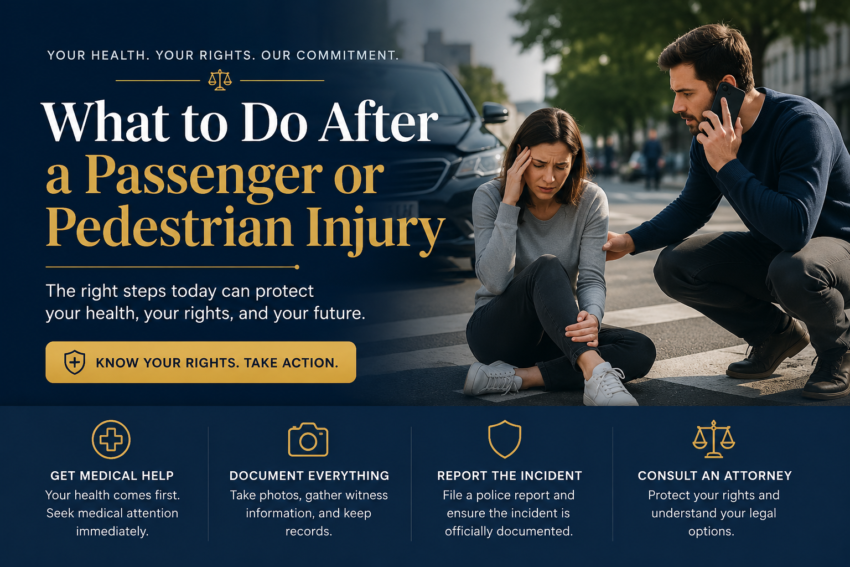
A sudden accident can leave a passenger or pedestrian dealing with pain, medical bills, missed work, and uncertainty about what to do next. Whether you were hurt while riding in a car, crossing a street, walking through a parking lot, or traveling near traffic, taking the right steps after an accident can make it easier to protect your interests.
Understanding how a passenger injury claim works can help you make informed decisions. The same is true for pedestrians who need assistance determining who may be responsible for their injuries. Although every accident is different, documenting what happened and getting appropriate medical attention should be priorities.
What Is a Passenger Injury Claim?
A passenger injury claim may arise when someone is injured while riding in a vehicle involved in an accident. A passenger generally does not control how the vehicle is operated, so responsibility may involve the driver of the vehicle they were riding in, another driver, or potentially another responsible party.
For example, a passenger could be injured in a rear-end collision, intersection crash, rideshare accident, or collision involving multiple vehicles. The circumstances of the accident can affect which insurance policy may apply and how a claim should be handled.
Passengers should avoid assuming that they cannot pursue compensation simply because they were riding with the driver who caused the crash. Liability and insurance coverage depend on the facts of the particular case.
Common Injuries Passengers and Pedestrians May Suffer
Vehicle and pedestrian accidents can cause injuries ranging from relatively minor to life-changing. Common examples include:
- Whiplash and other neck injuries
- Back and spinal injuries
- Broken or fractured bones
- Sprains and soft-tissue injuries
- Head injuries and concussions
- Cuts, bruises, and lacerations
- Internal injuries
- Knee, shoulder, or other joint injuries
- Traumatic brain injuries
- Emotional distress following a serious accident
Some injuries may not become obvious immediately. Adrenaline can temporarily mask pain, while certain conditions may develop or worsen over the following hours or days. Seeking medical evaluation after an accident is therefore an important step, particularly when symptoms appear.
What Should You Do Immediately After an Accident?
The decisions you make shortly after an accident can affect both your recovery and any future injury claim. If you are physically able to do so, consider taking these steps.
Get Medical Attention
Your health should come first. Call emergency services when necessary and follow the recommendations of medical professionals. Keep records of appointments, prescriptions, diagnostic tests, treatment plans, and related expenses.
Medical documentation can also help establish the nature and timing of an injury.
Report the Accident
Depending on the circumstances, the accident may need to be reported to police, property management, a transportation company, or another appropriate authority. Ask how to obtain a copy of any available accident or incident report.
Gather Evidence
If it is safe to do so, take photographs or videos of the accident scene, vehicles, road conditions, traffic signals, visible injuries, and surrounding conditions. Obtain contact information for witnesses when possible.
Important evidence can become difficult to locate later, so documenting the scene promptly may be valuable.
Keep Important Records
Save medical bills, receipts, wage-loss information, insurance correspondence, photographs, and other accident-related documents. Maintaining a simple timeline of what happened and how the injury has affected your daily activities can also be useful.
How Do Pedestrian Injury Claims Work?
Pedestrians are particularly vulnerable because they have little physical protection when involved in a collision with a vehicle. A pedestrian injury claim may involve determining whether a driver, property owner, business, government entity, or another party had legal responsibility for the circumstances that caused the injury.
Driver behavior can be an important factor. Speeding, distracted driving, failing to yield, ignoring traffic controls, or driving while impaired may contribute to pedestrian collisions.
However, pedestrian cases are not always straightforward. Questions about traffic signals, visibility, road design, right-of-way, witness accounts, and available video footage may all become relevant.
Finding a Trusted Pedestrian Injury Firm in Camden
After a serious pedestrian accident, understanding your legal options can be difficult while you are also dealing with medical treatment and everyday responsibilities. A Trusted Pedestrian Injury Firm in Camden can help you understand the factors that may affect your potential claim and identify what evidence could be important.
When evaluating legal representation, consider whether the firm has experience with pedestrian accidents, motor vehicle collisions, insurance disputes, and personal injury cases. It can also be helpful to choose a legal team that communicates clearly and explains the process without making unrealistic promises about the outcome.
For local accident victims, the Law Office of Aaron can be one option to consider when seeking information about personal injury representation.
What Compensation May Be Available?
Depending on the facts of the case, an injured passenger or pedestrian may potentially seek compensation for different types of losses. These can include:
- Reasonable medical expenses
- Future medical treatment
- Lost wages
- Reduced earning capacity
- Physical pain and suffering
- Emotional distress
- Rehabilitation and therapy costs
- Other accident-related expenses
The availability and value of compensation depend on factors such as liability, insurance coverage, the severity of the injury, medical evidence, and applicable law.
Be Careful When Speaking With Insurance Companies
Insurance companies may request information about an accident and your injuries. It is important to provide accurate information, but you should also understand what you are being asked to provide and why.
Avoid guessing about details you do not remember. Do not exaggerate your injuries, but do not minimize them either. Statements made shortly after an accident may later be considered when evaluating a claim.
If an insurer offers a settlement, carefully review what the proposed payment covers before accepting it. Once certain claims are resolved, it may be difficult or impossible to seek additional compensation for the same injuries.
Why Evidence Matters in an Injury Claim
A successful personal injury claim generally requires evidence connecting the accident to the injuries and losses being claimed. Useful evidence may include medical records, police reports, photographs, witness statements, surveillance footage, vehicle information, employment records, and insurance documents.
The sooner evidence is preserved, the less likely it is to be lost or forgotten. This is particularly important when surveillance footage or other temporary records may be overwritten.
Take the Next Step Carefully
A passenger or pedestrian accident can create questions that are difficult to answer on your own: Who may be responsible? Which insurance policy applies? How serious are the injuries? What evidence should be preserved? Is a settlement offer fair?
There is no single process that fits every accident. If you have been injured, focus first on your health, document what happened, preserve relevant records, and learn about your legal options before making important decisions.