
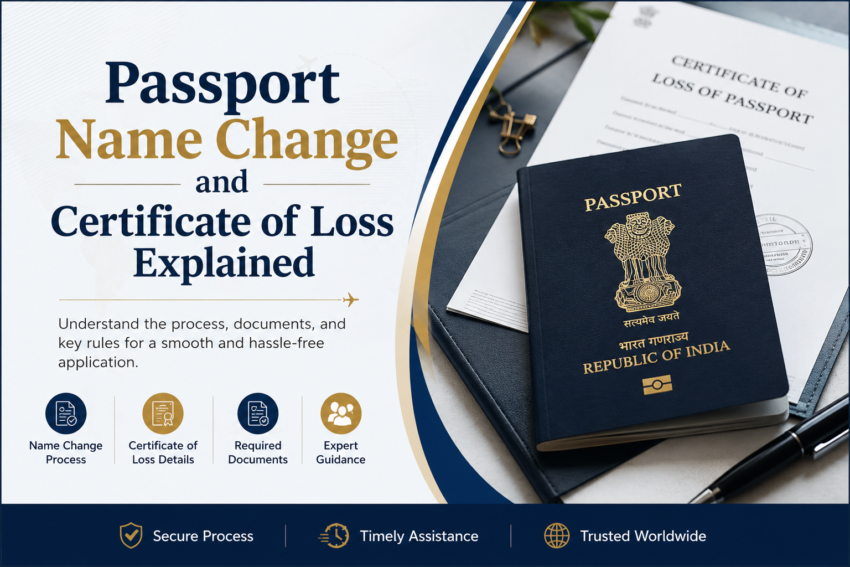
Changing a name on a passport or dealing with a Certificate of Loss of Nationality can raise important questions about identity documents, citizenship, and future travel. Although these are separate matters, both may require accurate records and supporting documents. A mistake in one document can create delays when applying for a new passport, visa, immigration benefit, or other official service.
Understanding what documents are normally involved and when an update may be necessary can make the process easier. Requirements vary depending on the country that issued the passport and the individual’s circumstances, so applicants should always check the latest instructions from the appropriate government authority.
What Does Place of Name Change Passport Mean?
The phrase place of name change passport generally refers to the location or procedure used to update a person’s name on a passport. A passport is an identity and travel document, so the name shown on it should normally match the applicant’s current legal name and other important records.
A name may change because of marriage, divorce, a court order, adoption, or another legally recognized reason. When the name on a passport no longer matches the person’s legal identity, updating the document may be necessary.
The exact process depends on the passport-issuing authority. Some applications can be submitted through passport offices or authorized application centers, while citizens living overseas may need to use a designated embassy or consular service.
Documents Commonly Needed for a Passport Name Change
Supporting documentation is usually the most important part of a name-change application. Depending on the reason for the change, an applicant may be asked to provide documents such as:
- Current or recently issued passport
- Legal name-change certificate or court order
- Marriage certificate, when applicable
- Divorce decree, when applicable
- Government-issued identification
- Proof of current address, if required
- Recent passport photographs
- Completed application forms
- Additional declarations or supporting documents requested by the issuing authority
The name should be entered consistently across the application and supporting paperwork. Differences in spelling, order of names, initials, or dates can sometimes lead to requests for clarification.
Why Keeping Your Name Consistent Matters
A passport name should generally align with other official identity records. Inconsistent names can create practical problems when booking international travel, applying for a visa, opening certain accounts, or completing immigration paperwork.
For example, if a legal name has changed but an older passport still shows the previous name, an airline, immigration authority, or foreign government may request additional evidence explaining the difference.
Before submitting a passport update, compare the spelling and order of your name across relevant documents. Correcting inconsistencies early can help avoid unnecessary delays.
What Is a Certificate of Loss of Nationality?
A Certificate of Loss of Nationality is an official document associated with the formal loss or relinquishment of U.S. nationality. It is generally issued after the relevant government authority determines that the legal requirements for loss of nationality have been satisfied.
This document is different from an ordinary passport cancellation. Losing or relinquishing nationality can have significant legal consequences, while a passport is primarily a travel and identity document.
People dealing with nationality-related matters should therefore avoid assuming that passport cancellation alone automatically establishes loss of nationality. The legal process and applicable requirements depend on the circumstances.
How Loss of Nationality Can Affect Passport Records
When a person loses U.S. nationality, their U.S. passport status can be affected. A person who is no longer a U.S. national generally cannot continue using a U.S. passport as though their nationality remained unchanged.
This is why people dealing with a Certificate of Loss of Nationality should keep copies of relevant official correspondence and final documents. They may be needed when explaining citizenship status to another government or when completing future immigration or nationality applications.
Name Changes and Nationality Documents Are Different Issues
A legal name change and loss of nationality should not be treated as the same procedure.
A passport name change concerns the identity information displayed on a travel document. A Certificate of Loss of Nationality concerns a person’s legal nationality status. In some situations, an individual may have both issues to address, but each requires separate consideration.
For example, someone who legally changed their name before completing a nationality-related process should make sure their records clearly connect the former and current names. This can be particularly important when government records were created under different names.
Common Mistakes to Avoid
Several mistakes can make passport and nationality-related applications more complicated:
Using an Informal Name
A nickname or commonly used name should not automatically be substituted for a legal name on an official application.
Forgetting Supporting Evidence
A name-change request may require proof of the legal event that caused the change. Submitting an incomplete application can result in additional processing time.
Assuming Passport Cancellation Equals Loss of Nationality
Passport cancellation and nationality loss are legally distinct concepts. Applicants should rely on official documentation rather than assumptions.
Providing Different Names on Different Forms
Check every application carefully before submission. Even a small spelling difference can create questions about identity.
Preparing for a Passport or Nationality-Related Application
Start by gathering the documents that establish your identity, legal name, citizenship or nationality history, and any event that changed your status. Make clear copies where required and keep the original documents secure.
If your records contain different names, prepare documentation that explains the connection between them. For complex nationality matters, obtaining advice from a qualified immigration or nationality professional may also be appropriate.
Final Thoughts
A passport name update and a Certificate of Loss of Nationality involve different legal processes, but both depend on accurate personal records and reliable supporting documents. Understanding the difference between a passport name change, passport cancellation, and loss of nationality can help applicants avoid confusion and prepare more effectively.
Because government procedures and documentation requirements can change, always verify current requirements with the relevant passport, consular, or nationality authority before submitting an application.