
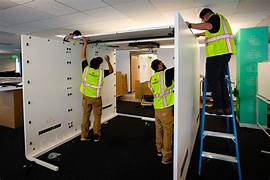
A beautifully designed modular interior delivers its full value only when it is installed correctly. Modular Installation Services provide professional assembly, positioning, alignment, and finishing of modular kitchens, wardrobes, storage units, office furniture, and other factory-made components. Proper installation helps ensure that every unit fits the available space, operates smoothly, and maintains the appearance intended in the original design.
For homeowners planning modular interiors, Modular Kitchen Design Services: What to Expect Before You Start can offer useful guidance about the design and planning stage. Installation is the next important step, where accurate measurements, site conditions, component identification, and skilled workmanship come together to turn manufactured modules into a finished interior. Professional installation can also reduce errors that may occur when complex modular systems are assembled without sufficient experience.
What Are Modular Installation Services?
Modular installation involves assembling and fixing pre-manufactured furniture components at the project site. Unlike conventional furniture construction, many modular systems arrive as prepared panels, cabinets, hardware, and accessories that need to be carefully assembled according to approved drawings.
The process can include kitchen cabinets, wardrobes, TV units, storage systems, study units, vanities, and other customized furniture.
Importance of Accurate Measurements
Before installation begins, the actual site should be checked carefully. Walls, floors, electrical points, plumbing connections, windows, doors, and ceiling levels can influence the final positioning of modular units.
Even a small measurement discrepancy can affect cabinet alignment or appliance placement. Accurate site verification therefore plays an important role in achieving a clean final result.
Professional Assembly
Modular furniture often includes multiple components and specialized hardware. Skilled installers understand how these parts fit together and can follow the required assembly sequence.
Professional assembly can help ensure that hinges, drawer channels, handles, lifting mechanisms, shelves, and other accessories are installed correctly.
Kitchen Installation
Kitchen installation requires particular attention because cabinets must work around plumbing, electrical points, countertops, appliances, and wall conditions.
Base cabinets need appropriate leveling, while wall cabinets require secure fixing. Appliance spaces should also correspond with the approved design and required dimensions.
Wardrobe Installation
Wardrobes need accurate alignment to achieve a neat appearance. Installers may need to work around uneven walls, flooring variations, skirting, and ceiling conditions.
Sliding wardrobes require additional attention to track installation and door alignment, while hinged systems need properly positioned hinges and shutters.
Storage and Living Room Units
TV units, crockery cabinets, bookshelves, display units, and other storage systems can also require professional installation.
The installer must ensure that individual modules are properly aligned and securely fixed while maintaining planned gaps, proportions, and visual balance.
Hardware Installation
Quality hardware can improve the usability of modular furniture, but it must be installed accurately.
Drawer channels, hinges, lift-up mechanisms, handles, baskets, and other accessories should be positioned according to manufacturer specifications and the furniture design.
Site Preparation
A clean and prepared site can make installation more efficient. Flooring, walls, electrical work, and other relevant construction activities should be completed at the appropriate stage.
Protective measures may also be used to minimize the risk of scratches or damage to finished surfaces during installation.
Quality Checks
Installation should not end as soon as the furniture is assembled. A final quality inspection can identify problems such as uneven shutters, loose hardware, misaligned drawers, gaps, or unstable components.
Each cabinet, drawer, door, and accessory should be tested before project handover.
Benefits of Professional Installation
Choosing professional installers can provide several advantages:
- Better component alignment
- Accurate assembly
- Proper hardware installation
- Reduced installation errors
- Safer fixing of furniture
- Cleaner finishing
- Efficient project execution
- Better functionality
- Easier troubleshooting
Professional installation also creates a more organized process when multiple modular systems are being installed simultaneously.
Choosing the Right Installation Provider
Before hiring an installation team, consider their experience with modular furniture, knowledge of different hardware systems, attention to detail, ability to interpret technical drawings, and approach to quality control.
It is also useful to understand whether the service includes transportation coordination, installation, adjustments, finishing checks, and post-installation support.
Installation and Design Must Work Together
Successful modular interiors depend on coordination between design, manufacturing, site preparation, delivery, and installation. A well-designed unit can still perform poorly if it is incorrectly installed.
That is why installation should be treated as an essential part of the overall interior process rather than simply the final task.
Conclusion
Modular Installation Services help transform factory-made furniture components into functional and visually coordinated interiors. From accurate measurements and professional assembly to hardware fitting and final quality checks, every stage contributes to the finished result.
When installation is coordinated properly with design and manufacturing, homeowners can achieve interiors that are durable, practical, attractive, and comfortable to use. Careful planning from the design stage, including considerations discussed in Modular Kitchen Design Services: What to Expect Before You Start, can further support a smoother installation and successful final outcome.