
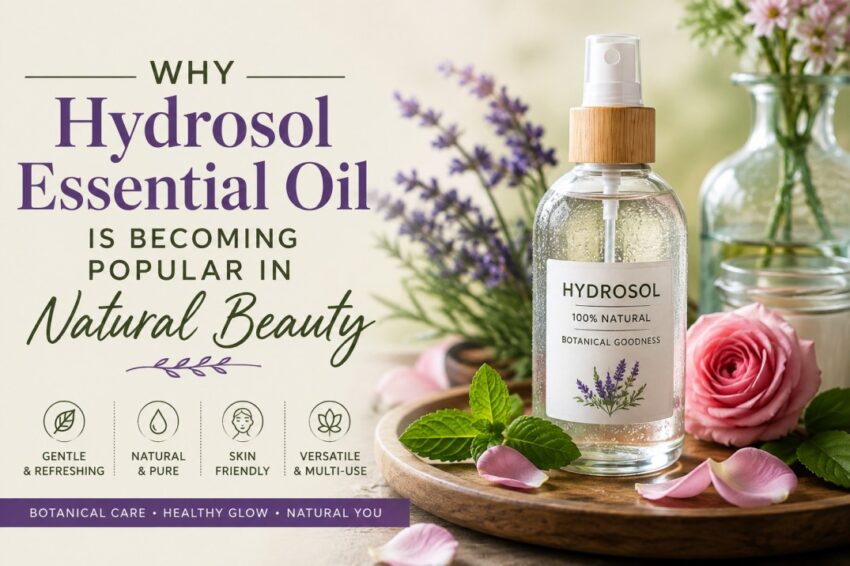
Natural beauty has moved beyond simple ingredient trends. Today, many consumers are looking for skincare products that feel gentle, practical, and closely connected to botanical ingredients. This shift has brought floral waters, plant extracts, and aromatic ingredients into greater focus. Among these options, hydrosol essential oil has attracted attention because it offers a lighter, water-based way to incorporate botanical aromas and plant-derived compounds into everyday beauty routines.
As people become more interested in minimalist skincare and naturally inspired personal care, hydrosols are increasingly appearing in facial mists, toners, hair products, and DIY beauty preparations. Their versatility and subtle character make them appealing to beginners as well as experienced natural beauty enthusiasts.
What Makes Hydrosols Different?
Hydrosols are aromatic waters produced during the distillation of plant materials such as flowers, leaves, herbs, and other botanicals. During steam distillation, the plant material releases volatile compounds. The resulting condensed water contains water-soluble plant components and trace amounts of aromatic compounds. This creates a product that is considerably less concentrated than an essential oil.
This distinction is important for anyone interested in natural skincare. Traditional essential oils are highly concentrated and generally require appropriate dilution before topical use. Hydrosols, meanwhile, have a predominantly water-based composition and a much softer aroma. That makes natural hydrosol water an attractive ingredient for people who prefer a lighter sensory experience.
A Gentle Addition to Daily Skincare
One of the biggest reasons botanical waters are gaining popularity is their convenience. A facial mist can be sprayed onto clean skin during a morning routine, after cleansing, or throughout the day when the skin feels dry or tired.
Different plants bring different aromatic profiles and characteristics. Rose, lavender, chamomile, peppermint, neroli, and other botanical varieties can provide distinct experiences. For example, Miracle Botanicals Essential Oils offers a range of hydrosols derived from different botanical sources, including rose, neroli, helichrysum, and Hawaiian sandalwood.
Rather than replacing every product in a skincare routine, a botanical hydrosol spray can complement existing steps. It may be used as a refreshing mist or incorporated into suitable DIY formulations according to the product’s instructions.
Growing Interest in Minimalist Beauty
Minimalist skincare has become increasingly appealing to consumers who want fewer unnecessary steps. Instead of maintaining complicated routines with numerous products, many people are looking for multipurpose ingredients that can work across different aspects of personal care.
A floral hydrosol mist fits naturally into this approach. Depending on the formulation and intended use, it can function as a facial refresher, aromatic body mist, or ingredient in homemade beauty preparations.
The appeal also comes from the sensory experience. Hydrosols generally have softer aromas than concentrated essential oils, making them suitable for people who prefer subtle botanical fragrances. Their water-based format also makes them convenient for products designed around lightweight textures.
Hydrosols and the Natural Beauty Movement
The wider natural beauty movement is focused on transparency, botanical sourcing, and simpler formulations. Consumers increasingly want to know where ingredients originate and how they are produced.
Hydrosols can support this interest because their production is directly connected to botanical distillation. However, not every product marketed as a hydrosol is necessarily identical. Quality can vary depending on the plant material, distillation process, storage conditions, and formulation. Buyers should therefore examine ingredient information and choose products from reputable suppliers.
For skincare applications, it is also worth remembering that “natural” does not automatically mean suitable for every person. Skin can react to botanical ingredients just as it can to synthetic ones. Patch testing and following product directions remain sensible steps.
A Useful Option for DIY Beauty Enthusiasts
DIY skincare is another area where hydrosols have found a place. Their water-based nature allows them to become part of various homemade beauty concepts, including facial mists and simple botanical preparations.
However, homemade water-based products require particular care. Water can support microbial growth, so products containing water should not simply be stored indefinitely without an appropriate preservation strategy. Clean containers, suitable ingredients, proper storage, and reliable formulation guidance are important.
For beginners, using a professionally prepared product according to its label can be simpler than experimenting with homemade formulations. Those who do make DIY products should research preservation and ingredient compatibility rather than assuming that natural ingredients are automatically shelf-stable.
How Hydrosols Compare With Essential Oils
Although their names are sometimes used together, hydrosols and essential oils are not interchangeable. Essential oils are concentrated aromatic extracts, while hydrosols are predominantly water-based distillation products with much lower concentrations of aromatic compounds.
This difference affects how each product is incorporated into a beauty routine. Essential oils are typically used in carefully measured amounts and diluted with an appropriate carrier. Hydrosols can offer a softer alternative for applications where a water-based format is preferred.
For consumers building a natural skincare collection, understanding this difference can help prevent inappropriate use and make product selection easier.
Why Versatility Matters to Consumers
Modern consumers often value products that can serve more than one purpose. A single botanical water may become part of a skincare ritual, haircare routine, or relaxing self-care moment, depending on its ingredients and label directions.
This versatility helps explain why hydrosol essential oil products are receiving more attention. They combine the appeal of botanical ingredients with a lightweight format that can be incorporated into different routines.
The variety available is another advantage. Floral options can offer delicate aromas, while herbal and woody varieties provide completely different sensory experiences. This gives natural beauty enthusiasts the opportunity to choose products according to their personal preferences rather than relying on one universal ingredient.
Connecting Natural Beauty With Self-Care
Natural beauty is increasingly being viewed as part of a broader self-care lifestyle rather than simply a way to improve appearance. A refreshing mist, calming scent, or simple skincare ritual can become a small daily moment of relaxation.
This idea connects well with the article “How Spice Essential Oil Fits Into a Natural Self-Care”, which explores how aromatic botanical ingredients can become part of personal self-care practices. Readers interested in expanding their natural beauty routines can use this concept as inspiration while exploring different plant-based ingredients and aromas.
The important point is to approach aromatics thoughtfully. Natural ingredients can enhance a routine, but they should be selected and used according to their intended purpose.
Choosing a Quality Product
With increasing popularity comes a larger number of products on the market. Consumers should look beyond attractive packaging and examine the product details.
Look for clear botanical identification, ingredient information, appropriate packaging, and storage instructions. Reputable suppliers should provide enough information for consumers to understand what they are purchasing.
It is also useful to consider whether the product is intended for cosmetic, aromatic, or other applications. A product should always be used according to its manufacturer’s directions rather than assuming that every hydrosol is suitable for every purpose.
The Future of Botanical Skincare
The growing interest in natural ingredients shows that consumers are becoming more selective about their beauty routines. They are looking for products that combine simplicity, botanical appeal, versatility, and a pleasant user experience.
Hydrosols fit several of these preferences. They provide a water-based format, subtle botanical aromas, and numerous possibilities for incorporation into personal care routines. While they should not be treated as miracle ingredients, they can be a practical addition to a thoughtfully designed natural beauty regimen.
As botanical skincare continues to evolve, hydrosol essential oil products are likely to remain an interesting option for consumers who want to explore gentler, plant-inspired approaches to everyday beauty.
FAQs
1. What is a hydrosol?
A hydrosol is an aromatic water produced during the distillation of plant materials. It contains water-soluble plant compounds and trace aromatic constituents and is much less concentrated than an essential oil.
2. Can hydrosols be used in skincare?
Many hydrosols are formulated for cosmetic use and can be used as facial mists or incorporated into suitable skincare products. Always check the product label and follow the manufacturer’s directions.
3. Are hydrosols the same as essential oils?
No. Essential oils are highly concentrated aromatic extracts, whereas hydrosols are predominantly water-based and considerably more diluted.
4. What are popular types of hydrosols?
Rose, lavender, chamomile, peppermint, neroli, sandalwood, and helichrysum are among the botanical varieties commonly available.
5. How should hydrosols be stored?
Storage depends on the specific product. Follow the manufacturer’s instructions, keep the container properly closed, and protect it from unsuitable heat, light, or contamination.