
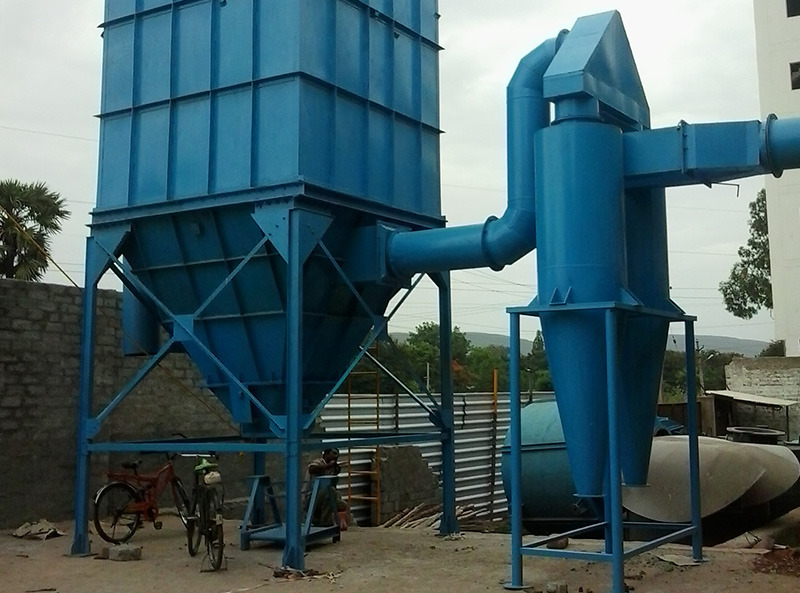
Selecting the right Boiler bag filter Manufacturers is essential when installing a dust collection system for an industrial boiler. A boiler bag filter must handle specific flue gas conditions, particulate loading, temperature and operating requirements while maintaining effective filtration. Choosing equipment based only on price or capacity can lead to higher maintenance costs, premature filter-bag failure and inefficient operation. Before placing an order, buyers should evaluate several technical and practical factors to ensure the selected system matches the boiler application.
1. Understand Your Boiler Operating Conditions
Before approaching Boiler bag filter Manufacturers, collect accurate information about your boiler and its operating conditions. Important parameters include boiler capacity, fuel type, flue gas volume, gas temperature, dust concentration and expected operating hours.
The type of fuel can significantly influence the characteristics of the collected dust. Coal, biomass, rice husk, wood and other fuels can generate different particulate loads and combustion by-products. Understanding these conditions allows the manufacturer to recommend a suitable filtration configuration instead of supplying a generic system.
2. Check the Required Airflow Capacity
Airflow is one of the most important parameters when sizing a boiler bag filter. The system must accommodate the volume of flue gas produced by the boiler while allowing sufficient filtration area for efficient operation.
Ask the manufacturer how the airflow requirement has been calculated and whether the design considers normal as well as peak operating conditions. An undersized filter can experience excessive filtration velocity and pressure drop, while an unnecessarily large system may increase initial and operating costs.
The airflow calculation should also consider the complete flue-gas path and associated equipment.
3. Evaluate Filter Area and Air-to-Cloth Ratio
The available filter area directly affects the performance and operating life of the filter bags. Air-to-cloth ratio, also known as filtration velocity, is an important design parameter because it indicates how much gas is being passed through a given area of filter media.
Ask for the proposed filter area and the design basis used to determine it. The appropriate value depends on dust characteristics, gas conditions, filter-media properties and cleaning arrangements.
A properly designed system should provide sufficient filtration area without unnecessarily increasing the equipment footprint.
4. Select the Correct Filter Media
Filter-bag material is particularly important in boiler applications because flue gases can operate at elevated temperatures and may contain chemically aggressive components.
Depending on the application, manufacturers may recommend materials such as polyester, aramid, PPS or fiberglass, with specialized finishes or membranes where required. High-temperature applications can require specially selected media designed for thermal and chemical resistance.
Do not select filter media based solely on its purchase price. Consider operating temperature, moisture, chemical exposure, dust characteristics, abrasion and expected service life.
5. Ask About Operating Temperature
Temperature is a critical consideration before purchasing a boiler bag filter. Excessive temperature can damage filter media, while condensation caused by excessively low temperatures can create moisture-related filtration problems.
Ask the manufacturer for the recommended continuous operating temperature and maximum permissible temperature for the selected filter media. Also discuss possible temperature fluctuations during boiler start-up, shutdown or abnormal operating conditions.
Some boiler bag-filter systems incorporate upstream protection or other design measures to manage high-temperature flue gases before they reach the filter bags.
6. Understand Pressure Drop Requirements
Pressure drop indicates the resistance created as flue gas passes through the filter system. As dust accumulates on the bags, resistance can increase.
Ask the manufacturer about the expected initial and operating pressure drop and how the cleaning system is designed to control it. Excessive pressure drop can increase fan energy requirements and affect the overall performance of the boiler’s exhaust system.
A good design should balance filtration efficiency, filter area and cleaning frequency rather than depending on excessively frequent cleaning cycles.
7. Examine the Pulse Jet Cleaning System
Many industrial bag filters use pulse jet cleaning to remove accumulated dust from filter bags. Short bursts of compressed air dislodge the dust cake and restore filtration performance.
Before purchasing, ask about pulse pressure, pulse duration, cleaning sequence, valve arrangement and automatic controls. Also determine whether cleaning is controlled by a timer, differential-pressure signal or another control strategy.
Efficient cleaning should remove accumulated dust without unnecessarily stressing the filter bags or consuming excessive compressed air.
8. Check Dust Handling and Hopper Design
The collected dust must be discharged reliably after it falls into the hopper. Ask how the hopper is designed for your expected dust characteristics and what type of discharge arrangement is proposed.
Depending on the application, the system may require suitable rotary valves, screw conveyors, double-dump arrangements or other dust-handling equipment. Poor dust discharge can cause buildup, increase maintenance requirements and interfere with filter operation.
9. Consider Maintenance and Filter-Bag Replacement
A boiler bag filter should be designed for practical inspection and maintenance. Before ordering, ask how easily filter bags can be accessed and replaced.
Also request information about expected filter-bag life, recommended inspection intervals and commonly replaced components. Understanding these requirements helps plant operators plan preventive maintenance and minimize unexpected shutdowns.
Reliable Boiler bag filter Manufacturers should be able to provide clear operating and maintenance recommendations along with the equipment.
10. Review Customization and Technical Support
Every boiler installation has different space limitations, duct connections, airflow requirements and process conditions. Ask whether the manufacturer can customize the filter dimensions, inlet and outlet configuration, hopper arrangement, filter media and control system.
Also check whether technical support is available for installation, commissioning, troubleshooting and future replacement requirements.
When comparing Boiler bag filter Manufacturers, look beyond the quoted equipment price. Consider engineering capability, filter-media expertise, customization, maintenance support and the manufacturer’s understanding of your specific boiler conditions.
Make the Purchase Based on Application, Not Price Alone
A boiler bag filter is a long-term pollution-control investment, so selecting the right configuration at the beginning can have a major effect on operating costs and equipment reliability. Buyers should evaluate airflow, filter area, temperature, dust characteristics, filter media, pressure drop, pulse cleaning and maintenance requirements before approving a design.
Working with experienced Boiler bag filter Manufacturers can help ensure that the filtration system is engineered around the actual boiler and flue-gas conditions. A properly selected system can provide dependable particulate collection, efficient operation and a longer filter-bag service life while supporting the plant’s overall dust-control requirements.
Other Recommendations: Pulse Jet Bag Filter Manufacturers