
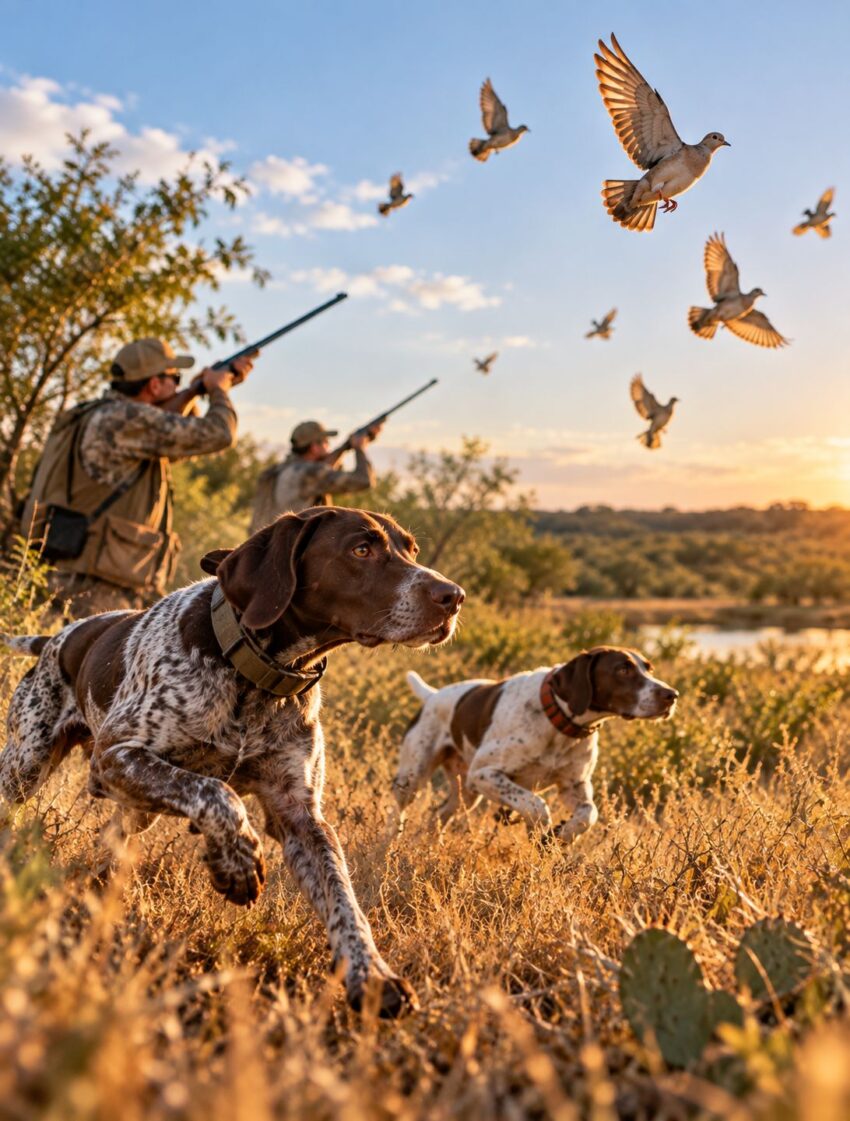
Quail hunting is a traditional Texas outdoor experience that combines challenging wingshooting, careful field awareness, and time spent exploring open country. For many hunters, the experience becomes even more rewarding when a well-trained dog is part of the hunt. A good hunting dog can help locate birds, work cover, and make retrieving downed birds more efficient while adding another level of skill and companionship to the day.
For anyone considering quail hunts in Texas, understanding how dogs contribute to the hunt can help you choose the right breed, prepare your dog properly, and plan a safer and more enjoyable trip. The right dog is not simply a tool for finding birds. It becomes part of the hunting team and needs appropriate training, conditioning, handling, and care.
Why Dogs Are Valuable for Quail Hunting
Quail can be difficult to locate because they spend much of their time in vegetation and can move quickly when disturbed. Hunters walking without a dog may overlook birds that are holding in dense cover or have difficulty locating birds after a successful shot.
A trained bird dog approaches the field differently. It uses scent and field movement to help identify areas where birds may be present, allowing the hunter to concentrate on positioning, safe shooting, and reading the terrain.
Texas regulations permit the use of dogs to aid in hunting game birds, making properly trained dogs a practical part of a legal hunting setup.
Choosing the Right Bird Hunting Dogs
Different breeds have different strengths, and the best choice depends on the type of hunting you plan to do. Pointing breeds are commonly associated with upland hunting because they can locate birds and indicate their presence before the hunter approaches.
Retrieving breeds can also be useful, particularly when the priority is recovering downed birds efficiently. Some hunters prefer versatile breeds that can perform both pointing and retrieving tasks.
When evaluating bird hunting dogs, consider more than breed reputation. Temperament, trainability, endurance, age, experience, and the dog’s ability to work cooperatively with its handler can all influence the quality of a hunt.
Important characteristics to consider include:
- Strong field endurance: Quail hunting can involve considerable walking across uneven terrain, brush, grass, and open country. A suitable dog should be physically prepared for extended activity without becoming unnecessarily exhausted.
- Reliable responsiveness: A dog that responds consistently to commands is easier to manage in the field. Basic control becomes especially important when hunting around other people, livestock, roads, or unfamiliar terrain.
- Good scenting ability: Finding quail depends heavily on a dog’s ability to work scent. A dog with appropriate training can help hunters identify areas worth investigating instead of relying entirely on visual searching.
- Steady hunting behaviour: Excessive chasing or uncontrolled movement can make a dog less useful during a hunt. Training should encourage the dog to work systematically and respond to the hunter’s direction.
Understanding Quail Hunts in Texas
Texas offers extensive habitat for upland game birds, and quail hunting takes place across a variety of landscapes. Depending on the region and property, hunters may encounter different terrain, vegetation, and bird-holding conditions.
For the 2026–27 season, Texas Parks & Wildlife Department lists the regular statewide quail season as November 1, 2026, through February 28, 2027. The department lists a daily bag limit of 15 quail and a possession limit of 45, with an Upland Game Bird Endorsement required. There is no open season for Mearns’ (Montezuma) quail.
Because regulations can be updated and county-specific information should always be checked before hunting, hunters should verify the current rules for the property and county they plan to visit.
Preparing Your Dog Before the Hunt
A successful hunt begins well before opening day. Even an experienced hunting dog needs conditioning and preparation before spending several hours working unfamiliar terrain.
Start by gradually increasing the dog’s exercise in the weeks leading up to the hunt. Short walks can progress into longer sessions that resemble the conditions expected during the actual trip.
Training should also reinforce practical field behaviour. Your dog should understand basic commands and be comfortable working around you, other hunters, vehicles, and different environments.
Before leaving for a hunting trip, consider:
- Physical conditioning: Gradually build your dog’s endurance instead of expecting it to handle a full hunting day immediately. Conditioning can reduce the risk of excessive fatigue and help your dog maintain consistent performance.
- Command practice: Reinforce recall, stopping, directional commands, and other field commands before the trip. Reliable communication between hunter and dog makes the experience safer and more organised.
- Exposure to hunting conditions: If possible, allow your dog to become familiar with different terrain and cover. This can make the transition to an unfamiliar ranch or hunting property easier.
- Equipment preparation: Check collars, identification information, water containers, first-aid supplies, and other dog-specific equipment before departure. Having essentials ready can prevent small problems from becoming major inconveniences during the hunt.
How Scouting and Dogs Work Together
A hunting dog does not replace scouting. Understanding the property remains important because quail behaviour can vary with food, cover, weather, water availability, and disturbance.
Before hunting, look for habitat that provides birds with suitable food, cover, and protection. Once you understand the property, your dog can help you investigate promising areas more efficiently.
For example, instead of walking randomly across an entire ranch, hunters can focus their efforts on areas where vegetation and terrain appear suitable for holding birds. The dog can then work those areas while the hunter maintains an appropriate pace and watches for movement.
Making the Hunt Safer and More Enjoyable
Safety should remain a priority whenever dogs and multiple hunters are sharing the same field. Hunters need to maintain awareness of where other people and dogs are positioned before taking a shot.
Clear communication within the hunting group can make a major difference. Everyone should understand the direction of movement, expected shooting positions, and how the group will respond when a dog points or birds flush.
Dog safety is equally important. Quail hunting can expose dogs to heat, rough vegetation, insects, uneven ground, and long periods of physical activity. Carrying adequate water and monitoring the dog throughout the hunt can help prevent avoidable problems.
Planning a Texas Quail Hunting Trip
For hunters arranging quail hunts in Texas, the property itself can have a major influence on the overall experience. Private ranches and guided hunting properties may offer different combinations of habitat, accommodations, hunting access, and support.
A good hunting trip should match your group’s expectations. Some hunters may prioritise challenging bird work and large areas to explore, while others may want a more relaxed ranch experience that combines hunting with comfortable lodging and time outdoors.
Before booking, ask about:
- Hunting access and habitat: Understand what type of terrain and cover are available and whether the property is managed specifically for upland hunting.
- Guided or self-guided options: Ask whether a guide is included and whether hunters are expected to bring their own dogs. This can significantly affect how you prepare for the trip.
- Accommodation and amenities: If your group plans to stay overnight, review available lodging, meals, parking, and other facilities before making arrangements.
- Rules for dogs: Confirm whether personal hunting dogs are permitted and whether there are any property-specific requirements concerning their use.
Conclusion
Well-trained bird hunting dogs can add significant value to a quail hunt by helping locate birds, working difficult cover, and recovering downed game. However, the quality of the experience depends on more than the dog itself. Proper training, conditioning, scouting, safety practices, and knowledge of current regulations all contribute to a successful outing.
For hunters planning quail hunts in Texas, the 2026–27 regular quail season runs from November 1 through February 28, with the applicable Upland Game Bird Endorsement and bag limits set by Texas Parks & Wildlife Department.
If you’re planning your next Texas quail hunting adventure, start preparing early. Choose a suitable hunting property, understand the applicable regulations, prepare your dog for the terrain, and look for a ranch experience that combines quality hunting opportunities with the comfort and amenities your group needs. Start planning your Texas quail hunting trip today.