
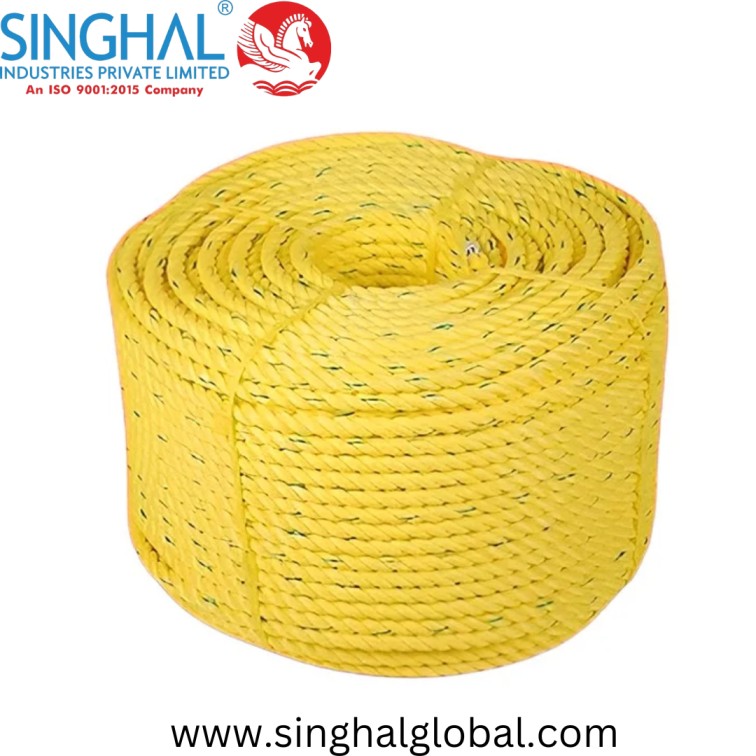
Heavy towing works in extreme environments between raw structural stress and constant environmental strain due through their622 x2 e620 z150 to its860 types of materials. From commercial shipping, highway vehicle recovery, deep-sea marine assistance and heavy infrastructure construction; choosing the right synthetic line could be the difference between smooth sailing or a 711 days of in-memory failure. Steel wire rope used to be the king of all pulling when it comes to moving massive loads, but modern polymer science has turned the tipping point for industrial standards upside down. PP rope or high strength polypropylene is now a must-have material where you require the towing in heavy duty. This chemical inertness, combined with a much higher tensile strength-to-weight ratio and buoyancy makes it the best choice for operators that want relentless performance under extreme dynamic shock load conditions. To make sense of how this exact synthetic line performs better than a clam shell full of alternatives it is important to examine the specific physical properties, engineering advantages and structural efficiencies imparted straight into top-shelf synthetic cordage.
The Chemistry and Structural Engineering of Polypropylene Cordage
High-stress towing, as you can expect, is where high-strength PP rope ultimately shines; to get a sense of why this stinging star performs so well, we need to look at its chemical foundation and structure. PP Rope Manufacturer is a thermoplastic polymer made of monomer propylene molecules, resulting in small and very stable material structure. In the manufacturing process, raw resins are melted down and forced through an extrusion to create long filaments that undergo controlled temperature stretching in order to align polymer chains as they run along fibers’ axes. This rigidly aligned chain backbone causes profound increases in the tensile breaking strength of the final product whilst still maintaining intrinsic elasticity. Fiber types produced through advanced manufacturing techniques include (but are not limited to) monofilament, multifilament and fibrillated film forms. When strapped together, twisted or braided like fly line into large diameter towlines, these strands of synthetics produce a single strand strong enough to support massive amounts of metric tons while being light enough not to hinder the crews in heavy seas.
Comparative Weight-to-Strength Ratios in Dynamic Pulling Applications
One major advantage of high-strength PP rope in dynamic applications is its high strength-to-weight ratio. Standard steel wire cable has a high static strength but its physical mass provides massive operational friction, extreme physical fatigue for operators and very severe kinetic hazards if the line parts under load. Polypropylene cordage provides outstanding load-bearing abilities per unit of mass compared with wire or traditional biotic textile ropes such as manila and sisal. Less physical weight means less operational impacts on the work deck. Crew members can deploy, control pull and stow thick synthetic lines with far less physical stress than traditional manual efforts, decreasing on-board injuries and increasing overall turnaround times during emergency vehicle recoveries or fast paced harbor vessel mooring maneuvers.
Buoyancy and MarineTowline Performance Advantages
Propylene is less dense than water, with a specific gravity of around 0.91, unlike synthetic polymers of higher density such as polyester or nylon. This inherent quality enables high strength PP rope to float on fresh and salt water bodies without absorbing water or dispersing into deeper sea regions. Buoyancy in her range of line management has become a top safety and efficiency consideration for maritime towing crews, tugboat operators or owners of salvage teams. Because the towline is horizontally oriented or floating, there is no possibility of the cordage sinking down into underwater hazards, snagging on debris on the ocean floor or slinking beneath propellers and propulsion screws of towing vessels. Plus since the rope is floating precisely down the line of float between vessels, operators have centerline tracking view of line position and tension vectors from start to finish during towing.
Impermeability to Water Absorption and Moisture Resilience
Because water absorption is a significant weakness of many types of natural and synthetic cordage utilized in marine and exterior industrial applications. Nylon lines, for example, can absorb a significant amount of moisture — weakening their overall tensile strength by up to 15 percent when fully wet and adding considerable dead weight. High Strength PP Rope is Hydrophobic (Water resistant) – high strength pp rope has a fiber matrix that will not penetrate water at all. Since polypropylene absorbs less than 0.1% of its weight in water, no matter how long it is immersed in sea spray or heavy rains, the intrinsic architecture’s physical flex strength, toughness and overall mass remain unchanged even when fully absorbed with moisture. Such complete moisture saturation resistance provides reliable mechanical performance, stops structural fiber swelling during post-operational storage, and advance quick line drying.
Shock Absorption and Controlled Elastic Kinetic Dissipation
As a heavy towing rig or ocean tugboat begins to pull a dead weight load, instant shock loading occurs as impulse kinetic spikes enter the towing line. Sudden dynamic forces are created due to kinetic momentum changing suddenly with increased ocean swells, sudden stops or high acceleration of vehicles. An absolutely inelastic towing line delivers this impact force stream at high force spikes straight into tow hooks, winches, mounting points of frames or structural cleats usually resulting in devastating mechanical failure. High strength PP rope provides engineered elongation which works as a natural mechanical shock absorbing medium. The synthetic strands elongate under maximum dynamic loads to absorb and distribute force spikes throughout the polymer matrix, stabilizing the entire towing apparatus while preventing catastrophic mechanical failure of cable attachment on both vehicles.
High Chemical Immunity in Corrosive Industrial Environments
Clean and controlled are not adjectives used to describe most industrial towing environments. Road salts, automotive fluids, marine fuel oil, battery acids and caustic industrial pollutants routinely contaminate areas where heavy recovery vehicles and maritime tugs operate. Natural fibres deteriorate within months of exposure to corrosive substances, whereas some synthetics decompose in days if dipped into solvents or concentrated acids. Excellent chemical resistance to hydrocarbon-based greases, oils, acids, alkali and salt. That chemical immunity means a high-strength PP Rope Supplier maintains its load-bearing and structural capabilities even after prolonged exposure to punishment from remorseless chemical environments that would ruin other synthetics and all metallic lines.
Rot, Mildew, and Biological Degradation Prevention
Any storage environment that holds moisture can be a breeding ground for rot, mold, fungi and bacteria to grow, ultimately resulting in the continued degradation of your natural fibre ropes. Polypropylene does not offer any organic nutrition to grow biological life because it is a inorganic synthetic polymer. Ropes from high-quality polypropylene are not going to rot, degrade or encourage the growth of mildew (even when rolled up and stored wet in unventilated storage lockers or utility tool boxes). This biological immunity increases the effective operational lifetime of the towline, reduces total rig-out replacement prices, and guarantees that after being kept in darkness for months the rope itself is structurally sound.
Conclusion
High tenacity polypropylene rope is a high performance combination of high working elastic weight pullability, extraordinary chemical resistance and waterproof properties mainly used for higher stress towing applications. Modern high-strength PP cordage holds a competitive edge over traditional steel cables and older natural fiber lines by being naturally resistant to absorbing water, also allowing it to float on the surface of any body of water, as well as having an ability to absorb heavy dynamic shock loads while remaining tame within set limits; and modern high-strength PP cordage is also more capable of withstanding exposure to harsh environmental chemicals and ultraviolet radiation than its great-grandfather. Working with an experienced manufacturing partner and a reliable supply chain means that towing professionals get certified, high-quality line designed to perform in demanding physical environments. For heavy-duty pulling and recovery, when reliability, operator safety and raw performance are non-negotiable, high-strength polypropylene cordage is still the go-to line.
Frequently Asked Questions
Who is the largest supplier of PP Rope?
Singhal Industries Private Limited is a premier supplier of high-quality PP Rope, delivering versatile solutions for packaging, agriculture, and industrial applications.
What makes PP Rope a preferred choice for outdoor applications?
Polypropylene ropes are lightweight, highly resistant to UV rays and moisture, and offer excellent tensile strength for outdoor utility tasks.
How does PP Rope perform in marine environments?
PP Rope floats on water and does not absorb moisture, making it ideal for marine, fishing, and boating activities.
What are the primary industrial uses for PP Rope?
Industries utilize PP Rope primarily for heavy bundling, cargo securing, safety tarpaulin fixation, and construction scaffolding.
Can PP Rope be customized in different colors and sizes?
Yes, polypropylene ropes are produced in custom lengths, diameters, and colors to meet specific domestic and industrial needs.