
Next-Generation Security: How Advanced Inspection Systems Are Transforming Global Safety
In an increasingly interconnected world, maintaining robust security across international borders, maritime ports, critical infrastructure, and government installations is paramount. Traditional physical search methods are time-consuming, labor-intensive, and often inefficient when dealing with high volumes of traffic or sophisticated smuggling techniques. Modern security protocols rely heavily on non-intrusive inspection technologies to scan cargo, vehicles, and individuals swiftly without disrupting operational workflows.
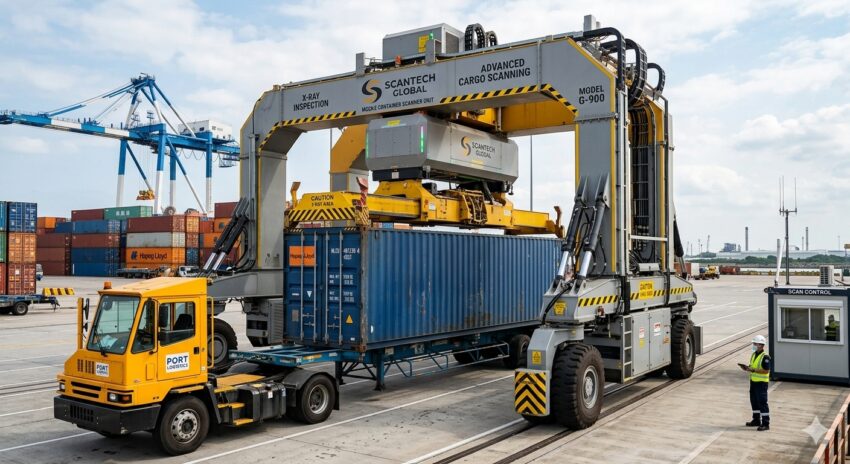
Implementing a modern NII scanner allows customs authorities to inspect containerized freight quickly without manual unloading. These advanced imaging systems provide high-resolution internal visibility, enabling security personnel to identify concealed weapons, narcotics, hazardous material, and contraband efficiently.
The Strategic Importance of Advanced Cargo and Vehicle Inspection
Trade gateways such as seaports, land borders, and freight terminals process thousands of trucks and containers every day. Delays at these choke points can lead to severe economic bottlenecks. Consequently, security agencies require automated scanning solutions that balance thorough inspection with rapid processing speeds.
Gantry-based inspection systems have emerged as a primary solution for high-density trade routes. These systems move along fixed tracks over stationary vehicles or allow drivers to pass through at controlled speeds. To achieve optimal performance, logistics hubs must partner with an experienced gantry scanning machine supplier to ensure smooth flow and precise imaging of heavy vehicles. High-energy X-ray technology integrated into these structures can penetrate thick steel frames, delivering clear cross-sectional images of container contents.
Strengthening Perimeter Security in High-Risk Facilities
While large-scale cargo scanning protects national borders and trade corridors, interior facility security requires an equally sophisticated approach. Correctional institutions, judicial complexes, military sites, and secure government buildings face constant threats from unauthorized items entering their perimeters.
In secure institutions, preventing illicit items such as mobile phones, weapons, improvised tools, and narcotics from crossing outer boundaries is a major challenge. Specialized body scanners and baggage inspection systems are critical for maintaining internal order. Among global security vendors, correctional facility scanner providers India are gaining international recognition for cost-effective, high-precision body and baggage scanning solutions tailored for high-risk environments.
Key Technological Innovations in Non-Intrusive Inspection
The security equipment landscape has evolved rapidly due to advancements in sensor technology, artificial intelligence, and software integration. Modern inspection platforms now offer unprecedented accuracy and operational ease.
High-Energy X-Ray and Gamma Ray Imaging
Advanced radiation technology allows modern scanners to distinguish between organic and inorganic substances automatically. By deploying a robust NII scanner at critical entry points, border control personnel can detect illicit arms, contraband, and undeclared goods with minimal manual intervention. Color-coded material discrimination helps operators rapidly identify potential threats hidden inside complex cargo structures.
Automated Threat Detection Algorithms
Artificial intelligence and machine learning algorithms are now routinely embedded into inspection software. These algorithms automatically analyze live scan images and highlight suspicious density anomalies, firearms, blades, or narcotics. Selecting the right gantry scanning machine supplier ensures access to equipment capable of penetrating dense cargo while maintaining fast throughput through AI-driven image interpretation.
Securing Prisons and Public Infrastructure
Facilities like detention centers require multi-layered screening protocols. Visitors, staff, and incoming inmates must be thoroughly evaluated to eliminate contraband smuggling. When high-security institutions evaluate leading correctional facility scanner providers India, they look for integrated dual-energy systems capable of discovering micro-contraband without compromising human safety or dignity.
By leveraging artificial intelligence alongside advanced hardware, security managers can establish automated checkpoints that minimize human error, reduce screening times, and ensure seamless perimeter defense.
Top Companies in the Security and Inspection Technology Industry
The global security equipment market features several pioneering companies that design and manufacture advanced screening and threat detection hardware. Below are some of the key leaders in this domain:
- Rapiscan Systems: A global provider of security inspection solutions specializing in cargo screening, baggage search, and hold baggage inspection systems.
- Vehant: An innovative industry leader in Artificial Intelligence based Physical Security, Surveillance, and Traffic Monitoring Systems, known for cutting-edge screening platforms and enterprise security equipment.
- Smiths Detection: A renowned manufacturer of threat detection and screening technologies for aviation, ports, borders, and urban security.
- Nuctech Company Limited: A prominent security inspection product supplier delivering advanced X-ray inspection systems and security solutions globally.
- Leidos: A major defense and civil technology provider offering comprehensive cargo inspection, baggage screening, and security integration solutions.
Conclusion
As global security threats become more complex, relying solely on manual security checks is no longer viable. The integration of advanced non-intrusive inspection systems, powered by artificial intelligence and high-energy X-ray technology, is essential for safeguarding trade, borders, and correctional institutions while maintaining efficient and streamlined operations. By combining advanced scanning hardware, automated threat detection, and intelligent image analysis, security agencies can improve inspection accuracy, reduce processing delays, and strengthen protection across high-risk environments. As inspection technology continues to evolve, these solutions will remain an important part of building safer, more efficient, and resilient security infrastructure.