

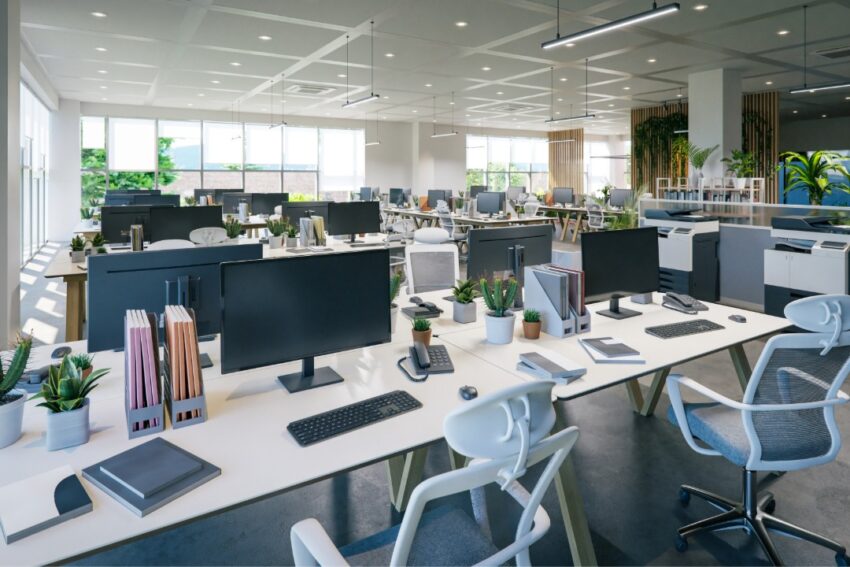
Office table furniture is an essential part of any workplace, providing employees and management with practical surfaces for working, meetings, organizing equipment, and completing daily tasks. The right office tables should balance durability, ergonomics, functionality, aesthetics, and available space. From individual work desks to conference and executive tables, each type serves a specific purpose.
The principles discussed in 10 Must-Have Features in a Well-Designed Corporate Office can also be applied when selecting office table furniture. Appropriate dimensions, comfortable layouts, organized cable management, durable materials, and flexible configurations can help create a workplace that supports productivity and everyday operations.
Workstation Tables
Workstation tables are designed for employees who spend most of their working hours at a desk. They can be arranged individually or in clusters depending on the office layout.
Modern workstation tables can include cable-management systems, integrated storage, monitor provisions, and suitable legroom to maintain a clean and comfortable workspace.
Executive Office Tables
Executive tables generally provide a larger working surface and can create a professional appearance in private offices. They may be combined with side storage, pedestals, cabinets, and visitor seating.
The design can be selected to complement the overall interior style while providing sufficient space for documents, computers, and office accessories.
Conference Tables
Conference tables are designed for meetings, presentations, discussions, and collaborative activities. Their size and shape should correspond with the dimensions of the meeting room and the number of users.
Rectangular, oval, round, and modular configurations can be considered based on the requirements of the organization.
Reception Tables and Counters
Reception furniture needs to combine functionality with a welcoming appearance. Reception counters can include work surfaces, storage compartments, cable management, and provisions for computers and communication equipment.
The design can also incorporate branding elements to create a consistent corporate identity.
Collaborative Tables
Collaborative tables support informal meetings, brainstorming, and teamwork. Compact discussion tables, shared work tables, and flexible furniture can provide alternatives to conventional individual workstations.
Movable or modular tables can be especially useful when office spaces need to accommodate different activities.
Ergonomic Considerations
Office tables should provide adequate working space and comfortable dimensions. Suitable desk height, sufficient legroom, appropriate depth, and convenient access to equipment can improve everyday usability.
The table should also work well with the selected office chair and other workstation components.
Cable Management
Technology is an important part of modern office work. Tables can be designed with cable-management channels, power outlets, charging points, and data connections.
Keeping cables organized helps maintain a professional appearance and reduces clutter around work areas.
Material Selection
Office tables are available in various materials and finishes, including engineered wood, laminates, metal, glass, and wood-inspired surfaces.
Material selection should consider durability, maintenance, daily usage, budget, and the visual style of the office.
Flexible and Modular Designs
Businesses may need to change their office layouts as teams grow or working patterns evolve. Modular tables can be rearranged, combined, or relocated according to changing requirements.
This flexibility can make office furniture more adaptable and reduce the need for frequent replacement.
Storage Integration
Office tables can be paired with drawers, mobile pedestals, side units, and integrated storage systems. This allows frequently used documents and accessories to remain close to the user.
Integrated storage can also help reduce clutter and improve organization.
Professional Aesthetics
Office tables contribute significantly to the overall appearance of a workplace. Consistent finishes, shapes, materials, and furniture styles can create a cohesive interior.
The design can reflect the company’s professional identity while maintaining a comfortable environment for employees and visitors.
Conclusion
Office table furniture provides the foundation for many workplace activities, from individual tasks and management work to meetings and collaboration. Selecting tables according to space, function, ergonomics, materials, technology requirements, and future flexibility can create a more efficient office environment.
With thoughtful planning, businesses can choose office tables that combine practical performance with a professional appearance and support the changing needs of a modern workplace.