

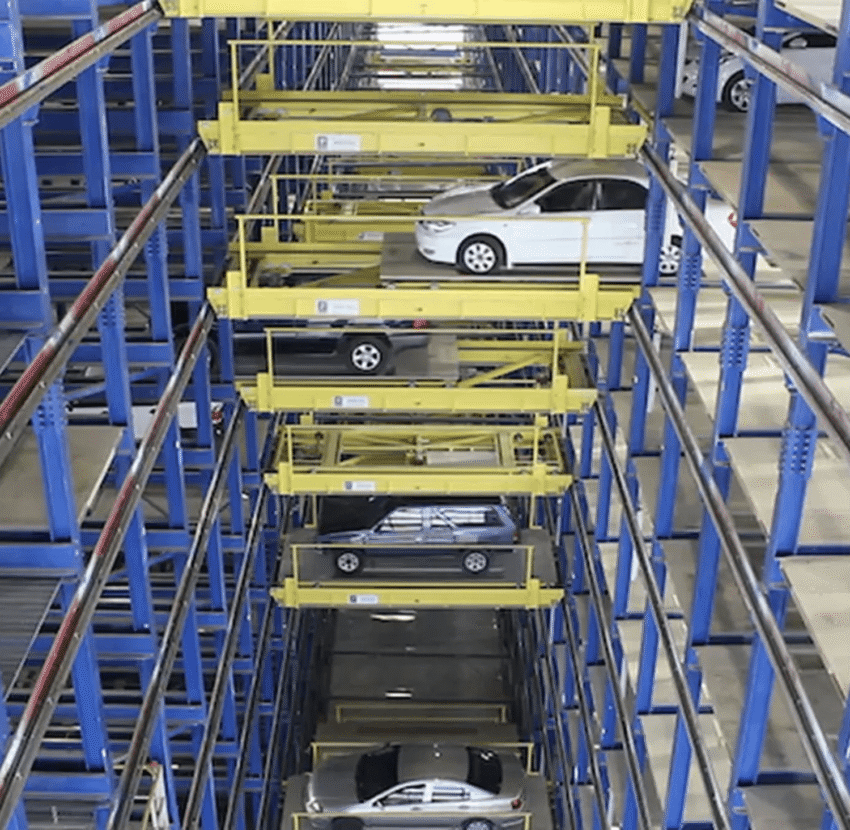
As cities become more crowded and available land becomes increasingly limited, managing parking efficiently has become an important consideration for residential buildings, commercial properties, hospitals, airports, hotels, and other large facilities. Traditional parking methods can require significant space, staff involvement, and ongoing management. Technology-driven solutions are changing this approach by making parking more organized, convenient, and efficient.
Automated Parking Systems use a combination of mechanical equipment, sensors, software, and control systems to manage the movement and storage of vehicles. Instead of relying entirely on drivers to find and occupy parking spaces, these systems can automate several stages of the parking process, from vehicle entry to space allocation and retrieval.
What Are Automated Parking Systems?
Automated Parking Systems are technology-based parking solutions designed to reduce manual involvement in vehicle parking. Depending on the type of system, vehicles may be moved using lifts, conveyors, platforms, shuttles, or robotic mechanisms.
When a vehicle enters an automated facility, sensors and control technology can identify available parking spaces and direct the vehicle to an appropriate location. The system can then store the vehicle efficiently until it is requested for retrieval.
This approach can help make better use of available floor space while creating a more structured parking environment.
How Do Automated Parking Systems Work?
The exact operation depends on the system design, but the general process is relatively straightforward.
A driver enters a designated area and positions the vehicle according to the system’s instructions. Sensors can detect the vehicle’s position and collect relevant information. The parking control system then determines where the vehicle should be stored.
Mechanical equipment moves the vehicle to the assigned location. When the driver wants to leave, the system receives a retrieval request and locates the vehicle before moving it to the designated collection area.
This automated process can reduce the need for drivers to spend time searching through large parking facilities.
The Role of an Automated Parking Management System
An automated parking management system brings different parking functions together through centralized software and control technology. It can help monitor parking availability, manage vehicle movement, track spaces, and provide information to operators.
Modern systems may incorporate sensors, cameras, access-control equipment, digital displays, payment solutions, and parking software. Connecting these components can provide operators with better visibility into how the facility is being used.
For larger properties, centralized management can also make it easier to monitor operations and identify potential issues.
Efficient Use of Parking Space
One of the major considerations in parking design is space utilization. Conventional parking layouts need sufficient room for vehicle movement, turning, ramps, pedestrian access, and other requirements.
Automated Parking Systems can use vertical and compact storage arrangements to reduce some of these space requirements. Vehicles can be positioned closer together because drivers do not necessarily need to move between every parked vehicle.
This can allow property developers to explore parking layouts that make more effective use of limited space.
Improving the Parking Experience
Finding a parking space can be frustrating, particularly in busy commercial areas or large buildings. Automated parking solutions can simplify this process by reducing the amount of time drivers spend searching for available spaces.
An automated parking management system can provide information about parking availability and guide users through the entry and retrieval process. Depending on the system, digital interfaces can also provide clear instructions to drivers.
The result can be a more organized parking experience with fewer unnecessary movements inside the facility.
Safety and Controlled Vehicle Movement
Automated systems can also provide greater control over vehicle movement within a parking facility. Sensors and monitoring technologies can help detect vehicle presence, position, and movement.
Because drivers may not need to drive through every section of an automated parking facility, there can be fewer interactions between moving vehicles and pedestrians in certain layouts.
Safety still depends on proper system design, installation, maintenance, and compliance with applicable standards. Regular inspection and servicing are important for maintaining reliable operation.
Reducing Manual Parking Operations
Traditional parking facilities can require staff to perform tasks such as monitoring spaces, directing vehicles, issuing access credentials, and managing parking records.
An automated parking management system can handle many routine functions electronically. This can reduce repetitive manual tasks and allow personnel to focus on monitoring, customer assistance, maintenance, and other operational responsibilities.
Automation does not necessarily eliminate the need for staff. Instead, it can change how parking personnel are involved in day-to-day operations.
Where Can Automated Parking Systems Be Used?
Automated parking solutions can be considered for a wide range of properties. Common applications include:
- Residential apartments and high-rise developments
- Commercial and office buildings
- Shopping and retail centers
- Hospitals and healthcare facilities
- Hotels
- Airports and transportation facilities
- Mixed-use developments
- Public parking facilities
The appropriate system depends on factors such as available space, vehicle volume, building design, expected parking duration, budget, and operational requirements.
Considering an Automated Parking Solution
Before implementing an automated parking system, property owners and developers should evaluate the site’s specific requirements. Important considerations include available land, structural conditions, entry and exit arrangements, vehicle dimensions, expected capacity, maintenance requirements, and future expansion.
The software and control infrastructure should also be considered because reliable communication between sensors, mechanical equipment, access controls, and management software is essential for smooth operation.
A detailed site assessment and professional system design can help determine whether automation is suitable for a particular property.
The Future of Parking Management
As urban development continues and land availability becomes more challenging, technology will remain an important part of parking management. Automated Parking Systems provide an approach that combines space optimization, controlled vehicle movement, digital monitoring, and operational automation.
An automated parking management system can further connect these functions, giving property operators a centralized way to monitor and manage parking activities.
For modern developments, automated parking is not simply about storing vehicles. It is about creating a more organized system that uses available space effectively while making parking easier to manage and more convenient for users. With careful planning, suitable technology, and regular maintenance, automated parking solutions can become an important part of modern parking infrastructure.