

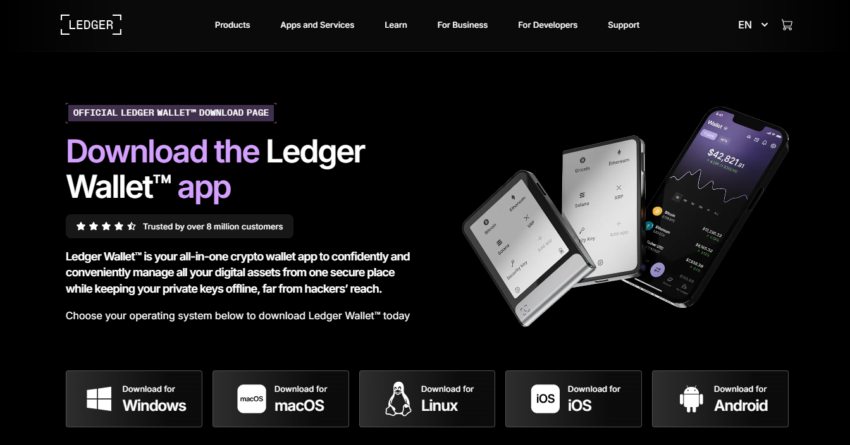
Managing digital assets requires more than simply choosing a wallet. Users need a solution that can help protect private keys while making everyday crypto activities easier to understand. Ledger Wallet is designed around this idea, combining hardware-based key protection with software tools that help users manage supported digital assets from a convenient interface.
What Is a Ledger Wallet?
A Ledger Wallet is a hardware wallet designed to keep a user’s private keys isolated from the internet when the device is not being used for an active transaction. Instead of storing private keys directly on a computer or phone, the wallet uses a dedicated physical device to help protect sensitive signing operations.
Depending on the model and supported services, users can connect their Ledger device with compatible software to view balances, manage accounts, and approve transactions. This approach provides an additional security layer compared with keeping private keys in an always-connected environment.
How Does Ledger Wallet Work?
The basic process is straightforward. After setting up a compatible Ledger device, users create or restore their wallet according to the official instructions. The device generates or protects the credentials needed to access supported blockchain accounts.
When a transaction needs authorization, important signing steps can take place on the hardware device. Users can review transaction information and confirm actions directly on the device. This helps reduce the risk of exposing sensitive private keys to a connected computer.
For security, users should always download wallet software and firmware updates through official sources and carefully verify transaction details before confirming them.
Advantages of Ledger Wallet
1. Hardware-Based Key Protection
One of the main advantages is that private keys are designed to remain protected within the hardware device rather than being routinely exposed to an internet-connected computer.
2. Convenient Asset Management
Compatible Ledger software can provide a central place for viewing accounts and managing supported digital assets. This can make routine wallet management easier for both new and experienced users.
3. Transaction Confirmation
Ledger devices allow users to review and approve transactions on the physical wallet. This gives users an additional opportunity to verify important transaction details before signing.
4. Support for Multiple Assets
Ledger products support a broad range of cryptocurrencies and blockchain networks, although exact compatibility varies by device and software. Users should check current official compatibility information before transferring an asset.
5. Portable Security
Because the wallet is a physical device, users can keep it stored separately from their everyday computer or smartphone. This can be useful for people who prefer dedicated hardware for long-term asset management.
Tips for Using a Ledger Wallet Safely
Security also depends on user behavior. Never share your recovery phrase with another person, website, application, or support representative. Anyone who obtains the recovery phrase may be able to access the associated assets.
Keep the recovery phrase offline in a secure location and avoid entering it into websites or forms. Be cautious with unexpected messages, fake applications, and websites that request wallet credentials. Before approving a transaction, carefully check the recipient address and transaction information shown by the wallet.
It is also important to purchase hardware wallets through trusted channels and keep the device software updated using official procedures.
Final Thoughts
A Ledger Wallet provides a hardware-focused approach to managing digital assets while giving users practical tools for viewing accounts and approving transactions. Its combination of dedicated hardware, transaction confirmation, portability, and broad asset support makes it a useful option for people who want greater control over their crypto security.
However, no wallet can replace careful security practices. Protecting the recovery phrase, checking transactions, avoiding suspicious links, and using official software are essential parts of responsible digital asset management.