

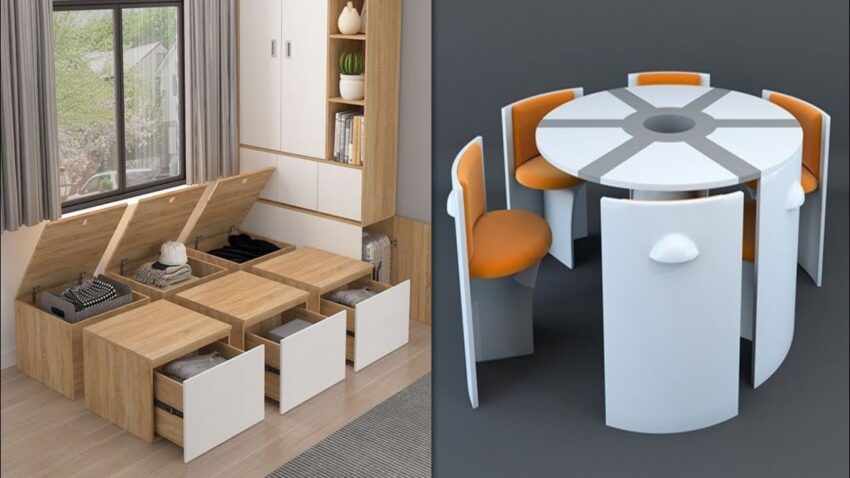
Space Saving Furniture for Small Spaces helps make compact homes more functional, comfortable, and organized. When floor area is limited, conventional furniture can quickly make a room feel crowded. Multifunctional furniture, foldable tables, storage beds, compact seating, wall-mounted units, and modular storage can provide essential functions while using less floor space. Multifunctional furniture is particularly useful because one piece can serve two or more purposes.
Smart space planning focuses on making every available area useful. How Modular Kitchens Improve Space Efficiency in Small Homes demonstrates the importance of combining functionality with efficient planning. The same principle can be applied to bedrooms, living rooms, dining areas, home offices, and other compact spaces through furniture that combines storage, flexibility, and everyday functionality.
Multifunctional Furniture
Multifunctional furniture is one of the most practical choices for small spaces. A sofa bed can provide seating during the day and sleeping space when required. Storage ottomans can function as seating, footrests, and concealed storage.
Other options include extendable dining tables, nesting tables, folding desks, and benches with built-in storage. These designs reduce the number of separate furniture pieces needed in a room.
Storage Beds
The space beneath a bed can become valuable storage. Hydraulic storage beds and beds with drawers can accommodate bedding, seasonal clothing, luggage, and other belongings.
Using the space beneath the bed can reduce the need for additional cabinets and help maintain a cleaner bedroom layout.
Compact Modular Wardrobes
Wardrobes can take up considerable floor and wall space, so their design should be carefully planned. Floor-to-ceiling wardrobes maximize vertical storage, while sliding doors reduce the clearance required in front of the unit. Sliding wardrobes are specifically useful where door-swing space is limited.
Adjustable shelves, drawers, hanging sections, and pull-out accessories can further improve storage efficiency without significantly increasing the wardrobe’s footprint.
Foldable and Extendable Furniture
Furniture that folds or expands according to requirements can be highly useful in compact interiors. A foldable dining table can remain against a wall when not required, while an extendable table can provide additional seating when guests arrive.
Wall-mounted foldable tables can also function as temporary dining or work surfaces while keeping the floor open when folded away.
Wall-Mounted Furniture
Walls provide valuable opportunities for storage without consuming much floor area. Floating shelves, wall-mounted desks, cabinets, and television units can keep essential items organized while preserving visible floor space.
This approach can also make a compact room appear less crowded because fewer bulky units occupy the floor.
Space Saving Living Room Furniture
Compact living rooms can benefit from sofa beds, nesting tables, storage ottomans, floating TV units, and multifunctional coffee tables. These pieces allow seating, storage, and entertainment requirements to be combined within a smaller footprint.
Furniture should also be appropriately scaled to the room. Oversized sofas and deep cabinets can restrict movement even when the room contains only a few pieces.
Space Saving Bedroom Furniture
Bedrooms can use storage beds, sliding wardrobes, compact bedside tables, wall-mounted dressing units, and foldable study desks. A wall-mounted desk can provide a workspace without requiring a permanent large desk.
For multifunctional bedrooms, furniture that can be folded, moved, or converted can allow the same space to serve different purposes throughout the day.
Vertical Storage
When floor space is limited, vertical storage becomes particularly valuable. Tall cabinets, floor-to-ceiling wardrobes, overhead storage, and wall-mounted shelves can increase capacity without expanding the furniture footprint.
Using vertical space effectively can also reduce clutter by providing dedicated places for items that would otherwise occupy tables or floors.
Customized Furniture
Customized furniture can be useful when standard products do not fit the dimensions of a compact room. Built-in cabinets, corner units, under-stair storage, wall-to-wall wardrobes, and customized desks can be designed around the actual layout.
This approach can make use of difficult areas such as narrow corners, alcoves, columns, and spaces beneath windows.
Choosing Furniture for Small Spaces
Before purchasing furniture, homeowners should measure the room and consider walking paths, door openings, window positions, storage requirements, and furniture depth.
It is also important to consider the quality of hinges, sliding systems, hydraulic mechanisms, and folding hardware. Furniture that transforms or moves frequently needs reliable mechanisms for everyday use.
Benefits of Space Saving Furniture
Choosing the right space saving furniture for small spaces can provide several benefits:
- Better use of limited floor area
- Increased storage capacity
- Multifunctional room layouts
- Improved organization
- Greater flexibility
- Reduced visual clutter
- Better movement and circulation
- More efficient use of vertical space
The goal is not simply to choose smaller furniture. Effective space-saving design combines appropriate proportions, functionality, storage, and flexibility.
Conclusion
Space Saving Furniture for Small Spaces provides practical solutions for making compact interiors more comfortable and functional. Storage beds, modular wardrobes, foldable tables, wall-mounted furniture, multifunctional seating, and customized storage can help homeowners make better use of every available area.
With careful measurements and thoughtful furniture planning, small rooms can support multiple activities without feeling overcrowded. The right combination of multifunctional and space-efficient furniture can create an interior that is organized, flexible, and comfortable.