

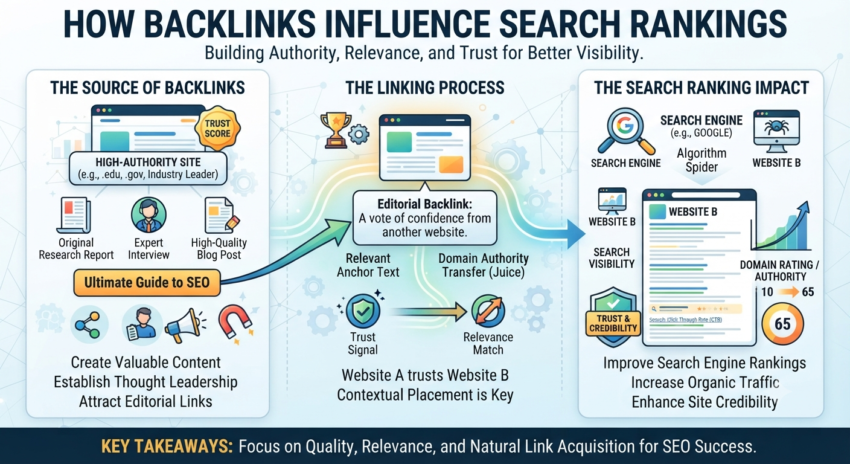
Search engine optimization involves many different activities, including keyword research, technical optimization, content creation, website performance, internal linking, and user experience. Another important part of SEO is backlink building.
Backlinks are links from one website to another. When a relevant and trustworthy website links to your content, it can provide a useful signal about the value and relevance of your page. However, backlinks are not simply about collecting as many links as possible. Quality, relevance, context, and the overall reputation of the linking website matter.
For businesses trying to increase organic visibility, understanding how backlinks work can help create a more sustainable SEO strategy.
What Is a Backlink?
A backlink is a hyperlink on one website that points to a page on another website.
For example, imagine a digital marketing blog publishes an article about SEO tools and links to a useful resource on another website. The website receiving that link has gained a backlink.
Backlinks are also called inbound links or incoming links.
Search engines can use links as one part of understanding relationships between websites and pages. A backlink can also introduce new visitors to a website when people click it.
Why Do Backlinks Matter for SEO?
Search engines evaluate many signals when determining how pages should appear in search results. Links can provide information about the relationship, authority, and relevance of web content.
A backlink from a relevant website can potentially contribute to a page’s ability to compete in organic search. However, there is no guarantee that receiving a particular backlink will increase rankings.
The quality of the entire website and page also matters.
Quality Matters More Than Quantity
One of the biggest misunderstandings about backlinks is that more links automatically mean better rankings.
A website could receive hundreds of low-quality or irrelevant links without creating meaningful SEO value. In contrast, a smaller number of relevant, editorially earned links may be more useful.
For example, a detailed article about accounting software receiving a genuine reference from a respected business publication may be more meaningful than dozens of unrelated links from low-quality websites.
The focus should therefore be on earning relevant and trustworthy backlinks, rather than collecting links without considering their source.
Relevance Is an Important Factor
Imagine that a website selling fitness equipment receives a backlink from a reputable fitness publication. The relationship between the two websites is easy to understand.
Now imagine the same website receives a link from an unrelated website about an entirely different subject.
The first link may provide more meaningful context because the websites operate in related areas.
Businesses should therefore look for backlink opportunities that make sense within their industry, audience, and content.
Backlinks Can Bring Referral Traffic
Backlinks are not only useful for SEO.
People can click a link and arrive directly at the linked website. This is known as referral traffic.
For example, a local business may be mentioned in an industry article that receives thousands of monthly visitors. A useful link within that article can introduce the business to a relevant audience.
This means businesses should evaluate backlinks from both an SEO perspective and a broader marketing perspective.
Backlinks Can Help Build Online Authority
When respected websites reference a company’s research, guides, products, or services, those mentions can contribute to the company’s online credibility.
For example, a technology company that publishes original research may earn links from technology publications, educational websites, and industry blogs.
The backlinks are valuable not simply because they are links, but because they represent genuine references to useful information.
Company Example: Google
Google has repeatedly emphasized the importance of creating useful content for users. Its search ecosystem evaluates many signals when determining how content should be presented.
For businesses, this reinforces an important principle: link building should support valuable content rather than replace it.
A company that publishes original research, useful guides, statistics, case studies, and expert resources has more opportunities to naturally attract references from other websites.
Company Example: HubSpot
HubSpot has developed a large library of educational marketing and business content. Comprehensive resources can naturally create opportunities for other websites to reference and link to them.
The broader lesson for businesses is that creating genuinely useful resources can support link acquisition while also attracting visitors through search and other channels.
Company Example: Moz
Moz is well known for publishing SEO-related educational resources and tools. SEO companies and professionals frequently use educational material, research, and tools as references when discussing search optimization.
This illustrates how original resources can become linkable assets within an industry.
Different Types of Backlinks
Not every backlink has the same characteristics. Common examples include:
Editorial Backlinks
These are links included naturally by publishers because they believe a resource is useful to their readers.
Guest-Content Links
A business may contribute an article to a relevant publication and receive an appropriate link when the publication’s guidelines allow it.
Resource-Page Links
Some websites maintain resource pages that link to useful guides, tools, research, or educational materials.
Business and Directory Links
Relevant business directories and industry listings can provide links and referral opportunities, particularly for local businesses. However, businesses should prioritize legitimate, relevant directories rather than mass-submitting to low-quality sites.
How to Earn Better Backlinks
1. Create Original Research
Original statistics, surveys, studies, and industry reports can attract citations from other publishers.
2. Publish Comprehensive Guides
Detailed guides that answer common questions can become useful references for other websites.
3. Create Useful Tools
Calculators, templates, checklists, and interactive resources can generate natural interest and links.
4. Promote Valuable Content
Creating content is only the beginning. Businesses should promote useful resources through social media, email marketing, professional communities, and relevant industry relationships.
5. Build Industry Relationships
Networking with journalists, publishers, bloggers, businesses, and industry professionals can create legitimate opportunities for collaboration and content references.
Backlink Practices to Avoid
Businesses should be careful with strategies designed purely to manipulate search rankings.
Buying large quantities of low-quality links, participating in link schemes, using irrelevant link networks, or generating artificial links at scale can create SEO risks.
A sustainable strategy focuses on creating valuable content and earning relevant references.
How to Evaluate a Backlink
Before pursuing a backlink opportunity, consider:
-
Is the website relevant to the industry?
-
Does it have genuine content and an identifiable audience?
-
Is the linking page useful to readers?
-
Is the link contextually appropriate?
-
Could the link generate referral traffic?
-
Does the website appear trustworthy?
-
Is the link being obtained naturally rather than through a manipulative scheme?
These questions can help businesses focus their efforts on meaningful opportunities.
Digital Marketing Bucks: Building a Stronger Backlink Strategy
Digital Marketing Bucks is a digital marketing company that can help businesses improve their online presence through SEO, content marketing, social media marketing, paid advertising, website optimization, and digital strategy. Backlink development can be an important component of a broader SEO campaign because relevant references can help connect valuable content with audiences across the web. As a top digital marketing company, Digital Marketing Bucks can help businesses identify content opportunities, research relevant websites, develop link-worthy resources, and support outreach strategies based on the business’s goals and industry. Instead of focusing only on the number of backlinks, the approach can emphasize relevance, content quality, audience value, and sustainable SEO practices. When combined with technical SEO, keyword research, internal linking, content development, and performance analysis, backlink strategies can become part of a comprehensive approach to improving organic search visibility.
Backlinks and Local SEO
Backlinks can also support local businesses.
For example, a restaurant might receive a mention from a local food publication. A law firm could be referenced by a local business organization. A college might receive links from educational resources or community websites.
Relevant local references can help businesses become more visible within their communities while also generating referral traffic.
How Long Does Backlink SEO Take?
Backlink building is generally a long-term activity. A newly acquired link does not guarantee an immediate change in search rankings.
Search performance depends on many factors, including content quality, competition, technical SEO, search intent, website reputation, and the overall link profile.
Businesses should therefore evaluate backlink campaigns over time instead of expecting instant results.
Conclusion
Backlinks remain an important part of the SEO landscape because they can help search engines understand relationships between websites while also providing referral traffic and online visibility.
However, successful backlink building is not about obtaining the highest possible number of links. Relevance, quality, context, and genuine usefulness are more important considerations.
Businesses can build stronger backlink opportunities by creating original research, comprehensive guides, useful tools, and valuable content that other websites have a genuine reason to reference.
When supported by technical SEO, internal linking, content marketing, and consistent performance analysis, a thoughtful backlink strategy can contribute to a stronger and more sustainable online presence.