

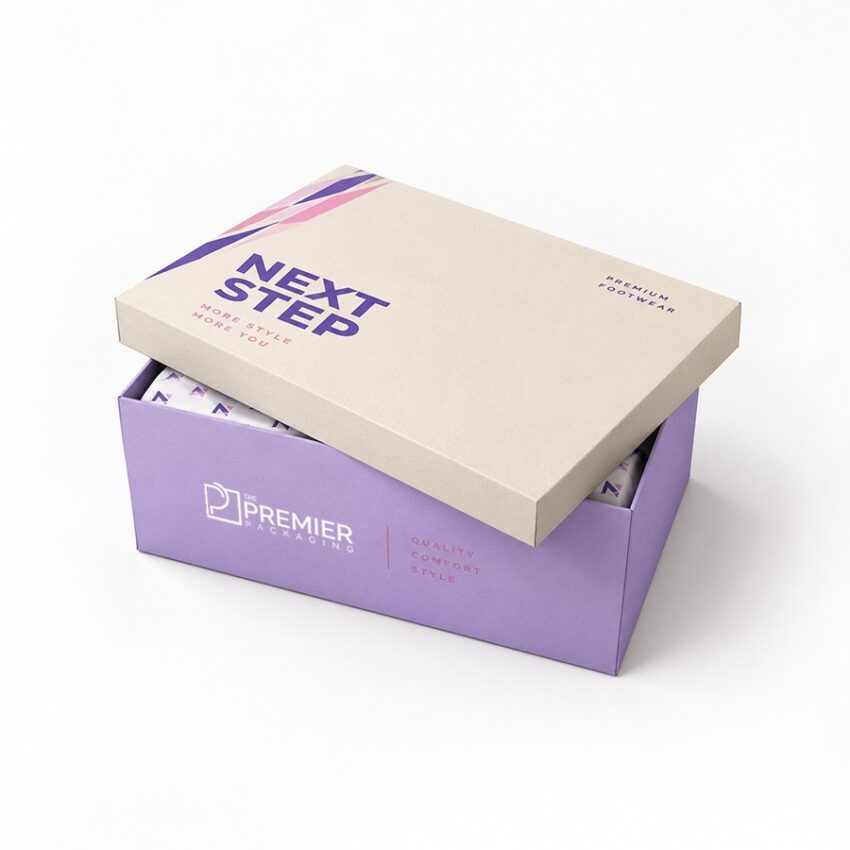
A shoebox looks like one of those things nobody’s bothered redesigning in fifty years – rectangle, lid, done. Open one up for a low-top sneaker, and then open one up for a hiking boot, though, and the differences start to show fast. A low-top barely fills a third of the space it’s given. Put a high-top in that same box, and the lid won’t even close. Hiking boots are a whole other story, since they’re heavy and wide, and a sneaker box just wasn’t built for that. Grabbing the same box off the shelf for every style and hoping it works out is a good way to end up with crushed shoes and unhappy customers.
Why Shoe Shape Changes the Packaging Math
The basic rectangular shoebox format has stuck around because it’s cheap to produce and easy to stack. But what happens inside that rectangle has to change depending on the shoe. Height varies the most from style to style, and bulk and volume come right behind it. Size a box around a low-top, and it’s a tight fit for that shoe, but a high-top boot won’t go in at all. Size it generously for boots, and a low-top ends up rattling around in all that empty space, which means more material is used and a better chance the shoe shifts in transit.
Low-Top Shoes: Efficiency Is the Priority
Low-top sneakers and shoes are the easiest category to package, because there’s so little height to deal with and almost no wasted space in a properly sized box. The real job here isn’t making room for bulk. It keeps the shoe in place within a tight footprint so it doesn’t slide forward or backward during shipping.
A few things matter most for low-top packaging:
- Snug length and width fit to prevent sliding
- Minimal extra height, since low-tops don’t need much vertical clearance
- Tissue paper or light interior padding to prevent surface scuffing
- Lid depth proportioned closely to the shoe’s actual height
High-Top Shoes: Vertical Space Becomes the Challenge
High-top sneakers and boots stand much taller, and a standard low-top box will press down on the upper part of the shoe, crushing it. These shoes need more interior height. Sometimes they also have to be packed at a slight angle, or with the upper folded carefully, just to fit a reasonably sized box without bending the structure out of shape.
This is where corrugated cardboard shoe packaging with lids really earns its place. The rigid, layered board is strong enough to support a taller box, so the walls don’t bow or collapse when other boxes are stacked on top. That’s a real risk with tall boxes that lack sufficient built-in reinforcement.
Bulky Shoes: Volume and Weight Both Increase
Hiking boots, chunky athletic shoes, and anything with a thick sole or extra structure bring a different set of problems. They aren’t just taller. They’re usually heavier and wider, too, so the whole box needs reinforcing, not just the top, where a high-top’s extra height puts the stress.
A few considerations specific to bulky shoe packaging:
- Reinforced base structure to support added weight without the bottom sagging
- Wider interior dimensions to accommodate thicker soles and broader shoe profiles
- Sturdier lid construction, since bulkier shoes put more pressure on the box when stacked
- Consideration for uneven weight distribution, especially with asymmetrical or heavily structured designs
Comparing Packaging Needs Across Shoe Types
|
Shoe Type |
Primary Challenge |
Key Structural Need |
Common Mistake |
|
Low-top |
Preventing sliding in excess space |
Snug, minimal-height fit |
Boxes sized too generously, wasting material |
|
High-top |
Accommodating vertical height |
Reinforced tall-box structure |
Crushing the upper against an undersized lid |
|
Bulky/athletic |
Supporting added weight and width |
Reinforced base and sturdy lid |
Underestimating the weight stress on box walls |
One Universal Box Size Rarely Works Well
Brands that sell many shoe styles sometimes use a single box size across the entire catalog to keep logistics simple. It usually backfires, and in one of two ways. Either the high-tops and bulky shoes get squeezed in and possibly damaged, or the low-tops ship in oversized boxes that waste material, raise shipping costs, and let the shoes move around more than it should.
Keeping a few box sizes based on general shoe categories works out better than forcing every style into the same packaging. Yes, it makes inventory a bit more complicated on the packaging side, but it’s worth the trouble.
Branding Still Matters Across All Shoe Types
Whatever the shoe shape, the box has become a big branding moment, especially in sneaker culture and with limited releases, where it is sometimes part of what makes the pair collectible. Clean graphics, a recognizable logo, and a lid that opens with a little ceremony all add to the unboxing experience. That counts just as much for a low-top release as it does for a heavier boot.
Working With a Manufacturer Who Understands Footwear Variety
Not every packaging supplier has much experience adjusting structural design across such different shoe profiles. A company like The Premier Packaging works with footwear brands that manage multiple shoe categories, so you’re more likely to get useful advice on where box dimensions really need to differ, instead of one generic shoebox template applied across the whole range.
Final Words
Shoe packaging looks like a solved problem from a distance, but low-tops, high-tops, and bulky styles each require real adjustments to height, width, and structural reinforcement to ensure the shoe arrives in good shape. Brands that plan for those differences, rather than forcing every style into identical boxes, tend to see fewer damaged shipments and a more consistent unboxing experience across the catalog.