

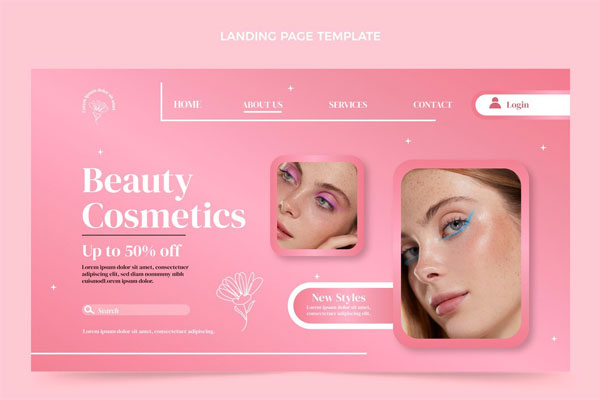
A cosmetic clinic’s website is often the first point of contact between a potential patient and the clinic. Before deciding to book a consultation, people commonly research treatments, practitioners, clinic facilities, qualifications, patient reviews, pricing information, and expected experiences online. A website that looks professional and provides useful information can make this research process easier and more reassuring.
For cosmetic clinics, appearance matters. Patients are often looking for a combination of expertise, safety, quality, and aesthetic excellence. The website needs to communicate these qualities without becoming difficult to navigate or overly focused on visual effects.
Effective cosmetic clinic website design combines attractive visuals with usability, informative content, mobile responsiveness, search engine optimization, accessibility, security, and clear calls to action. When these elements work together, a website can become an important tool for building credibility, generating inquiries, and supporting patient engagement.
What Makes a Cosmetic Clinic Website Professional?
A professional website is more than a collection of attractive images and service descriptions. It should provide visitors with a clear path through the information they need.
The design should reflect the clinic’s brand while maintaining consistency across pages. Typography, colors, imagery, spacing, navigation, buttons, and content should work together rather than compete for attention.
Cosmetic clinic website design should also be developed around the needs of prospective patients. Someone visiting the website should quickly understand what the clinic offers, who provides the treatments, where the clinic is located, and how to request further information or a consultation.
A professional website should feel polished without sacrificing simplicity.
Why Is Professional Website Design Important for Cosmetic Clinics?
1. Creates a Strong First Impression
First impressions can influence how people perceive a business. For a cosmetic clinic, the website is particularly important because prospective patients may associate the quality of the digital experience with the professionalism of the clinic itself.
An outdated layout, inconsistent branding, low-quality photographs, broken links, or difficult navigation can create doubts.
On the other hand, a clean and modern website can immediately communicate professionalism and attention to detail.
Cosmetic clinic website design should therefore create a visual identity that reflects the clinic’s values and target audience. A premium clinic may use elegant typography and refined imagery, while a more approachable practice may use warmer colors and friendly photography.
The design should feel authentic to the clinic rather than simply copying competitors.
2. Builds Patient Trust and Confidence
Trust is one of the most important factors in healthcare-related decisions. Cosmetic treatments can involve significant personal, financial, and emotional considerations, so patients often want substantial information before making contact.
A professional website can provide details about practitioners, qualifications, treatments, facilities, technology, and patient care.
Cosmetic clinic website design should make these trust-building elements easy to find. Doctor and practitioner profiles can explain experience and areas of specialization. Treatment pages can provide clear educational information. Testimonials, where appropriate, can offer insight into patient experiences.
The purpose is to give visitors enough reliable information to make informed decisions rather than relying solely on promotional language.
3. Makes Treatments Easier to Understand
Cosmetic clinics may offer a wide range of services, including surgical procedures, injectables, skin treatments, body treatments, and other aesthetic services.
If all services are presented on one crowded page, visitors may struggle to find the information relevant to them.
Cosmetic clinic website design can organize treatments into logical categories and provide dedicated pages for important services.
A treatment page might explain what the procedure involves, who may be suitable, preparation requirements, recovery information, frequently asked questions, and how to arrange a consultation.
Clear information architecture helps patients move through the website naturally and reduces confusion.
4. Improves the Patient Journey
The patient journey often begins before someone contacts the clinic. A prospective patient may first discover a treatment through search, read educational content, explore the clinic’s services, learn about practitioners, and then decide whether to request a consultation.
A website should support every stage of this journey.
Cosmetic clinic website design can connect related pages so that visitors can move easily from educational information to treatment details, practitioner profiles, and appointment options.
For example, someone reading about a particular treatment should be able to find information about the practitioner who provides it and easily locate the consultation process.
A well-planned website reduces unnecessary steps and makes the online experience more convenient.
5. Makes Consultation Booking Easier
The ultimate goal of many cosmetic clinic websites is to encourage qualified visitors to make an inquiry or consultation request.
A complicated booking process can discourage potential patients. If visitors cannot quickly identify how to contact the clinic, they may leave the website and look elsewhere.
Cosmetic clinic website design should include clear and consistent calls to action. Buttons such as “Book a Consultation,” “Contact Us,” or “Request an Appointment” should be visible without overwhelming the visitor.
Forms should be simple and request only information that is necessary. Phone numbers, email addresses, and other contact options should also be easy to find.
The fewer unnecessary barriers between a visitor and the clinic, the smoother the conversion journey can become.
6. Provides an Excellent Mobile Experience
Patients frequently use smartphones to research healthcare and cosmetic services. A website that works well only on a desktop computer can therefore lose potential visitors.
Responsive design allows a website to adapt to different screen sizes. Navigation, images, text, forms, and buttons should remain easy to use on smartphones and tablets.
Cosmetic clinic website design should prioritize mobile usability from the beginning. Visitors should be able to read treatment information, view practitioner profiles, locate the clinic, call the practice, and request a consultation from a mobile device.
A strong mobile experience also contributes to a more consistent brand image across different devices.
7. Supports Search Engine Visibility
A beautiful website is not useful if potential patients cannot find it. Search engine optimization can help cosmetic clinics become more visible when people search for relevant treatments and services.
Website structure plays an important role in SEO. Search engines need to understand what each page is about and how different pages are connected.
Cosmetic clinic website design should incorporate SEO-friendly elements such as descriptive page titles, logical headings, clean URLs, internal links, optimized images, mobile responsiveness, and fast loading times.
Dedicated service pages can also help the website provide more relevant information for specific search queries.
SEO should be considered during the design and development process rather than added after the website is complete.
8. Helps the Clinic Stand Out From Competitors
Cosmetic clinics often operate in competitive markets. Potential patients may compare several providers before making a decision.
A distinctive website can help a clinic communicate what makes its services different.
Cosmetic clinic website design can highlight areas such as practitioner expertise, specialized treatments, technology, facilities, patient care, or the clinic’s unique approach.
However, differentiation should not mean filling the website with excessive animations or unusual layouts. The strongest websites often stand out through consistent branding, high-quality content, professional photography, and a clear user experience.
The website should communicate why the clinic deserves consideration without making unsupported claims.
9. Showcases the Clinic’s Brand
Branding is particularly relevant to cosmetic businesses because patients often associate visual presentation with quality and professionalism.
A clinic’s website can establish a consistent brand through color palettes, typography, photography, logos, graphic elements, and tone of voice.
Cosmetic clinic website design should ensure that branding is consistent across every important page. If the homepage looks premium but treatment pages appear outdated or inconsistent, the overall impression can suffer.
Consistent branding can also make the clinic easier to recognize across search results, social media, advertisements, and other digital channels.
10. Makes Doctor and Practitioner Profiles More Accessible
Potential patients often want to know who will provide their treatment. A detailed practitioner profile can help answer this question.
Profiles can include qualifications, areas of expertise, professional experience, memberships, training, and relevant interests.
Professional photographs can make profiles feel more personal and approachable.
Cosmetic clinic website design should give practitioner information sufficient visibility rather than hiding it several clicks away from the homepage.
Connecting practitioner profiles with relevant treatment pages can also help visitors understand which professionals specialize in specific services.
11. Makes Before-and-After Galleries More Effective
Before-and-after galleries can be an important visual resource for cosmetic clinics. They can help prospective patients understand the types of results associated with particular procedures.
However, these galleries should be presented responsibly. Patient privacy should be respected, images should be authentic, and information should not imply that a particular outcome is guaranteed.
Cosmetic clinic website design can organize galleries by treatment category and provide appropriate context around each set of images.
High-quality images are important, but they should also be optimized so that they do not unnecessarily slow down the website.
12. Improves Website Speed
Website speed affects the overall user experience. Visitors may leave a page if it takes too long to load, particularly when accessing it from a mobile connection.
Cosmetic websites often contain many high-resolution images, videos, and interactive features. Without proper optimization, these elements can negatively affect performance.
Cosmetic clinic website design should balance visual quality with technical efficiency. Images can be compressed, modern formats can be used where appropriate, and unnecessary scripts or animations can be reduced.
A fast website allows prospective patients to access important information without unnecessary delays.
13. Provides Clear Location and Contact Information
Patients need to know where a clinic is located and how to contact it. This information should never be difficult to find.
The website should clearly display the clinic’s address, telephone number, email information, opening hours, and other relevant contact details.
Cosmetic clinic website design can place contact information in the header or footer and provide a dedicated contact page.
Location information can also include directions, parking details, transportation options, and maps where useful.
Making these details easy to access is particularly important for visitors who are already ready to arrange a consultation.
14. Supports Content Marketing
A clinic website can become a valuable educational resource through blogs, guides, FAQs, treatment explainers, and other informative content.
Content marketing can help answer patient questions while creating additional opportunities for the website to appear in search results.
Cosmetic clinic website design should provide a well-organized content section where articles can be categorized and searched easily.
Topics might include treatment preparation, recovery, frequently asked questions, skincare advice, procedure comparisons, and general educational information.
The content should be accurate, useful, and written for patients rather than created solely to include keywords.
15. Improves Accessibility
A professional website should be usable by visitors with different abilities and needs.
Accessibility can involve readable fonts, sufficient color contrast, descriptive alternative text for relevant images, accessible forms, logical headings, and keyboard-friendly navigation.
Cosmetic clinic website design should incorporate accessibility throughout the development process.
An accessible website can provide a better experience for a broader audience while demonstrating a commitment to inclusive communication.
16. Helps Protect Patient Information
Cosmetic clinic websites may include contact forms, consultation requests, appointment systems, or links to patient portals. Whenever personal information is involved, security and privacy need to be considered carefully.
Websites should use secure connections and appropriate safeguards. Clinics should also ensure that their digital processes comply with applicable privacy and healthcare requirements.
Cosmetic clinic website design should consider security as part of the overall website strategy rather than treating it as an optional technical feature.
A website that looks professional but fails to protect user information can undermine the trust it is designed to create.
17. Encourages Better Patient Education
Patients often have questions before deciding whether to explore a cosmetic procedure. A website can provide educational information that helps them prepare for a consultation.
Rather than simply listing treatments, clinics can explain what patients may want to discuss with their practitioner and what factors can influence treatment decisions.
Cosmetic clinic website design should give educational content enough space to remain useful and readable.
The goal is to help visitors understand their options without attempting to replace professional medical advice.
How Can a Cosmetic Clinic Improve Its Website?
The first step is to evaluate the website from the patient’s perspective.
A clinic can ask:
-
Can visitors quickly identify the services offered?
-
Are practitioner profiles easy to find?
-
Is consultation booking straightforward?
-
Does the website work properly on mobile devices?
-
Are treatment pages informative?
-
Is contact information clearly displayed?
-
Does the website load quickly?
-
Is the content easy to understand?
-
Are important pages accessible to people with disabilities?
-
Does the design accurately represent the clinic’s brand?
Cosmetic clinic website design should evolve as patient expectations, technology, services, and business goals change.
Analytics can also help identify pages that receive significant traffic, areas where visitors leave the website, and sections that generate consultation requests.
The Long-Term Value of Professional Website Design
A professional website should not be viewed as a one-time marketing expense. It can become a long-term digital asset for a cosmetic clinic.
As the clinic grows, the website can support new treatments, additional practitioners, educational resources, locations, campaigns, and patient services.
Cosmetic clinic website design should therefore be scalable. The underlying structure should make it possible to add new content without creating a confusing navigation system.
Regular updates to content, technology, security, performance, and design can help the website remain useful and competitive.
Conclusion
A professional website can have a significant impact on how prospective patients perceive and interact with a cosmetic clinic. It provides an opportunity to establish credibility, explain treatments, showcase practitioners, answer questions, simplify consultation booking, and create a consistent brand experience.
Strong cosmetic clinic website design combines aesthetics with functionality. The website should look polished, but it should also be fast, mobile-friendly, accessible, secure, easy to navigate, and optimized for search engines.
The most effective website is not necessarily the one with the most impressive visual effects. It is the one that helps visitors find relevant information quickly, understand the clinic’s services, develop confidence, and take the next appropriate step.
By investing in thoughtful website design, cosmetic clinics can create a stronger online presence and provide prospective patients with a more informative, convenient, and trustworthy digital experience.
Frequently Asked Questions
1. Why does website design matter for cosmetic clinics?
Website design creates an initial impression and influences how easily prospective patients can find information, evaluate services, learn about practitioners, and request consultations. A professional website can support credibility and patient engagement.
2. What should a cosmetic clinic website include?
A cosmetic clinic website should generally include treatment pages, practitioner profiles, consultation options, contact details, location information, FAQs, educational content, testimonials where appropriate, and relevant information about the clinic.
3. How can a cosmetic clinic website attract more patients?
A website can attract more potential patients by combining SEO, useful content, mobile-friendly design, clear treatment information, strong calls to action, professional branding, and an easy consultation process.
4. Is mobile-friendly design important for cosmetic clinics?
Yes. Many prospective patients use smartphones to research clinics and treatments. A responsive website ensures that content, navigation, forms, and contact options remain easy to use on smaller screens.
5. How can website design build trust with prospective patients?
Trust can be supported through professional branding, practitioner credentials, accurate treatment information, authentic testimonials where appropriate, quality photography, clear contact details, transparent communication, and a secure website experience.
6. Should cosmetic clinics have separate pages for each treatment?
Dedicated treatment pages can be useful because they allow clinics to provide detailed information about individual services. They can also improve website organization and provide opportunities for search engines to understand specific services.
7. How important are before-and-after photos on a cosmetic clinic website?
Before-and-after photos can help visitors understand the type of work a clinic provides. They should be authentic, presented responsibly, and accompanied by appropriate context rather than being used to guarantee specific outcomes.
8. Does website speed affect a cosmetic clinic website?
Yes. A slow website can frustrate visitors and make it harder for them to access treatment information. Optimizing images, scripts, and other website resources can improve performance and usability.
9. How often should a cosmetic clinic redesign its website?
There is no fixed timeframe. A redesign may be appropriate when the website becomes outdated, difficult to use, slow, poorly optimized for mobile devices, inconsistent with the brand, or unable to support the clinic’s current services and goals.
10. What is the most important feature of a cosmetic clinic website?
There is no single feature that matters most. The strongest websites combine clear information, intuitive navigation, mobile responsiveness, professional branding, fast performance, accessible design, strong practitioner profiles, and simple consultation pathways.
Learn More – https://webdesigningdubaiuae.blogspot.com/2026/09/why-professional-hotel-website-design.html