

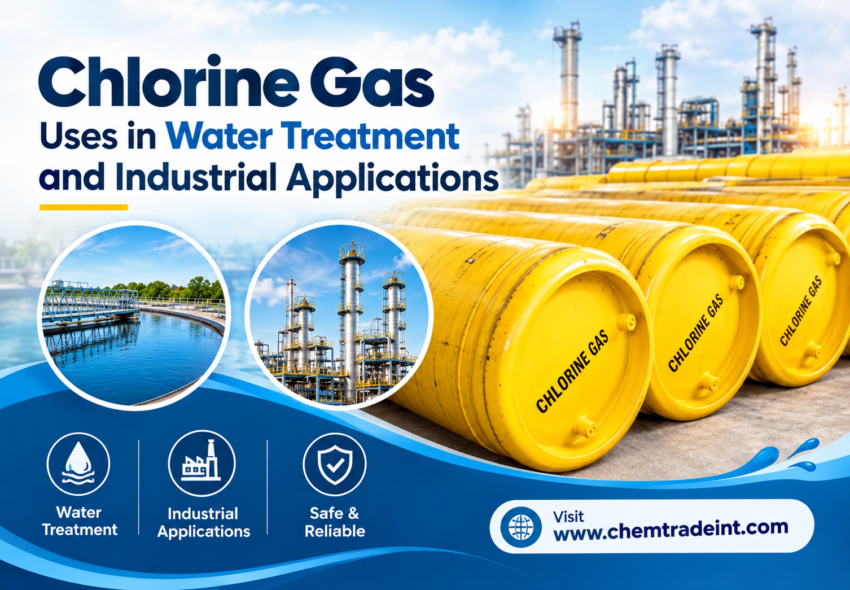
Chemtrade International Corporation is a trusted name in providing industrial solutions related to chlorine and water treatment requirements. Chlorine Gas is an important chemical used across water treatment, sanitation, chemical processing, and several industrial applications. Due to its strong disinfecting properties, it plays an important role in maintaining water quality and supporting various industrial processes. Understanding its uses, benefits, handling requirements, and applications can help industries select suitable solutions for their operational needs.
What Is Chlorine Gas?
Chlorine Gas is a reactive chemical substance commonly used for disinfection and industrial processing. It has applications in municipal water treatment plants, wastewater treatment facilities, chemical industries, pulp and paper processing, and other sectors.
Because chlorine is hazardous when improperly handled, its storage, transportation, dosing, and use require appropriate equipment, trained personnel, ventilation, monitoring systems, and established safety procedures.
Chlorine Gas in Water Treatment
One of the most important applications of chlorine is water disinfection. Water treatment plants use chlorine-based processes to control microorganisms and improve the microbiological quality of treated water.
Chlorine can be used in municipal water supplies, industrial water treatment systems, swimming pool treatment, and wastewater applications. When appropriately controlled, chlorination helps reduce harmful microorganisms and supports safer water distribution.
Key Uses in Water Treatment
|
Application |
Purpose |
|
Drinking Water Treatment |
Microbial disinfection |
|
Wastewater Treatment |
Reduction of microorganisms |
|
Industrial Water |
Process-water sanitation |
|
Swimming Pools |
Water disinfection |
|
Municipal Treatment |
Maintaining water quality |
Mild Steel Chlorine Gas Cylinder
For industries that use chlorine, suitable storage and handling equipment is essential. A Mild Steel Chlorine Gas Cylinder is designed for the storage and transportation of chlorine under controlled conditions and is used in industrial environments where compatible cylinder systems are required.
The selection of a cylinder should consider applicable standards, capacity, inspection requirements, valves, compatibility, and operating conditions. Cylinders should always be handled by trained personnel and stored in designated areas according to applicable safety regulations.
Liquid Chlorine Gas and Its Applications
Liquid Chlorine Gas refers to chlorine maintained in a liquefied form under suitable pressure and temperature conditions. Commercial chlorine is commonly stored and transported as a liquefied gas, allowing significant quantities to be handled efficiently.
Liquid chlorine systems require specialized equipment and strict safety controls. Facilities using chlorine should have appropriate leak detection, ventilation, emergency response procedures, personal protective equipment, and trained operators.
Liquid Chlorine in Industrial Applications
Liquid Chlorine has applications beyond municipal water treatment. It is used in several chemical manufacturing processes and industrial operations where chlorine chemistry is required.
Some common industrial applications include:
- Water and wastewater disinfection
- Chemical manufacturing
- Pulp and paper processing
- Production of chlorinated compounds
- Industrial sanitation
- Certain textile and manufacturing processes
The exact application depends on the industry’s process requirements and regulatory standards.
Role of Industrial Salt in Chlorine Production
Industrial Salt is an important raw material in the chlor-alkali industry. In chlor-alkali processes, salt is used to produce chlorine along with other valuable chemicals such as caustic soda and hydrogen.
High-quality raw materials and properly controlled industrial processes are important for achieving consistent production and operational efficiency. Industrial salt therefore has an important role in the broader chlorine manufacturing supply chain.
Benefits of Chlorine Gas in Water Treatment
Chlorine-based disinfection provides several important benefits when used correctly and under controlled conditions.
Major Benefits
- Effective Disinfection: Chlorine helps control many microorganisms in water.
- Suitable for Large-Scale Treatment: It can be used in municipal and industrial treatment facilities.
- Residual Protection: Properly managed chlorination can provide residual disinfectant protection within distribution systems.
- Established Technology: Chlorination is a widely established water treatment method.
- Industrial Versatility: Chlorine is also useful in multiple chemical and manufacturing processes.
Advantages of Chlorine-Based Treatment
The major advantages include scalability, established treatment practices, and the ability to integrate chlorine dosing into large water treatment systems. However, chlorine is a hazardous substance, so these advantages must always be balanced with appropriate safety management.
|
Advantage |
Description |
|
Large-Scale Use |
Suitable for high-volume treatment systems |
|
Effective Disinfection |
Helps control microorganisms |
|
Established Process |
Widely used in water treatment |
|
Industrial Applications |
Useful across multiple industries |
|
Controlled Dosing |
Treatment levels can be monitored and managed |
Safe Handling and Storage
Safety should always be the first priority when working with chlorine. Facilities should follow applicable local regulations and manufacturer instructions for storage, transportation, and operation.
Important safety practices include maintaining appropriate ventilation, installing suitable gas detection systems, restricting unauthorized access, conducting regular equipment inspections, and providing emergency response training.
Chlorine cylinders and related equipment should be kept in designated storage areas. Operators should never attempt to repair or modify chlorine equipment without appropriate authorization and technical expertise.
How to Choose the Right Chlorine Solution?
Before selecting chlorine-related equipment or products, industries should evaluate their treatment capacity, application, storage requirements, regulatory requirements, operating conditions, and safety infrastructure.
A professional supplier can help businesses understand suitable product specifications and application requirements. Proper planning can improve operational reliability while supporting safer handling practices.
Frequently Asked Questions (FAQs)
1. What is Chlorine Gas mainly used for?
Chlorine Gas is widely used for water and wastewater disinfection and is also used in various chemical and industrial processes.
2. What is a Mild Steel Chlorine Gas Cylinder used for?
A Mild Steel Chlorine Gas Cylinder is used for controlled storage and transportation of chlorine in suitable industrial applications, subject to applicable standards and safety requirements.
3. Is Liquid Chlorine the same as Chlorine Gas?
They are different physical forms of chlorine. Chlorine can exist as a gas under normal atmospheric conditions and can be stored as a liquid under appropriate pressure and temperature conditions.
4. What is the role of Industrial Salt in chlorine production?
Industrial Salt is a key raw material used in chlor-alkali processes for producing chlorine and other important chemical products.
5. Why is chlorine safety important?
Chlorine can be hazardous if released or handled improperly. Proper equipment, training, monitoring, ventilation, storage, and emergency procedures are essential.
Conclusion
Chlorine has an important role in modern water treatment and industrial applications. From water disinfection to chemical manufacturing, its controlled use supports numerous essential processes. Chlorine Gas, Mild Steel Chlorine Gas Cylinder, Liquid Chlorine Gas, Liquid Chlorine, and Industrial Salt are all connected to different stages and applications within the broader chlorine industry.
For product information, industrial requirements, and further assistance, contact us at +91 97254 16517.