

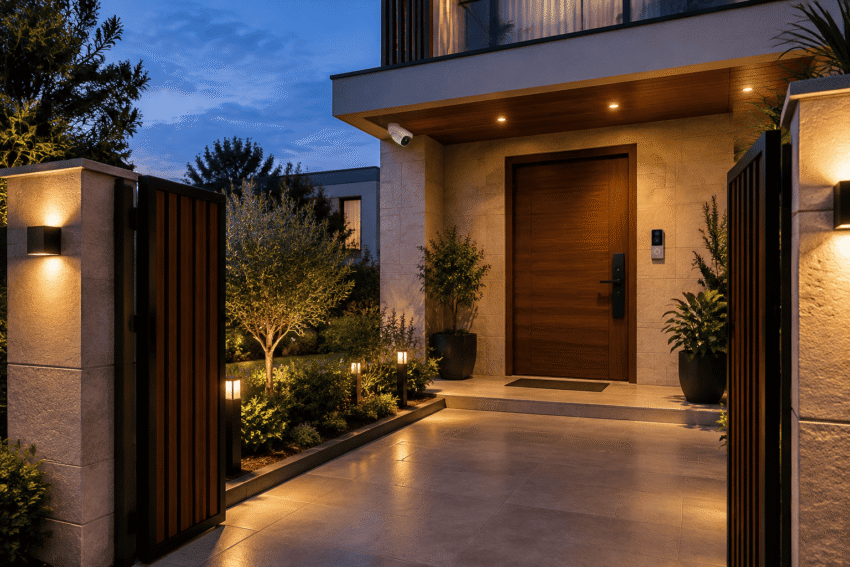
Many homeowners believe their home is secure because a few CCTV cameras are mounted outside. Cameras are valuable, but on their own they mostly record what has already happened. Real home security works in layers, where each part covers a gap the others leave open.
A well-planned system does three things: it discourages intruders, detects problems early and lets you respond quickly, even when you are away from home.
Layer 1: Deterrence
The first goal is to make your home look like a difficult target. Visible cameras, a well-lit entrance and lights that switch on when someone approaches all send a clear message that the property is watched and cared for.
Outdoor lighting is often overlooked in security planning. Dark corners beside a gate, an unlit side passage or a pitch-black garden give anyone an easy place to stay unseen. Motion-activated lights at entrances, pathways and boundary walls remove those hiding spots and make arrivals safer for family members too.
Layer 2: Detection
Detection is about knowing the moment something is wrong. This is where alarms and sensors come in.
Door and window sensors alert you when an entry point is opened while the system is armed.
Motion detectors cover rooms and corridors inside the home.
Glass-break and vibration sensors can add protection for large windows and sliding doors.
Modern wireless alarm systems send instant notifications to your phone, so you are informed within seconds rather than discovering a problem hours later.
Layer 3: Visibility
CCTV cameras provide the visual record and allow you to check on your home live from anywhere. To be genuinely useful, a camera system should be planned rather than simply installed.
Good planning covers clear coverage of every entry point, including gates, main doors, back doors and parking areas. It includes night vision so footage remains useful after dark, and enough recording storage so footage is not overwritten before you need it. Power backup keeps cameras running during outages, and secure remote access lets you view cameras safely on your phone.
A common mistake is placing cameras where they look impressive rather than where they are most needed. A short site survey before installation helps avoid blind spots.
Layer 4: Access Control
Controlling who can enter is just as important as watching who comes near. Video door phones let you see and speak to visitors before opening the door. Smart door locks remove the worry of lost keys and allow temporary access codes for staff or guests. In apartments and gated communities, access control at entrances and lifts adds another level of protection.
Bringing It Together
The real strength of a modern security system comes from integration. When cameras, alarms, locks and lighting work together, the home can respond intelligently. An alarm can switch on all outdoor lights at once. A “leaving home” mode can lock doors, arm sensors and switch off unnecessary lights with a single tap. While you are travelling, lights can switch on and off in the evening so the house looks lived in.
This coordinated approach gives homeowners something cameras alone cannot: peace of mind.
The best time to plan home security is during construction or renovation, when cabling, camera points and sensor positions can be decided alongside the interiors. Existing homes can still be upgraded effectively with wireless alarms and modern cameras.
Every home is different, so a professional site assessment is the most reliable starting point. Experienced integrators such as Brightmatic design home security systems that combine CCTV, alarms, access control and smart lighting into one easy-to-use system.
Final Thoughts
Security is not about filling a home with gadgets. It is about planning protection in layers so that each part supports the others. When deterrence, detection, visibility and access control work together, a home becomes safer, simpler to manage and far more reassuring to live in.