

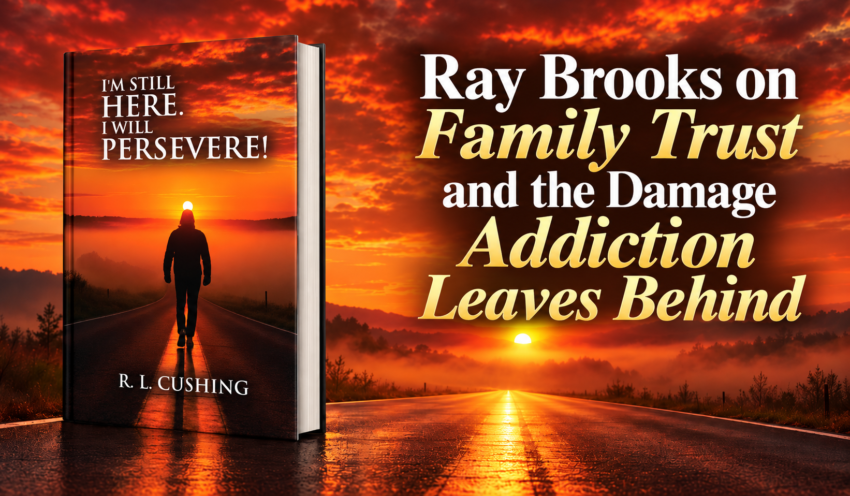
Addiction can take money, jobs, health, and freedom, but Ray Brooks’s I’m Still Here! I Will Persevere! Addiction to Redemption keeps returning to another loss that is harder to measure: trust. Brooks loved his wife and sons, yet his cocaine and crack use repeatedly pushed him into secrecy, broken promises, disappearances, and choices that made the people closest to him question what they could believe. His memoir shows that family damage does not happen only during the moments of drug use. It continues in the waiting, suspicion, embarrassment, missed time, and emotional exhaustion that surround those moments.
Love Does Not Protect a Family From Addiction
Brooks’s marriage begins with genuine affection. He remembers meeting his future wife, spending time together, building a home, traveling, getting married, and enjoying a close partnership. Their relationship was not false simply because addiction later damaged it.
That makes the decline more painful. Brooks wanted the marriage, but he also kept using. He could love his wife and still lie about where he had been. He could understand her anger and still relapse. The contradiction appears throughout the memoir.
The book makes an important distinction: caring about someone does not automatically make a person dependable.
Secrecy Changes Everyday Life
Trust begins to erode when ordinary questions no longer have ordinary answers. Brooks describes hiding crack use, waiting until his wife was asleep, and inventing explanations for delays. A simple question about where he had been could require a lie.
One major turning point comes when he fails a drug test for a respected power company. The opportunity could have improved their financial future, but the failure also embarrassed his wife because she knew people connected with the company. Brooks remembers her anger not only about the lost job but also about being placed in a situation she never chose.
Children Experience the Missing Time
Brooks’s relationship with his sons adds another dimension. He clearly takes pride in them. He remembers sports, academic achievements, Scouting, graduations, girlfriends, careers, and later family milestones. His affection is obvious.
During the worst years, legal trouble, divorce, addiction, and incarceration reduce his presence in their lives. When he later sees his sons during jail visitation, he confronts the reality that they are growing while he is confined. After his car accident, he reconnects with them in the hospital and asks what he has missed.
Their lives are full of progress. That is good news, but it also reminds Brooks that childhood does not wait for a parent to become ready.
Trust Returns Through Repeated Presence
The later chapters do not show one conversation fixing the family. Brooks gradually becomes involved again. He attends sporting events and graduations. He follows his sons’ careers. Holidays bring family members together. His relationship with his ex-wife becomes more workable in certain situations.
Brooks’s later sobriety gives those repeated moments room to accumulate. He becomes easier to locate, more predictable, and more involved in ordinary family life. He cannot recover the events he missed, but he can stop creating new absences.
Boundaries Can Be Part of Love
Family trust is not the only form of trust rebuilt in the memoir. Nurses, aides, case managers, and healthcare professionals also have to decide what behavior they will accept. Two companies eventually stop serving Brooks because substance use creates unsafe and unmanageable situations.
A later nurse, Heather, takes a firmer approach. She makes clear that continued crack use could threaten his care, benefits, and stability. Brooks may not enjoy those limits, but they become part of the structure that helps him change.
The relationship shows that supporting someone does not always mean protecting that person from consequences. Sometimes trust requires a boundary strong enough to be believed.
Redemption Does Not Erase Memory
By the final chapters, Brooks is living a far more stable life. He is sober, connected to family, working, attending therapy, and surrounded by people he considers extended family. The difference is meaningful, but the memoir never suggests that the earlier damage vanished.
That honesty gives the redemption credibility. Brooks can be grateful for the relationships he has without pretending he handled them well in the past.
Ray Brooks’s story reminds readers that addiction affects families through more than dramatic crises. It changes conversations, expectations, schedules, finances, reputations, and the emotional meaning of promises. Trust is damaged in small moments before it is visibly broken.
It can be rebuilt through small moments: showing up, telling the truth, respecting boundaries, and keeping promises consistently.
Trust grows when actions become dependable.
In Addiction to Redemption, that slow return to reliability becomes one of the clearest signs that recovery is no longer only something Brooks says he wants. It becomes something the people around him can finally experience with him.