

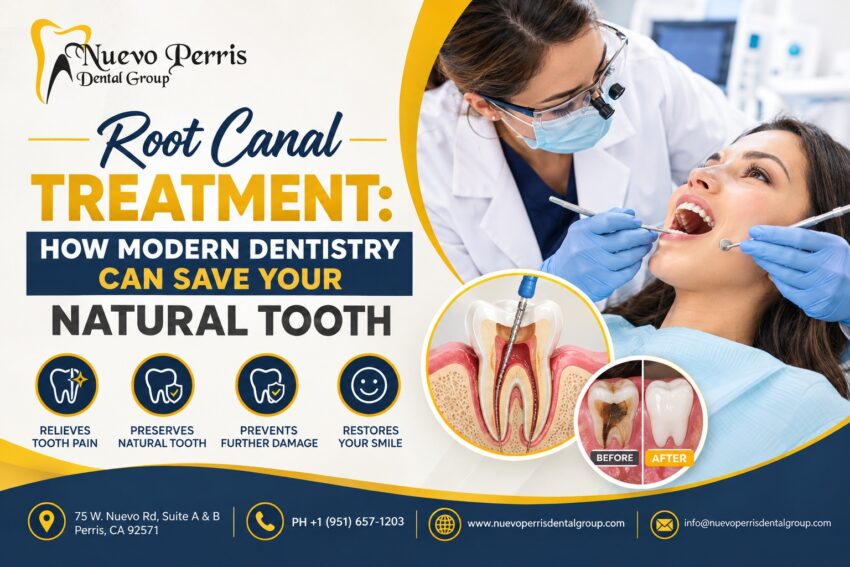
Tooth pain can make everyday activities like eating, drinking, and sleeping uncomfortable. Sometimes, the discomfort may indicate a problem deep inside the tooth that requires professional dental care. Root canal treatment is a common dental procedure that helps treat infection or inflammation inside a tooth while preserving its natural structure. With modern dental techniques and proper care, this treatment can help patients relieve discomfort and maintain their natural smiles.
At Nuevo Perris Dental in Perris, California, patients can explore dental treatment options based on their individual needs. Understanding how root canal treatment works can help you make informed decisions about your oral health and know when it may be time to schedule a dental examination.
Root canal treatment is a dental procedure that treats problems affecting the pulp, the soft tissue inside a tooth. The pulp contains nerves and blood vessels that help the tooth develop. When bacteria enter the pulp because of deep decay, cracks, or dental injuries, inflammation or infection may develop.
If the affected pulp cannot heal on its own, a dentist may recommend root canal treatment. During the procedure, the damaged pulp is removed, the inside of the tooth is carefully cleaned, and the root canals are sealed to help prevent further infection.
Rather than removing the entire tooth, this treatment aims to preserve the remaining natural tooth structure. Saving a natural tooth can help maintain normal chewing function and prevent some of the complications associated with tooth loss.
Benefits of Saving Your Natural Tooth
One of the main goals of root canal treatment is to preserve your natural tooth whenever possible. Keeping the tooth can help maintain your bite and allow you to continue chewing with your existing teeth.
Root canal treatment may also help relieve pain caused by inflammation or infection inside the tooth. By treating the source of the problem, the procedure can help prevent the need for extraction when the tooth can be successfully restored.
Preserving a natural tooth may also reduce the need for certain replacement treatments. However, every case is different, and your dentist can explain whether root canal treatment, extraction, or another option is most appropriate for your situation.