

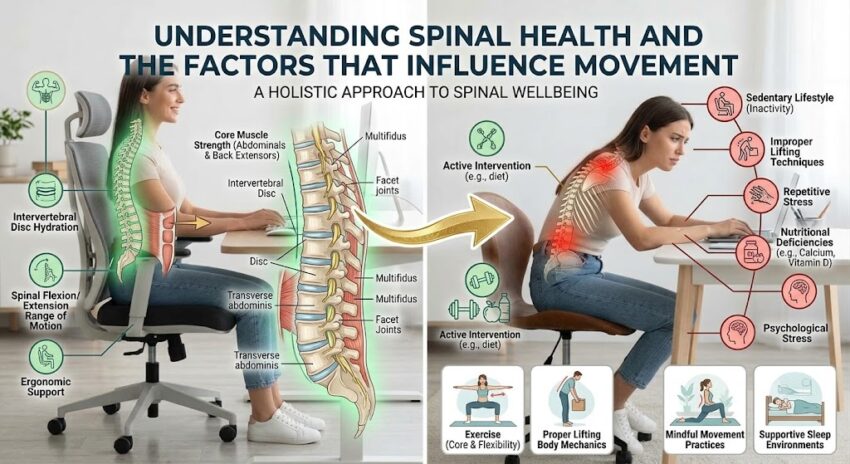
Spinal health plays an important role in everyday movement, posture, balance, and physical comfort. The spine supports the body while allowing people to bend, turn, walk, sit, and perform routine activities. When the structures around the spine become strained or undergo gradual changes, movement may become uncomfortable or restricted.
Neck and upper-spine concerns are especially common because the cervical spine supports the head and participates in many daily movements. At the same time, spinal alignment can also be affected by curvature conditions such as scoliosis. Understanding these concerns, their symptoms, and the role of movement can help people make informed decisions about maintaining spinal health.
Understanding Neck and Upper-Spine Problems
The cervical spine contains small bones, joints, discs, muscles, and connective tissues that work together to support neck movement. Everyday activities such as looking down at a phone, working at a computer, driving, or maintaining the same position for extended periods can place additional stress on this area.
Poor posture may contribute to muscle tension and restricted neck mobility. Some people may experience neck pain, shoulder discomfort, headaches, or spinal stiffness. Others may notice that turning or tilting the head becomes less comfortable than usual.
Age-related degenerative changes can also influence the discs and joints of the cervical spine. These changes do not always cause symptoms, but when discomfort or movement limitations occur, professional assessment can help determine the underlying factors.
How Posture and Screen Use Affect the Neck
Modern work and lifestyle habits can influence spinal health. Spending long periods using computers, tablets, or smartphones may encourage the head and neck to remain in a forward position. Repeating this posture can increase muscular fatigue and make existing posture problems more noticeable.
Helpful daily habits include:
- Keeping screens at a comfortable viewing height
- Avoiding prolonged static sitting
- Changing positions regularly throughout the day
- Supporting the lower back while sitting
- Keeping the shoulders relaxed rather than raised
- Taking short movement breaks during desk-based activities
- Using comfortable sleeping and working positions
These habits are not intended to replace professional care, but they can support better movement patterns and reduce unnecessary strain during everyday activities.
Assessment and Management of Cervical Spine Concerns
When neck discomfort continues, becomes more noticeable, or affects normal activities, an appropriate clinical assessment can help identify contributing factors. A healthcare professional may consider symptoms, movement patterns, posture, muscle strength, flexibility, and functional limitations.
Depending on the findings, a physiotherapy-based approach may focus on improving neck mobility, strengthening supporting muscles, correcting movement habits, and increasing flexibility. Treatment plans should be individualized because the cause and severity of symptoms can differ between people.
For people researching cervical spondylosis treatment, it is important to understand that management generally depends on the individual’s symptoms, physical findings, lifestyle, and overall spinal health. Professional guidance can help determine which exercises, mobility techniques, or other approaches are appropriate.
Recognizing Spinal Curvature and Scoliosis
Spinal health also involves maintaining an appropriate overall alignment of the spine. Scoliosis is a condition in which the spine develops an abnormal sideways curvature. The appearance and effects of scoliosis can vary considerably, and some people may have noticeable changes in spinal alignment while experiencing few symptoms.
Possible signs can include uneven shoulders, differences in hip height, an uneven waistline, or changes in the appearance of the back. Some individuals may also experience muscle fatigue, discomfort, or reduced flexibility.
Assessment is important because spinal curvature can have different patterns and may require different management strategies. A healthcare professional can evaluate posture, spinal alignment, movement, and other relevant factors before recommending an appropriate approach.
Physiotherapy and Movement for Scoliosis
Physiotherapy can play a supportive role in managing movement limitations associated with scoliosis. The exact approach depends on the individual’s age, physical condition, spinal curvature, symptoms, and functional needs.
A treatment plan may include:
- Gentle mobility exercises
- Strengthening of supporting muscles
- Flexibility exercises
- Postural awareness
- Balance and movement training
- Education about safe daily activities
- Exercises designed around individual movement patterns
People looking for scoliosis treatment malaysia may benefit from choosing a qualified healthcare professional who can assess their specific condition rather than relying on a generalized exercise routine. A personalized assessment is particularly useful because exercises that are suitable for one person may not be appropriate for another.
Building Better Spinal Health Through Daily Movement
Maintaining spinal health does not necessarily require major lifestyle changes. Consistent attention to movement, posture, flexibility, and strength can support comfortable physical activity.
Simple strategies include alternating between sitting, standing, and walking when possible. Gentle stretching can help maintain flexibility, while appropriate strengthening exercises can support the muscles around the spine. Maintaining awareness of head, shoulder, and pelvic positioning may also help reduce unnecessary strain during routine activities.
It is equally important to avoid suddenly increasing physical activity without adequate preparation. Gradual progression allows the body to adapt to new movement demands and can make exercise more manageable.
When Professional Assessment May Be Important
Persistent or worsening spinal symptoms should not simply be ignored. Professional evaluation may be appropriate when discomfort interferes with work, sleep, walking, exercise, or other everyday activities.
Certain symptoms, such as significant weakness, numbness, loss of coordination, severe or rapidly worsening pain, or changes in bladder or bowel control, require prompt medical attention.
A qualified healthcare professional can help distinguish between common muscular discomfort, movement-related problems, degenerative changes, and conditions requiring further investigation.
Conclusion
Good spinal health depends on a combination of appropriate movement, posture, muscle strength, flexibility, and awareness of individual physical needs. Neck and upper-spine concerns can be influenced by repetitive positions and everyday habits, while conditions involving spinal curvature require their own assessment and management considerations.
Rather than relying on a one-size-fits-all approach, people experiencing ongoing symptoms can benefit from professional evaluation and an individualized plan. Building sustainable movement habits and addressing posture concerns early can support better physical function and long-term spinal wellbeing.