
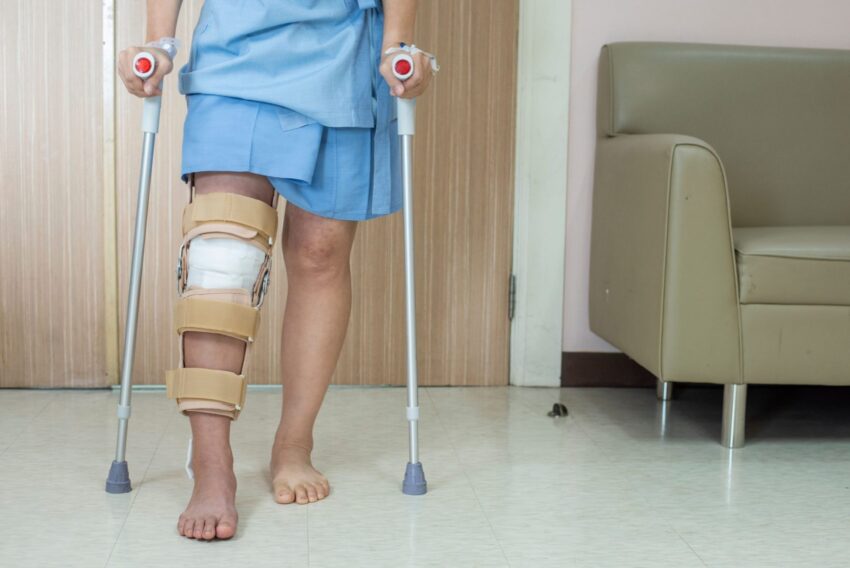
Recovery requires more than simply waiting for pain and swelling to disappear. A structured rehabilitation program can help restore knee movement, strength, stability, balance, coordination, and confidence. Depending on the injury and the individual’s goals, rehabilitation may be recommended with or without surgery.
For people seeking Acl Injury Treatment Dubai, professional physiotherapy can be an important part of the recovery journey. Vitruvian Italian Physiotherapy Center in Dubai provides physiotherapy and rehabilitation services that can be considered as part of an individualized ACL recovery program.
Understanding the ACL and Its Function
The anterior cruciate ligament is one of the major ligaments inside the knee. It connects the thigh bone, or femur, with the shin bone, or tibia, and contributes to knee stability during movement.
The ACL helps control excessive forward movement of the tibia relative to the femur and contributes to rotational stability. This is particularly important during activities involving:
- Running
- Jumping
- Landing
- Pivoting
- Cutting
- Sudden changes of direction
- Deceleration
When the ACL is injured, the knee may become painful, swollen, unstable, or difficult to use normally. The extent of symptoms can vary considerably from one person to another.
What Causes an ACL Injury?
ACL injuries can occur through contact or non-contact mechanisms.
A non-contact injury may happen when a person suddenly changes direction while running, lands awkwardly after a jump, or stops rapidly. A contact injury can occur when another player or external force causes the knee to move beyond its normal range.
Common situations associated with ACL injuries include:
- Sudden direction changes
- Incorrect landing mechanics
- Rapid stopping
- Pivoting
- Sports collisions
- Hyperextension
- Awkward twisting of the knee
Sports that require frequent cutting and pivoting can place substantial demands on the ACL.
Common Symptoms of an ACL Injury
Symptoms can appear immediately or develop shortly after the injury.
Common signs may include:
- Sudden knee pain
- Swelling
- Difficulty bearing weight
- Reduced knee movement
- A feeling of instability
- Difficulty walking normally
- Reduced confidence in the affected leg
- A sensation of the knee giving way
- Difficulty returning to sports
Some people report hearing or feeling a “pop” when the injury occurs, although this does not happen in every case.
A professional assessment is important because symptoms similar to an ACL injury can also occur with meniscus injuries, collateral ligament injuries, fractures, cartilage problems, or other knee conditions.
How an ACL Injury Is Diagnosed
Diagnosis generally begins with a clinical assessment. A healthcare professional may ask how the injury occurred and examine knee movement, swelling, stability, and function.
Special clinical tests may be used to evaluate ligament stability. Depending on the circumstances, imaging such as magnetic resonance imaging (MRI) may also be recommended to assess the ACL and determine whether other structures have been injured.
An ACL injury should not be diagnosed solely on the basis of pain or swelling.
Once the nature of the injury is understood, the patient and healthcare team can determine an appropriate rehabilitation strategy.
Why Early Rehabilitation Matters
The early period following an ACL injury often focuses on controlling symptoms and restoring basic knee function.
The initial objectives may include:
- Managing swelling
- Improving knee movement
- Restoring the ability to walk appropriately
- Maintaining muscle activation
- Reducing stiffness
- Building a foundation for later strengthening
A patient may initially find it difficult to fully straighten or bend the knee. Restoring appropriate movement is therefore an important part of early rehabilitation.
For individuals pursuing Acl Injury Treatment Dubai, early physiotherapy can provide structured guidance on movement, exercise progression, and functional recovery.
The Different Stages of ACL Rehabilitation
ACL rehabilitation is generally progressive. The exercises and activities appropriate during the first few weeks may be very different from those used when preparing an athlete to return to competitive sport.
A typical rehabilitation pathway may include several stages:
- Initial assessment and symptom management
- Restoration of knee movement
- Strength development
- Balance and neuromuscular training
- Functional movement
- Running progression
- Sport-specific training
- Return-to-sport assessment
The precise timeline varies according to whether the ACL is treated conservatively or surgically, the presence of additional injuries, the individual’s physical condition, and their rehabilitation goals.
Stage One: Managing Pain and Swelling
Immediately following an ACL injury, the knee may become swollen and difficult to move.
The first rehabilitation stage generally focuses on restoring comfortable movement and basic function.
A physiotherapist may work with the patient on:
- Appropriate mobility exercises
- Quadriceps activation
- Gentle range-of-motion exercises
- Walking mechanics
- Gradual weight-bearing
- Individualized symptom-management strategies
The goal is to establish a stable foundation for progressive rehabilitation.
Stage Two: Restoring Knee Mobility
Regaining knee extension and flexion is an important rehabilitation objective.
Limited knee movement can affect walking mechanics and make strengthening more difficult. Physiotherapy may therefore include controlled exercises designed to gradually improve range of motion.
Depending on the patient’s condition, exercises may involve:
- Heel slides
- Controlled knee bends
- Straight-leg exercises
- Gentle mobility movements
- Cycling when appropriate
The intensity and range should be adapted to the individual’s stage of recovery.
Stage Three: Rebuilding Muscle Strength
Following an ACL injury, the quadriceps and other muscles around the knee can become weaker. This weakness may develop because of reduced activity, swelling, pain, or protective movement patterns.
Strengthening is therefore a central component of ACL rehabilitation.
Exercises may eventually include:
- Quadriceps strengthening
- Hamstring strengthening
- Glute strengthening
- Calf strengthening
- Squats
- Step exercises
- Leg presses
- Controlled lunges
The program should progress gradually. Exercise selection depends on the patient’s condition and whether surgery has been performed.
The Importance of Quadriceps Strength
The quadriceps play an important role in knee function. Following ACL injury or reconstruction, restoring quadriceps strength can be particularly challenging.
Weakness can affect:
- Walking
- Stair climbing
- Squatting
- Running
- Jumping
- Landing
- Overall confidence
A structured rehabilitation program progressively challenges the quadriceps while also developing the strength of the surrounding hip and lower-leg muscles.
Balance and Neuromuscular Training
ACL rehabilitation is not only about muscle strength. The nervous system also needs to relearn how to control the knee during movement.
Balance and neuromuscular exercises may include:
- Single-leg standing
- Controlled stepping
- Weight-shifting exercises
- Balance-board activities
- Single-leg squats
- Dynamic balance drills
- Coordination exercises
These exercises can help develop control during movements that place greater demands on the knee.
For athletes, neuromuscular training becomes increasingly important as rehabilitation progresses toward running, jumping, cutting, and sport-specific movements.
ACL Rehabilitation After Surgery
Some ACL injuries are treated with surgical reconstruction, particularly when the patient wants to return to activities involving significant pivoting and cutting or when the knee remains unstable.
ACL reconstruction involves replacing the injured ligament with a graft. Rehabilitation after surgery is an extended process rather than a single treatment phase.
Postoperative physiotherapy may focus on:
- Managing postoperative swelling
- Restoring knee movement
- Activating muscles
- Progressively rebuilding strength
- Improving balance
- Developing movement control
- Gradually restoring running ability
- Preparing for sports-specific activities
The rehabilitation program should follow the surgeon’s instructions and the patient’s individual healing progress.
ACL Rehabilitation Without Surgery
Not every ACL injury necessarily requires reconstruction.
Some individuals may undergo non-operative rehabilitation depending on factors such as the extent of the injury, knee stability, associated injuries, activity requirements, and personal goals.
Conservative rehabilitation may emphasize:
- Strength development
- Neuromuscular control
- Balance
- Functional movement
- Activity modification
- Progressive return to physical activity
The decision between surgical and non-surgical management should be made with an appropriately qualified medical professional after considering the individual’s circumstances.
The Role of Physiotherapy in ACL Injury Treatment
Physiotherapy can provide structure throughout the recovery process.
For someone seeking Acl Injury Treatment Dubai, physiotherapy may help address several components of rehabilitation rather than focusing solely on pain.
These may include:
- Knee mobility
- Muscle strength
- Balance
- Proprioception
- Coordination
- Walking mechanics
- Running mechanics
- Landing technique
- Functional performance
- Sport-specific movement
The physiotherapist can also modify the program as the patient becomes stronger and more capable.
Running After an ACL Injury
Returning to running should generally be gradual.
Before beginning running, a patient may need sufficient:
- Knee mobility
- Strength
- Balance
- Single-leg control
- Functional capacity
- Confidence
A physiotherapist can introduce a progressive running program when appropriate.
The progression may move from walking to short intervals of jogging and eventually toward continuous running. Speed, distance, direction changes, and intensity can then be increased according to individual progress.
Jumping and Landing Rehabilitation
Jumping and landing are particularly important for athletes returning to sports.
Poor landing mechanics can increase the demands placed on the knee. Rehabilitation may therefore include controlled jumping and landing exercises once the patient has developed an adequate foundation of strength and movement control.
Training may progress from:
- Two-leg landing
- Controlled vertical jumping
- Single-leg landing
- Forward and lateral movements
- Repeated jumps
- Sport-specific jumping
Quality of movement is generally more important than rushing to higher intensity.
Returning to Sport After ACL Rehabilitation
One of the biggest goals for many ACL patients is returning to their preferred sport.
However, returning to sport should not be based solely on the number of months since injury or surgery.
Functional readiness may involve evaluating:
- Knee strength
- Leg symmetry
- Balance
- Jumping ability
- Landing mechanics
- Running performance
- Change-of-direction ability
- Sport-specific skills
- Confidence
A gradual return-to-sport pathway can help the athlete rebuild physical capacity before participating in unrestricted competition.
Preventing Future ACL Problems
Rehabilitation can also focus on improving movement quality and reducing modifiable factors associated with future injury.
Training may include:
- Strength exercises
- Balance work
- Jump-landing technique
- Agility exercises
- Core and hip strengthening
- Deceleration training
- Sport-specific movement
Athletes can benefit from maintaining these physical qualities even after they have returned to competition.
ACL Rehabilitation for Different Types of Athletes
ACL recovery is not identical for every athlete.
A recreational runner may have different requirements from a football player. A basketball athlete may require extensive jumping and landing preparation, while a tennis player may need greater emphasis on lateral movement and rapid changes of direction.
A personalized rehabilitation program can therefore consider the specific demands of the sport.
For example:
Football: Cutting, sprinting, tackling, and rapid direction changes.
Basketball: Jumping, landing, pivoting, and acceleration.
Tennis: Lateral movement, lunging, stopping, and directional changes.
Running: Progressive distance, speed, and endurance.
This sport-specific approach can help bridge the gap between basic rehabilitation and real-world athletic performance.
The Role of the Hip and Core in ACL Rehabilitation
ACL rehabilitation should not focus exclusively on the knee.
The hip and core contribute to lower-limb alignment and movement control. Weakness or poor control in these areas can influence how the leg behaves during squatting, landing, running, and cutting.
Exercises may therefore target:
- Gluteal muscles
- Hip abductors
- Hip extensors
- Core muscles
- Pelvic control
Developing strength throughout the lower kinetic chain can support better functional movement.
How Long Does ACL Recovery Take?
ACL recovery timelines vary significantly.
The duration can depend on:
- Whether surgery was performed
- Type of surgical procedure
- Associated meniscus or cartilage injuries
- Initial strength and fitness
- Patient age
- Rehabilitation consistency
- Sport requirements
- Individual healing
- Functional progress
ACL reconstruction rehabilitation often takes many months, particularly for athletes aiming to return to high-demand sports.
It is important not to treat a particular calendar date as a guarantee of readiness. Functional performance and medical guidance should help determine when progression is appropriate.
How Home Exercises Support ACL Recovery
Clinic-based physiotherapy is only one part of rehabilitation.
Home exercises can help patients continue developing strength and movement between appointments.
A home program may contain:
- Mobility exercises
- Strengthening exercises
- Balance training
- Flexibility work
- Movement-control exercises
- Functional activities
Consistency is essential. Patients should follow the program provided by their physiotherapist and communicate any unusual changes in symptoms.
Monitoring Progress During Rehabilitation
ACL rehabilitation should evolve over time.
Progress can be monitored through measures such as:
- Knee range of motion
- Muscle strength
- Single-leg control
- Balance
- Walking quality
- Running ability
- Jumping performance
- Functional tests
- Patient confidence
Regular reassessment allows the rehabilitation program to be adjusted when necessary.
A patient who has improved significantly may require greater strength and sport-specific challenges, while someone experiencing persistent limitations may need modifications to the current program.
How Vitruvian Italian Physiotherapy Center Can Support ACL Rehabilitation
For individuals looking for Acl Injury Treatment Dubai, Vitruvian Italian Physiotherapy Center in Barsha Heights, Dubai, offers physiotherapy and physical rehabilitation services. Vitruvian Italian Physiotherapy Center
A professional rehabilitation environment can provide patients with structured guidance throughout different stages of ACL recovery. The focus can include restoring movement, rebuilding strength, improving balance and coordination, and progressively returning to functional activities.
Patients can discuss their injury history, treatment status, activity level, and recovery objectives with a qualified physiotherapist to determine an appropriate rehabilitation pathway.
How to Make ACL Rehabilitation More Effective
Successful rehabilitation requires active participation from the patient.
Several habits can support the process:
- Follow the prescribed exercise program consistently.
- Attend scheduled physiotherapy sessions.
- Communicate changes in symptoms.
- Avoid progressing exercises too quickly.
- Focus on movement quality.
- Follow postoperative instructions when applicable.
- Maintain appropriate overall physical conditioning.
- Progress toward sport-specific activities gradually.
Rehabilitation is a process, and improvements may not occur at exactly the same rate every week.
When to Reassess Your Rehabilitation Program
A rehabilitation plan may need reassessment if progress appears to stop or if the patient develops new symptoms.
Examples include:
- Persistent swelling
- Increasing pain
- Repeated episodes of instability
- Difficulty progressing strength
- Significant loss of movement
- Problems with normal walking
- Difficulty completing previously tolerated exercises
Reassessment can help determine whether the current program needs modification or whether additional medical evaluation is appropriate.
Why Individualized ACL Rehabilitation Matters
No two ACL injuries are exactly the same. The appropriate rehabilitation approach depends on the patient’s injury, treatment method, physical condition, lifestyle, and goals.
Someone aiming to return to recreational exercise may need a different program from a professional athlete preparing for competitive sport.
This is why Acl Injury Treatment Dubai should be approached as an individualized rehabilitation process rather than a standard set of exercises.
At Vitruvian Italian Physiotherapy Center, physiotherapy can be structured around the patient’s current abilities and rehabilitation objectives, helping progress from basic movement and strength toward more demanding functional activities.
Final Thoughts
An ACL injury can temporarily change the way a person walks, exercises, works, and participates in sport. However, a carefully structured rehabilitation program can help restore knee mobility, strength, balance, coordination, and functional confidence.
Effective Acl Injury Treatment Dubai involves more than addressing symptoms. It requires understanding the injury, restoring basic knee function, progressively rebuilding strength, improving neuromuscular control, and preparing the individual for the physical demands of everyday life or sport.
Whether rehabilitation follows ACL reconstruction or a non-operative approach, physiotherapy can provide valuable structure throughout recovery. Vitruvian Italian Physiotherapy Center can be considered by individuals seeking professional physiotherapy and rehabilitation support in Dubai.
With appropriate assessment, gradual progression, consistent exercise, and individualized guidance, ACL rehabilitation can provide a clear pathway toward regaining physical function and returning to the activities that matter most.