
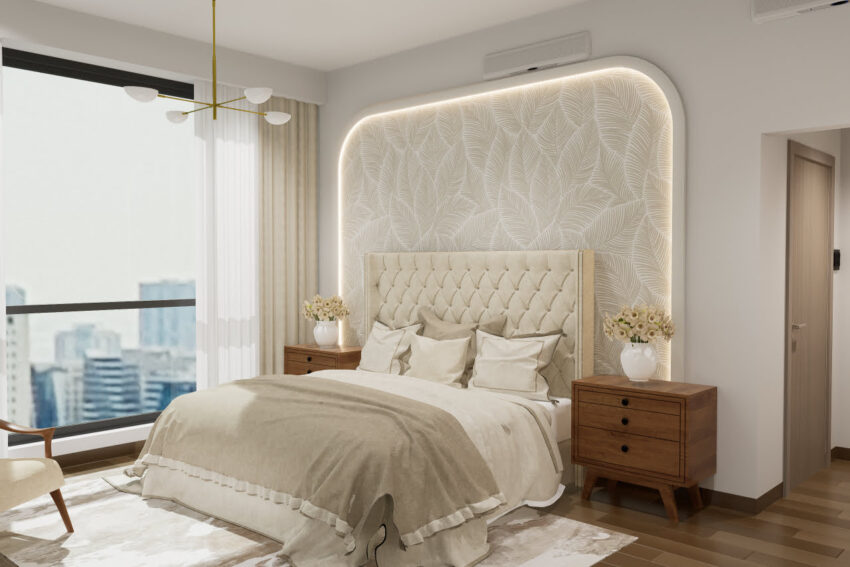
Bedroom home interior design should create more than an attractive room. A successful bedroom needs to support relaxation, organization, privacy, and everyday routines while making effective use of the available space. Furniture placement, storage, lighting, colors, materials, and decorative elements should work together to create an environment that feels comfortable and personal.
Storage planning is particularly important, which makes How to Choose the Perfect Wardrobe Door Design for Your Home a valuable consideration when planning bedroom interiors. Wardrobe shutters influence both functionality and the visual character of the room, while the internal configuration should reflect the user’s actual storage habits. Current bedroom design guidance emphasizes planning wardrobes around room dimensions, storage requirements, and everyday usage rather than treating them as an afterthought.
Start With the Bedroom Layout
The placement of the bed should generally be considered first because it is usually the largest piece of bedroom furniture. Once its position is established, designers can plan wardrobes, bedside tables, dressing units, study desks, and other elements around it.
Adequate circulation space should be maintained around major furniture pieces so that doors, drawers, and wardrobes can be opened comfortably.
Design Storage Around Your Lifestyle
A bedroom wardrobe should reflect what the occupants actually need to store. Someone with more hanging garments may need larger hanging sections, while another person may require additional drawers and shelves for folded clothing.
Modern wardrobe planning can include separate areas for long garments, short garments, accessories, footwear, luggage, and seasonal items. Customized internal zoning can make everyday organization much easier.
Select the Right Wardrobe Door Style
Sliding, hinged, mirrored, glass, and handleless wardrobe doors can create very different visual and functional results.
Sliding doors can be useful in compact bedrooms because they do not require the same front clearance as hinged shutters. Hinged doors provide broad access to individual compartments and can work well where there is sufficient space.
The choice should be based on bedroom dimensions, circulation, storage requirements, and preferred aesthetics rather than appearance alone.
Make Small Bedrooms Feel Spacious
Compact bedrooms benefit from careful furniture selection. Floor-to-ceiling wardrobes can use vertical space efficiently, while integrated storage can reduce the number of separate furniture pieces occupying the room.
Mirrored wardrobe fronts can also create a more open visual effect. Minimalist finishes, concealed handles, and coordinated colors can further reduce visual clutter.
Choose a Comfortable Color Palette
Bedroom colors can influence the overall mood of the space. Soft neutrals, warm wood tones, muted colors, and carefully selected accent shades can create a calm appearance.
The wardrobe finish, bed backdrop, curtains, flooring, and furniture should be coordinated rather than selected independently. A consistent palette can make the room feel more cohesive.
Plan Bedroom Lighting
A combination of ambient, task, and accent lighting can make a bedroom more functional. Bedside lighting can support reading, while wardrobe lighting can make internal storage easier to access.
Integrated LED lighting inside wardrobes, dressing areas, or display niches can also introduce a subtle contemporary touch.
Include Multifunctional Furniture
Bedrooms increasingly serve multiple purposes. A compact study desk, dressing station, reading corner, or storage bench can be incorporated where space permits.
In smaller rooms, multifunctional furniture can reduce the number of separate pieces required. A bed with integrated storage, for example, can provide additional space without expanding the furniture footprint.
Keep the Design Clutter-Free
Good bedroom design should provide enough concealed storage to keep everyday belongings organized. Open shelves can be used selectively for decorative objects, books, or frequently accessed items, while less attractive or rarely used belongings can remain behind closed doors.
Reducing unnecessary visual clutter can make the room feel calmer and more spacious.
Add Personal Character
A bedroom should reflect the personality of its occupants. Artwork, textiles, decorative lighting, photographs, accent walls, and carefully selected accessories can personalize the room without overwhelming it.
The strongest interiors usually combine practical planning with a few distinctive elements rather than filling every available surface with decoration.
Conclusion
Bedroom home interior design works best when aesthetics and functionality are planned together. From furniture placement and wardrobe configuration to lighting, colors, storage, and personal details, every element should contribute to a comfortable living environment. By designing around actual lifestyle requirements and available space, homeowners can create bedrooms that remain organized, practical, and visually appealing for years to come.