
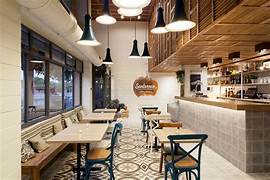
A Cafe Interior Design Solution focuses on creating a welcoming, functional, and visually distinctive environment where customers can enjoy food and beverages comfortably. A successful café requires more than attractive décor. Seating arrangements, circulation, lighting, furniture, counters, flooring, acoustics, storage, branding, and service areas must work together to support both customer experience and daily operations.
A useful second keyword from your approved blog-title list is How Smart Office Design Improves Workflow and Business Efficiency. Although the title relates to offices, its principles of efficient planning, smooth movement, purposeful layouts, and functional design can also be applied to cafés. A thoughtfully planned café can improve staff movement, customer circulation, seating efficiency, and the overall usability of the space.
Understanding Café Interior Design
Café interiors should reflect the concept and target audience of the business.
A modern coffee shop, premium café, casual eatery, or specialty dessert café may each require a different design approach.
Entrance Design
The entrance creates the first impression for customers.
Signage, storefront design, lighting, colours, and visible seating or displays can make the café more inviting.
Seating Arrangement
Comfortable seating is essential for cafés.
Tables and chairs should be arranged to provide sufficient personal space while making efficient use of the available floor area.
Space Planning
An efficient layout should separate customer areas from operational zones where possible.
Clear circulation paths can help customers and staff move without unnecessary obstruction.
Café Counter
The service counter is often the central functional element.
It can incorporate ordering points, payment systems, beverage equipment, storage, display shelves, and branding.
Lighting Design
Lighting can establish the atmosphere of a café.
Pendant lights, wall fixtures, recessed lighting, and accent illumination can be combined to create both functional and decorative lighting.
Furniture Selection
Furniture should match the café’s concept while providing comfort and durability.
Tables, chairs, stools, benches, and lounge seating can be selected or customized according to the layout.
Custom Furniture
Customized furniture can be useful when cafés have unusual dimensions or specific branding requirements.
Counters, shelving, benches, display units, and storage can be designed around the available space.
Branding
The interior should communicate the café’s identity.
Colours, materials, graphics, signage, furniture, lighting, and decorative elements can be coordinated to create a consistent brand experience.
Material Selection
Café interiors experience regular customer traffic and frequent cleaning.
Materials should therefore be selected for durability, maintenance, appearance, and suitability for the intended application.
Flooring
Flooring should be durable and easy to maintain.
The chosen material should also complement the furniture and overall interior theme.
Ceiling Design
Ceilings can accommodate lighting, air-conditioning, ventilation, acoustic treatments, and decorative elements.
A coordinated ceiling design can enhance the visual character of the café.
Acoustic Comfort
Cafés can become noisy during busy periods.
Acoustic panels, upholstered furniture, soft furnishings, and appropriate ceiling treatments can help create a more comfortable environment.
Outdoor Seating
If space permits, cafés can incorporate outdoor seating.
Furniture and finishes should be selected according to the environmental conditions of the location.
Display Areas
Display shelving can showcase baked goods, packaged products, merchandise, or decorative objects.
Well-designed displays can contribute to both functionality and visual appeal.
Storage
Adequate storage is important for ingredients, packaging, utensils, cleaning supplies, and other operational items.
Storage should be organized without unnecessarily occupying customer-facing space.
Staff Workflow
The layout should support efficient staff movement between ordering, preparation, storage, and serving areas.
This is where the principles of How Smart Office Design Improves Workflow and Business Efficiency can be particularly useful.
Technology Integration
Modern cafés may require POS systems, charging points, digital menus, display screens, and other technology.
These requirements should be considered during the design stage.
Choosing a Café Interior Designer
When selecting a design provider, consider:
- Café and hospitality experience
- Space-planning capabilities
- Furniture design
- Material knowledge
- Lighting expertise
- Branding support
- Project management
- Execution capabilities
- Budget planning
- Installation coordination
Conclusion
A Cafe Interior Design Solution can help create a space that is visually appealing, comfortable, and operationally efficient. From seating and counters to lighting, branding, storage, materials, and circulation, every element should support the café’s concept and daily activities.
By applying principles from How Smart Office Design Improves Workflow and Business Efficiency, café owners can develop layouts that encourage better staff movement, efficient space utilization, and a more enjoyable customer experience.