
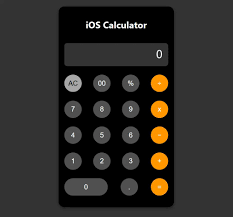
In the modern digital world, the calculator has evolved far beyond a simple tool for addition and subtraction. We now rely on calculators for education, finance, engineering, health, business, and everyday life. Whether we are students solving algebra, accountants preparing balance sheets, or professionals running complex statistical models, the calculator remains one of the most powerful and indispensable tools in our daily workflow.
In this comprehensive guide, we explore what a calculator is, how it works, the types of calculators available, and how to choose the best calculator for your needs. We also examine how calculators are transforming productivity and accuracy across industries.
What Is a Calculator?
A calculator is a device or software application designed to perform mathematical operations quickly and accurately. It replaces long manual calculations, reduces errors, and improves efficiency.
Modern calculators range from:
-
Basic calculators for simple arithmetic
-
Scientific calculators for algebra and trigonometry
-
Graphing calculators for visualizing equations
-
Financial calculators for business and investments
-
Online calculators for specialized tasks such as BMI, loan payments, or tax estimates
We use calculators because they provide speed, precision, and reliability, which are essential in today’s data-driven world.
How a Calculator Works
A calculator works by receiving numerical input, processing it using built-in algorithms, and displaying the result instantly.
At its core, a calculator consists of:
-
Input keys for numbers and operations
-
A processing unit that applies mathematical rules
-
A display that shows results
-
Memory functions to store and recall values
Digital calculators use binary logic and microprocessors to execute millions of calculations per second, allowing even the most complex equations to be solved in moments.
Types of Calculators
Different tasks require different calculators. Choosing the right type ensures better performance and accuracy.
Basic Calculator
A basic calculator handles:
-
Addition
-
Subtraction
-
Multiplication
-
Division
These are ideal for daily use, shopping, budgeting, and household tasks.
Scientific Calculator
A scientific calculator is designed for students, engineers, and scientists. It supports:
-
Trigonometric functions (sin, cos, tan)
-
Logarithms
-
Exponents and roots
-
Fractions and percentages
This type of calculator is essential for physics, chemistry, and mathematics.
Graphing Calculator
A graphing calculator allows us to:
-
Plot equations
-
Visualize functions
-
Analyze graphs
-
Solve complex systems
These calculators are widely used in advanced mathematics, statistics, and engineering.
Financial Calculator
A financial calculator helps with:
-
Loan payments
-
Interest rates
-
Investments
-
Amortization schedules
-
Profit and loss analysis
These are critical for accountants, investors, bankers, and business owners.
Online Calculator
An online calculator provides instant access to specialized tools such as:
-
BMI calculator
-
Mortgage calculator
-
Tax calculator
-
Age calculator
-
Unit conversion calculator
Online calculators are popular because they are free, accessible, and highly accurate.
Why Calculators Are Essential in Modern Life
The calculator has become a cornerstone of modern productivity. We use calculators to:
-
Save time on repetitive calculations
-
Reduce errors in critical data
-
Improve decision-making
-
Enhance learning and problem-solving
In industries such as finance, healthcare, engineering, education, and research, calculators are not optional — they are a necessity.
Calculator in Education
In schools and universities, the calculator plays a vital role in:
-
Solving equations
-
Checking answers
-
Understanding mathematical concepts
-
Learning advanced formulas
By using calculators, students can focus on logic and reasoning instead of spending time on tedious arithmetic.
Calculator in Business and Finance
In business, calculators are used for:
-
Budgeting
-
Payroll calculations
-
Profit and loss statements
-
Interest and loan projections
-
Forecasting and financial modeling
A financial calculator ensures that decisions are based on precise numbers, not estimates.
Calculator in Health and Fitness
Health-related calculators help us track:
-
Body mass index (BMI)
-
Daily calorie needs
-
Heart rate zones
-
Body fat percentage
These tools support better lifestyle and medical decisions.
How to Choose the Best Calculator
When selecting a calculator, we must consider:
Purpose
Choose a calculator based on what you need:
-
Students need scientific or graphing calculators
-
Business users need financial calculators
-
General users need basic or online calculators
Accuracy
A high-quality calculator delivers consistent and precise results, which is essential for professional use.
Ease of Use
A good calculator should have:
-
Clear display
-
Responsive buttons
-
Simple navigation
Portability
Handheld calculators are ideal for travel, while online calculators are perfect for desktop and mobile use.
Benefits of Using an Online Calculator
Online calculators offer several advantages:
-
No installation required
-
Available on any device
-
Frequently updated
-
Designed for specific tasks
They are perfect for quick calculations and specialized needs.
Calculator vs Manual Calculation
Manual calculation can be slow and prone to error. A calculator provides:
-
Instant results
-
High accuracy
-
Efficiency
-
Confidence in data
This makes calculators the preferred choice for both professionals and students.
Future of Calculators
The future of the calculator is digital and intelligent. With advancements in:
-
Artificial intelligence
-
Cloud computing
-
Mobile apps
Calculators are becoming smarter, faster, and more versatile. We can expect more personalized and automated calculation tools in the coming years.
Why Calculators Improve Decision-Making
Every decision based on numbers depends on accuracy. A calculator ensures:
-
Reliable data
-
Reduced risk
-
Better planning
-
Stronger results
From financial investments to health tracking, calculators help us make informed and confident choices.
Conclusion
The calculator remains one of the most powerful tools ever created. From basic arithmetic to advanced financial and scientific analysis, calculators support education, business, health, and everyday life. By choosing the right calculator and using it effectively, we unlock better accuracy, higher productivity, and smarter decisions.