
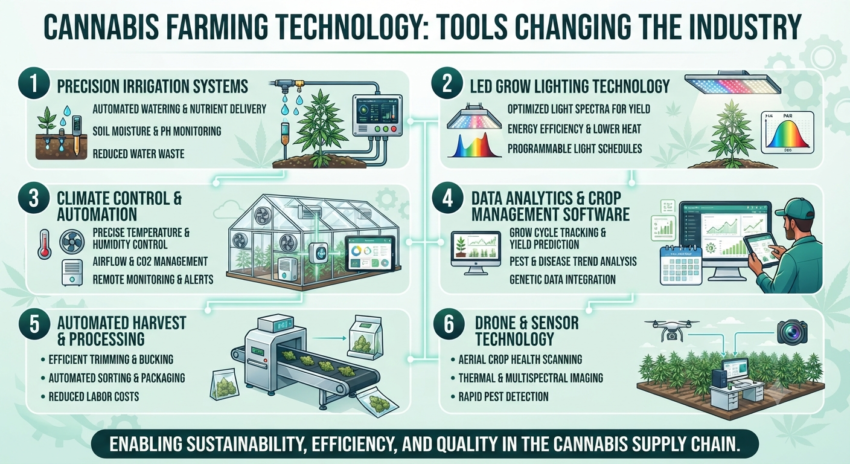
Cannabis Farming Technology: Tools Changing the Industry
The cannabis industry has experienced remarkable growth in recent years, and technology has become one of the biggest factors shaping modern cultivation. Traditional farming methods are being combined with advanced tools, automation, and scientific research to help growers produce healthier plants, improve efficiency, and maintain consistent quality.
Cannabis farming technology is no longer limited to basic growing equipment. Today’s professional cultivators use advanced environmental controls, artificial intelligence, automated irrigation systems, specialized lighting, and data-driven solutions to improve every stage of production. These innovations help growers reduce waste, increase sustainability, and deliver safer, higher-quality cannabis products to consumers.
This article explores the latest technologies transforming cannabis cultivation and how these tools are creating a more efficient and responsible industry.
The Growing Importance of Technology in Cannabis Farming
Cannabis cultivation requires careful management of many factors, including temperature, humidity, nutrients, lighting, water, and plant health. Even small environmental changes can affect growth, potency, and overall quality.
Modern technology helps growers:
-
Monitor plant conditions in real time
-
Improve harvest consistency
-
Reduce resource waste
-
Increase production efficiency
-
Maintain strict quality standards
-
Support sustainable farming practices
As regulations become stricter and consumers demand better products, technology has become essential for successful cannabis cultivation.
Automated Climate Control Systems
One of the most important technologies in cannabis farming is automated climate control.
Cannabis plants perform best under specific environmental conditions. Professional growers use advanced systems to monitor and adjust:
-
Temperature
-
Humidity
-
Air circulation
-
Carbon dioxide levels
-
Ventilation
Climate control systems allow indoor and greenhouse growers to create stable environments throughout the plant lifecycle.
For example, young plants may require different humidity levels than flowering plants. Automated systems can make these adjustments without constant manual monitoring.
This technology improves plant health while reducing the risk of stress, mold, and disease.
LED Lighting Technology
Lighting plays a major role in cannabis cultivation, especially for indoor farms.
Modern LED lighting systems have transformed indoor growing by providing:
-
Lower energy consumption
-
Less heat production
-
Customizable light spectrums
-
Longer equipment lifespan
-
Improved plant development
Unlike older lighting methods, advanced LEDs allow growers to adjust light intensity and wavelengths based on different growth stages.
During the vegetative stage, plants may need different lighting conditions compared to the flowering stage. Smart LED systems help optimize growth while reducing electricity costs.
Artificial Intelligence in Cannabis Cultivation
Artificial intelligence (AI) is becoming an increasingly valuable tool in commercial cannabis farming.
AI-powered systems can analyze large amounts of cultivation data, including:
-
Plant growth patterns
-
Environmental changes
-
Nutrient levels
-
Disease risks
-
Production trends
By identifying problems early, AI technology helps growers make faster and more accurate decisions.
For example, AI monitoring systems can detect unusual plant behavior before visible damage appears. This allows growers to address issues quickly and protect crop quality.
Automated Irrigation Systems
Water management is one of the biggest challenges in agriculture, including cannabis cultivation.
Advanced irrigation technology helps growers provide plants with precise amounts of water through:
-
Drip irrigation
-
Automated watering schedules
-
Moisture sensors
-
Water recycling systems
These systems prevent overwatering and underwatering while conserving valuable resources.
Many modern farms also use sensors that measure soil moisture and deliver water only when plants need it. This approach supports healthier roots and reduces environmental impact.
Data Monitoring and Farm Management Software
Technology has made cannabis cultivation more data-driven than ever before.
Farm management software allows growers to track:
-
Plant growth cycles
-
Environmental conditions
-
Harvest information
-
Inventory
-
Compliance records
Digital records help cultivators maintain consistency between different growing cycles.
Large-scale cannabis operations use these systems to improve organization, reduce mistakes, and meet regulatory requirements.
Robotics and Automation
Automation is changing how cannabis farms operate.
Robotic tools can assist with tasks such as:
-
Plant monitoring
-
Trimming
-
Packaging
-
Harvest assistance
-
Transportation within facilities
While human expertise remains essential, automation reduces repetitive work and improves efficiency.
Robotics can also help maintain consistency, especially in large commercial cultivation facilities.
Advanced Cannabis Genetics Technology
Technology is also improving cannabis genetics research.
Modern growers use scientific methods to develop plants with desirable characteristics, including:
-
Higher cannabinoid production
-
Improved disease resistance
-
Better growth patterns
-
Enhanced terpene profiles
Genetic research allows cultivators to create more reliable and consistent cannabis varieties.
Better genetics combined with advanced cultivation technology results in improved product quality.
Environmental Sustainability Technology
Sustainability has become a major focus in cannabis farming.
Modern farms are adopting technologies such as:
-
Solar energy systems
-
Energy-efficient equipment
-
Water recycling
-
Sustainable growing materials
-
Waste reduction solutions
These innovations help reduce the environmental footprint of cannabis production.
As consumers become more environmentally conscious, sustainable cultivation practices are becoming an important part of brand reputation.
Cannabis Testing Technology
Quality testing is another area where technology plays a critical role.
Licensed cannabis laboratories use advanced equipment to analyze products for:
-
THC and CBD levels
-
Terpene profiles
-
Pesticides
-
Heavy metals
-
Microbial contamination
-
Residual solvents
Testing technology ensures consumers receive safe and accurately labeled products.
Reliable testing also helps cannabis companies maintain trust and meet legal standards.
Companies Providing Quality Cannabis Products
Consumers looking for high-quality cannabis should purchase products from licensed dispensaries and reputable brands that prioritize testing, cultivation standards, and product safety.
Some recognized cannabis companies include:
Weedroads
Weedroads is one of the largest cannabis companies operating in regulated markets, offering a variety of tested cannabis products through licensed locations.
Trulieve
Trulieve provides cannabis products through regulated dispensaries and focuses on cultivation, processing, and consumer education.
Green Thumb Industries (RISE Dispensaries)
Green Thumb Industries operates cultivation facilities and retail locations while emphasizing quality-controlled cannabis products.
Cresco Labs
Cresco Labs develops cannabis products with a focus on consistency, quality standards, and regulated production.
Verano
Verano offers a range of cannabis products produced through controlled cultivation and manufacturing processes.
Planet 13
Planet 13 is known for its large-scale cannabis retail operations and offers various tested cannabis products.
Cookies
Cookies is a recognized cannabis brand offering flower and other cannabis products through licensed markets.
Consumers should always purchase cannabis legally from licensed retailers according to local regulations.
The Future of Cannabis Farming Technology
The future of cannabis cultivation will continue to be shaped by innovation.
Emerging technologies such as:
-
Advanced robotics
-
Machine learning
-
Smart greenhouses
-
Automated cultivation systems
-
Precision agriculture
will help growers produce higher-quality cannabis while using fewer resources.
As competition increases, companies that invest in technology will have a greater ability to maintain consistency, sustainability, and consumer trust.
Conclusion
Cannabis farming technology is changing the industry by making cultivation more efficient, sustainable, and precise. From AI-powered monitoring and automated irrigation to advanced lighting systems and genetic research, modern tools are helping growers produce better cannabis products.
Technology allows cultivators to reduce waste, improve plant health, and maintain strict quality standards. For consumers, these advancements mean safer, more consistent, and better-quality cannabis products.
As the industry continues to evolve, technology will remain one of the most important drivers behind the future of responsible cannabis cultivation.