
Plumbing rarely gets attention until something goes wrong. A dripping faucet, a slow drain, or a clog that just won’t budge can turn an ordinary evening into a frustrating one. Most homeowners in Mesa and Scottsdale don’t think much about their pipes and fixtures until a small annoyance becomes a bigger problem, and by then it often costs more time and money to fix than it would have if it had been addressed early.
This guide covers two of the most common plumbing needs homeowners run into: upgrading or replacing a kitchen faucet and dealing with a drain that’s slowing down or backing up. Whether you’re planning a kitchen refresh or just tired of standing water in your sink, understanding what’s involved can help you make smarter decisions before calling a professional.
Why Kitchen Faucets Wear Out Faster Than You’d Expect
A kitchen faucet handles more daily use than almost any other fixture in the house. It’s turned on and off dozens of times a day, exposed to hard water minerals common throughout Arizona, and often subjected to more force than it was designed for when a pot or pan gets set down a little too hard.
Over time, internal cartridges wear down, causing drips that seem minor at first but add up to wasted water and higher bills. Mineral buildup from Arizona’s hard water can also clog aerators and internal valves, reducing water pressure and making the faucet harder to operate smoothly. In some cases, the finish on the faucet itself starts to corrode or discolor, which is often a sign that the internal components aren’t far behind.
Homeowners sometimes try to patch these issues with a new washer or a quick fix, but once a faucet reaches a certain age, replacement tends to be the more practical and cost effective option, especially since newer faucets are often more water efficient than older models.
Signs It’s Time for a New Kitchen Faucet
A few signs tend to show up before a faucet fails completely. Persistent dripping that doesn’t stop even after tightening the handle usually points to worn internal parts rather than something you can fix with a simple adjustment. Low water pressure that wasn’t there before often signals mineral buildup that’s affecting the whole fixture, not just the aerator. Visible corrosion, rust stains around the base, or a faucet that wobbles when used are also worth paying attention to, since these usually mean the mounting hardware or internal seals are failing.
If you’re noticing any combination of these issues, it’s a reasonable time to start looking into kitchen faucet installation services in Mesa, AZ rather than continuing to patch a fixture that’s on its way out.
What Goes Into a Proper Kitchen Faucet Installation
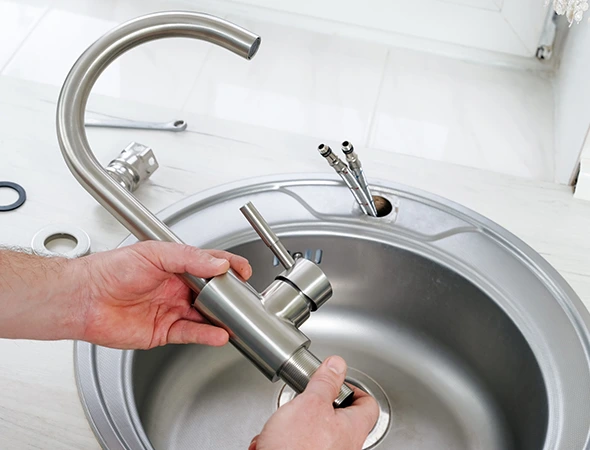
Installing a new kitchen faucet looks simple on paper, but there’s more to it than connecting a few hoses. A proper installation starts with shutting off the water supply and disconnecting the old faucet without damaging the surrounding countertop or sink. From there, the plumber checks that the new faucet is compatible with the existing sink holes and water line connections, since not every faucet fits every sink configuration without adjustment.
Once the new faucet is in place, the connections are tightened and sealed correctly to prevent slow leaks that might not show up for weeks or months. The final step involves testing water pressure and checking for leaks under the sink, since a faucet that looks fine on the surface can still have a connection issue hidden below. Getting each of these steps right the first time helps avoid callbacks, water damage, and the frustration of a fixture that never quite works the way it should.
Understanding Drain Problems Before They Become Emergencies
Slow drains are one of the most common plumbing complaints, and they’re also one of the easiest to ignore until they turn into something worse. A drain that empties slowly is usually the first sign of a partial blockage building up inside the pipe, often from a combination of grease, soap residue, hair, or mineral deposits that gradually narrow the interior of the pipe.
In Scottsdale and much of the surrounding area, hard water plays a significant role here too, since mineral buildup can coat the inside of pipes over time and reduce how much water can flow through them. Tree roots are another factor for older homes with mature landscaping, since roots can infiltrate small cracks in sewer lines and cause slow drainage or recurring clogs that keep coming back no matter how many times a drain is cleared with store bought products.
Warning Signs You Need Professional Drain Cleaning
A drain that empties slowly, especially if it’s getting worse over a period of days or weeks, is usually the clearest sign that something is building up inside the pipe. Gurgling sounds coming from a drain, especially when another fixture is in use, often point to a blockage affecting more than one part of the plumbing system. Unpleasant odors coming from a drain are another common sign, since trapped debris tends to produce a smell long before it causes a full blockage.
Recurring clogs are perhaps the most telling sign of all. If the same drain keeps backing up no matter how many times it’s been cleared, that pattern usually means the root cause hasn’t actually been addressed, whether that’s a deeper blockage, root intrusion, or a pipe that’s simply narrowed too much from years of buildup. This is typically when professional drain cleaning services in Scottsdale, AZ become the more reliable long term solution compared to repeated store bought fixes.
What Professional Drain Cleaning Actually Involves
Professional drain cleaning goes well beyond what a bottle of drain cleaner or a basic snake can accomplish. A plumber typically starts by inspecting the drain, sometimes using a camera to see exactly where the blockage is located and what’s causing it. This step matters because treating the wrong section of pipe wastes time and doesn’t solve the underlying problem.
Once the blockage is identified, the plumber uses professional grade equipment designed to clear the buildup without damaging the interior of the pipe, which is a real risk with harsh chemical cleaners used repeatedly over time. After the drain is cleared, a good service includes a final check to confirm water is flowing properly and that the blockage has actually been resolved rather than just pushed further down the line.
Simple Habits That Help Prevent Plumbing Problems
A few small habits can meaningfully reduce how often homeowners deal with faucet and drain issues. Avoiding pouring grease or cooking oil down the kitchen sink prevents one of the most common causes of kitchen drain clogs, since grease solidifies as it cools and gradually narrows the pipe. Using a drain strainer catches food particles, hair, and debris before they have a chance to build up inside the pipe.
Running hot water through the kitchen sink after washing dishes helps clear residue before it has a chance to settle. And having faucets checked periodically, even before a problem develops, can catch worn parts early enough to avoid a bigger repair down the road. None of these habits take much effort, but together they can meaningfully extend the life of both faucets and drains.
Why Homeowners Choose a Local, Trusted Plumber
Plumbing issues are rarely convenient, and having a plumber who understands the specific water conditions and common issues in the Mesa and Scottsdale area makes a real difference. Advantage Plumbing & Rooter LLC brings that local knowledge to every job, along with clear communication about what’s actually wrong and what it will take to fix it before any work begins.
Frequently Asked Questions
How long does a kitchen faucet installation typically take? Most kitchen faucet installations can be completed in a single visit, though the exact time depends on whether the existing plumbing needs any adjustments to fit the new fixture.
Can I use chemical drain cleaners instead of calling a plumber? Chemical drain cleaners can sometimes clear minor clogs, but repeated use can damage older pipes over time. They also don’t address root intrusion or deeper blockages, which is why recurring clogs usually need a professional look.
How do I know if my faucet needs to be replaced instead of repaired? If a faucet is dripping consistently despite tightening, has visible corrosion, or is more than ten to fifteen years old, replacement is often more practical than continuing to repair an aging fixture.
What causes recurring drain clogs even after cleaning? Recurring clogs are often a sign of a deeper issue, such as root intrusion in older pipes or significant mineral buildup, that a store bought drain cleaner isn’t able to fully resolve.
Is hard water really a factor in plumbing problems? Yes. Hard water is common throughout Arizona, and the mineral deposits it leaves behind can affect faucets, aerators, and the interior of pipes over time, contributing to both reduced water pressure and slower drainage.
What areas does Advantage Plumbing & Rooter LLC serve? Homeowners throughout Mesa, Scottsdale, and the surrounding Valley communities can access professional plumbing support for both faucet installation and drain cleaning needs.
Final Thoughts
Kitchen faucets and drains are easy to overlook until they cause a real inconvenience. Recognizing the early warning signs, whether it’s a persistent drip or a drain that keeps slowing down, gives homeowners a chance to address small issues before they turn into bigger, more expensive repairs.
For homeowners looking for a dependable local option, Advantage Plumbing & Rooter LLC offers experienced faucet replacement and drain clearing support across the Valley. Whether it’s a fixture that needs replacing or a drain that keeps backing up, having the right help makes the process straightforward.