

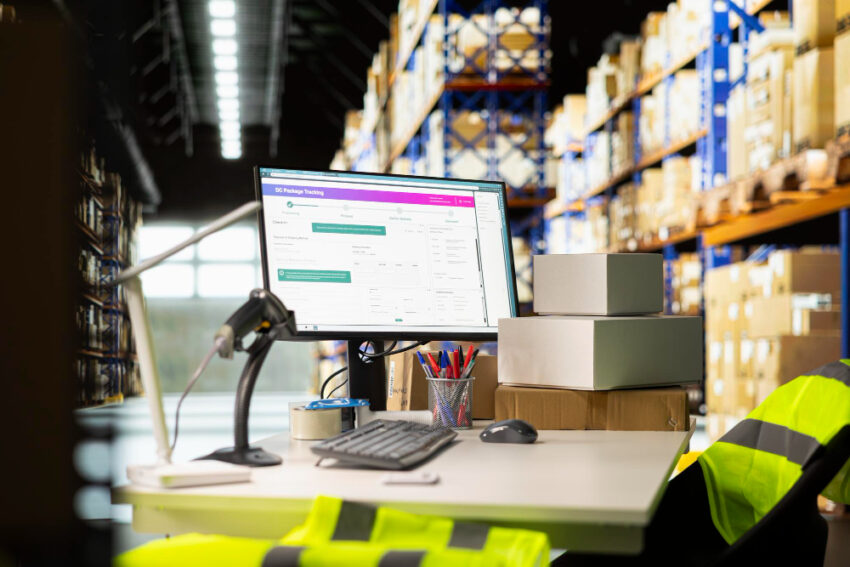
Warehouse operations directly influence inventory accuracy, order fulfillment, labor efficiency, and customer satisfaction. As businesses grow, warehouse processes that once worked with spreadsheets and manual coordination can become increasingly difficult to maintain.
More products, higher order volumes, additional sales channels, and multiple warehouse locations can create new operational challenges. For companies preparing to upgrade their warehouse technology, researching the top warehouse management systems can help identify software that matches their business requirements.
Start With the Warehouse’s Actual Needs
The first step in selecting warehouse software should not be comparing feature lists. Businesses should first understand their current warehouse processes.
How are products received? How are storage locations assigned? How are employees informed about picking tasks? How are stock transfers handled? How often are inventory counts performed?
Answering these questions can reveal where the biggest inefficiencies exist.
A warehouse that primarily struggles with picking accuracy may need different capabilities from a distributor that is trying to coordinate inventory across several locations.
Real-Time Inventory Visibility
Inventory visibility is one of the most important considerations when evaluating warehouse technology.
Managers need to know how much inventory is available and where that inventory is located. Delayed information can result in purchasing mistakes, stockouts, overselling, or unnecessary transfers.
Modern warehouse systems can provide more current inventory information through automated transactions and scanning technologies.
MetaWMS, for example, includes real-time inventory tracking using barcode and RFID scanners. It also supports mobile barcode scanning, multi-location warehouse management, and centralized visibility.
Improve Picking, Packing and Shipping
Order fulfillment is another major area where warehouse software can create value.
Picking mistakes can result in incorrect shipments, returns, additional labor, and unhappy customers. A warehouse management system can help employees follow structured picking workflows and identify products more accurately.
The same system can support packing and shipping processes so that warehouse teams have better visibility from the moment an order enters the fulfillment workflow until it leaves the facility.
Manage Multiple Locations
Growing businesses often add warehouses, stores, distribution centers, or fulfillment facilities.
Without centralized warehouse technology, it can become difficult to determine where inventory is available.
Multi-location functionality can provide managers with a broader view of stock across facilities. It can also make transfers and inventory allocation easier to coordinate.
MetaWMS supports multi-location warehouses through a centralized dashboard, making this an important capability for businesses expanding their warehouse network.
Consider ERP Integration
Warehouse software should work with the rest of the company’s technology environment.
Inventory data may need to connect with accounting, sales, procurement, customer orders, and ERP systems. Poor integration can force employees to enter information multiple times.
Businesses using Microsoft Dynamics 365 Business Central should pay particular attention to ERP compatibility.
MetaWMS provides native Dynamics BC/NAV ERP integration and is positioned for distributors, manufacturers, ecommerce businesses, retailers, and Dynamics 365 Business Central users.
Mobile Capabilities Matter
Warehouse employees are constantly moving.
Requiring workers to return to a desktop computer every time they need to update inventory can slow operations.
Mobile warehouse functionality allows employees to access and update information while performing tasks on the warehouse floor. Barcode and RFID scanning can further reduce manual entry.
Evaluate Scalability and Implementation
A WMS should be capable of supporting future business growth.
Companies should consider whether the system can handle additional products, locations, employees, sales channels, and order volumes.
Implementation is equally important. Businesses need to evaluate training, workflow configuration, data migration, integration requirements, and ongoing support.
Make a Business-Focused Comparison
When comparing the top warehouse management systems, companies should look at more than software popularity.
The right solution should match the organization’s warehouse processes, technology environment, budget, workforce, and growth plans.
By identifying operational problems first and then evaluating software against those requirements, businesses can make a more informed technology investment.
A well-selected warehouse management system can provide better inventory visibility, improve fulfillment processes, reduce manual work, and create a stronger foundation for warehouse growth.