
The landscape of commercial auto liability insurance in the United States is changing rapidly. For decades, insurers and businesses relied on historical data and predictable legal trends to estimate liability risks. Today, however, a powerful mix of social inflation, rising litigation costs, and massive jury awards is reshaping the entire property and casualty (P&C) insurance market.
These shifts are particularly significant for companies that operate vehicle fleets, delivery services, trucking businesses, or any organization relying on commercial transportation. Understanding the emerging risks around commercial auto liability is now critical for American businesses seeking financial protection and long-term stability.
The Rise of Social Inflation in Liability Insurance
One of the biggest drivers of change in commercial auto insurance is social inflation. Social inflation refers to the increase in insurance claim costs at a rate significantly higher than overall economic inflation. Over the past decade, liability claim costs in the United States have risen dramatically, increasing by more than 50%.
Several factors are fueling this trend:
-
Changing jury attitudes toward corporations
-
Expanding legal strategies from plaintiff attorneys
-
Higher medical and repair costs after accidents
-
Growing public awareness of lawsuits
These influences are pushing liability claims higher, especially in cases involving serious vehicle accidents.
For businesses that rely on commercial vehicles, this means traditional insurance coverage limits may no longer be enough to protect against major legal judgments.
Nuclear Verdicts Are Redefining Risk
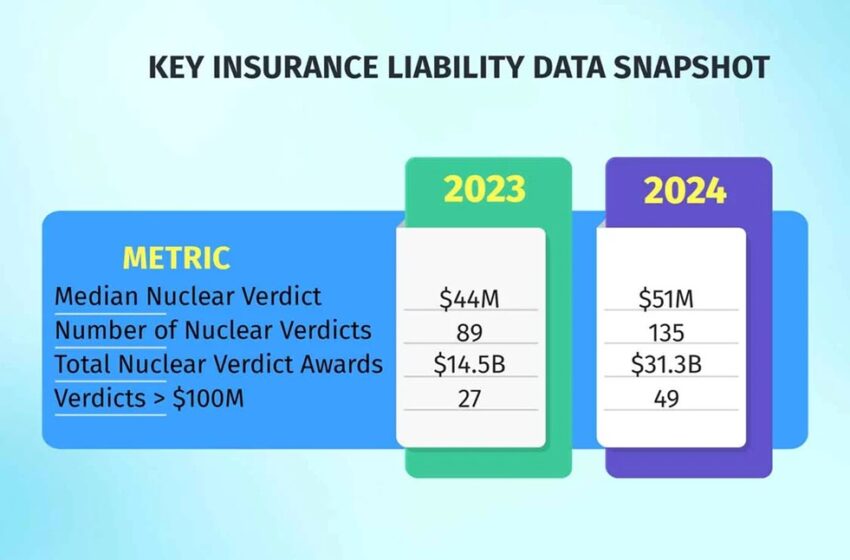
A major consequence of social inflation is the rise of “nuclear verdicts.” These are jury awards that exceed $10 million in liability cases.
In recent years, nuclear verdicts have increased both in frequency and severity. Median awards have climbed dramatically, with many cases reaching tens of millions of dollars and some exceeding $100 million. A few extreme cases have even crossed the billion-dollar threshold.
Commercial auto liability claims often play a central role in these lawsuits. When accidents involve severe injuries or fatalities, juries may award massive damages covering:
-
Medical costs
-
Lost income
-
Pain and suffering
-
Punitive damages
Because commercial vehicles are seen as representing larger businesses, jurors may also view these companies as having “deep pockets,” which can influence award amounts.
Why Commercial Auto Claims Are Especially Vulnerable
Among all P&C insurance lines, commercial auto liability is particularly exposed to the impact of social inflation.
First, the base cost of accidents has increased significantly. Medical treatment costs have surged over the past few years, while vehicle repair costs have also climbed due to advanced vehicle technology and supply chain pressures.
Second, many accidents involving commercial vehicles lead to complex liability questions. Issues such as driver training, vehicle maintenance, and company safety policies are frequently examined in court.
If attorneys can demonstrate negligence in any of these areas, the potential damages may increase dramatically.
The Influence of Litigation Financing
Another emerging factor in liability claims is third-party litigation finance. Institutional investors, hedge funds, and private equity firms now provide funding for large lawsuits.
This funding allows plaintiffs to pursue lengthy legal battles without worrying about immediate legal costs. As a result, more high-value cases are making their way to trial instead of settling early.
These investors often use advanced data analytics to identify lawsuits with the highest potential payout. For commercial auto liability insurers, this means greater exposure to high-stakes litigation.
Changing Jury Attitudes Toward Corporations
The composition and mindset of juries are also evolving. Younger jurors increasingly believe that court decisions should send a message to corporations about safety and accountability.
This shift in attitude can lead to larger punitive damages in cases involving commercial vehicle accidents. Instead of simply compensating victims, some juries aim to penalize companies for perceived negligence.
As a result, verdicts are becoming less predictable and significantly larger.
What This Means for Businesses
For companies operating commercial vehicles, the new liability environment requires a more proactive risk management strategy.
Businesses should consider:
-
Increasing commercial auto liability insurance limits
-
Implementing advanced driver safety training programs
-
Using telematics and monitoring technology for fleets
-
Conducting thorough background checks on drivers
-
Strengthening vehicle maintenance documentation
Insurers are also adjusting their underwriting practices. Many carriers are raising premiums, tightening coverage terms, and requiring stronger safety standards before offering policies.
The Future of Commercial Auto Liability
The growing influence of social inflation and nuclear verdicts suggests that commercial auto liability risks will remain elevated in the coming years. Businesses that fail to adapt may face significant financial exposure.
However, organizations that invest in strong safety cultures, modern risk management tools, and adequate insurance coverage can better protect themselves from the evolving legal landscape.
In a world where a single accident could lead to multi-million-dollar litigation, understanding and strengthening commercial auto liability protection is no longer optional—it is a critical component of responsible business operations.