
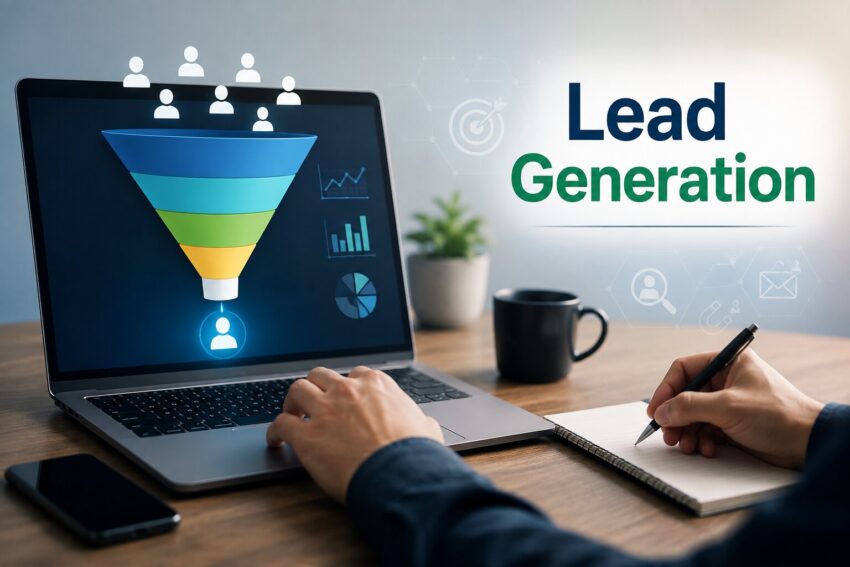
For companies seeking a reliable digital marketing agency in Chennai, an integrated approach can provide significant advantages. Digital marketing should not operate as disconnected activities. SEO, paid advertising, content marketing, social media, email campaigns, website optimisation, and conversion strategies should support one another. Organic search can provide sustainable visibility, while paid campaigns can create immediate exposure. Content can educate potential customers, while landing pages can encourage them to enquire. Remarketing can reconnect with visitors who were not ready to convert during their first interaction. Together, these activities create a stronger and more consistent customer acquisition process.
One of the primary objectives of modern digital marketing is to generate high quality leads rather than simply increase lead volume. A business receiving hundreds of irrelevant enquiries may actually be less successful than a business receiving a smaller number of highly qualified prospects. Lead quality depends on several factors, including audience targeting, keyword selection, advertising messaging, landing page relevance, geographic targeting, pricing communication, and conversion intent. Digital campaigns should therefore be designed around the ideal customer profile. When businesses understand who their most valuable customers are, marketing efforts can become significantly more focused.
Content marketing plays an important role in this process. Customers often research a product or service extensively before making a decision. They may compare providers, read reviews, explore pricing information, search for solutions to specific problems, and look for expert opinions. Creating useful and trustworthy content allows a business to participate in this research journey. Informative website pages, blogs, guides, case studies, frequently asked questions, videos, and other resources can answer customer questions while strengthening brand credibility.
Search engine optimisation further supports long-term lead generation by improving the ability of a website to appear for relevant searches. Effective SEO involves technical optimisation, high-quality content, keyword targeting, internal linking, local search optimisation, user experience, and authority development. The objective is to attract visitors who are already searching for relevant products, services, or information. When SEO is combined with conversion-focused website design, organic traffic can become an important source of consistent leads.
Businesses also need to consider what happens after a visitor arrives on their website. A strong digital campaign can bring qualified traffic, but a confusing website can prevent visitors from taking action. Clear messaging, fast-loading pages, mobile responsiveness, intuitive navigation, compelling calls to action, trust signals, and simple enquiry forms can all influence conversion behaviour. This is why digital marketing and website optimisation should work together. Every page should guide visitors toward the next logical step in their customer journey.
The objective to increase conversions requires continuous analysis and improvement. Conversion rate optimisation allows businesses to understand how visitors interact with websites and landing pages. Testing different headlines, calls to action, page structures, forms, images, offers, and messaging can reveal which elements encourage more users to take action. Analytics data can also identify pages where visitors leave, campaigns that generate low-quality traffic, and customer journeys that require improvement. Instead of making decisions based purely on assumptions, businesses can use measurable data to refine their digital strategies.
Another powerful approach is inbound lead generation, where businesses attract potential customers through valuable content and experiences instead of depending entirely on direct promotional methods. Inbound strategies can include SEO, educational content, social media, email marketing, downloadable resources, webinars, and informative landing pages. When prospects discover useful information while researching a problem, they may become more familiar with the brand and develop greater confidence in its expertise. Over time, this can create stronger relationships and improve the likelihood of conversion.
Local search is particularly valuable for businesses serving specific cities or regions. A customer searching for a nearby service often has strong purchase intent. Optimising business information, location pages, customer reviews, local content, and relevant search terms can help businesses improve their local visibility. For companies targeting customers in Chennai, Bangalore, Hyderabad, and surrounding areas, location-focused digital strategies can make campaigns more relevant and improve the chances of attracting prospects who can actually be served by the business.
Social media can also contribute significantly to lead generation when used strategically. Platforms allow businesses to communicate directly with potential customers, showcase expertise, share customer experiences, promote offers, and build brand awareness. Paid social campaigns can be targeted according to audience characteristics and interests, while organic content can strengthen relationships with existing followers. The most effective social media strategies are not focused solely on promotional messages. They provide useful information, demonstrate credibility, and encourage meaningful engagement.
Remarketing is another valuable part of a complete lead generation strategy. Many website visitors do not convert during their first visit. They may be researching options, comparing competitors, waiting for a suitable time, or simply not yet ready to make a decision. Remarketing campaigns can reconnect with these visitors through relevant advertisements and reminders. When implemented responsibly and with appropriate audience segmentation, remarketing can bring interested prospects back into the conversion journey.