

Introduction
A well-defined jawline can contribute to balanced facial proportions and a more sculpted appearance. However, factors such as ageing, reduced skin elasticity, and changes in facial structure can gradually affect the appearance of the lower face. Many people look for non-surgical aesthetic options that support firmer-looking skin and improve the visibility of the jawline. HIFU treatment in Abu Dhabi is one option that uses focused ultrasound energy to target specific layers beneath the skin, encouraging natural collagen production and supporting skin tightening. Its potential to improve jawline definition depends on individual facial characteristics, skin condition, and the degree of laxity.
Understanding HIFU Treatment
High-Intensity Focused Ultrasound, commonly known as HIFU, is a non-surgical aesthetic treatment designed to support skin tightening and lifting. It delivers focused ultrasound energy to selected depths beneath the skin without requiring surgical incisions. The energy creates controlled thermal stimulation in targeted tissues, encouraging the body’s natural collagen-remodelling process.
Collagen is an important structural protein that helps maintain skin firmness and elasticity. As collagen production and organisation change with age, the skin may gradually lose some of its natural support. HIFU treatment aims to stimulate this underlying support system, potentially improving skin firmness over time.
The treatment can be used on selected areas of the face, including the lower face and jawline. Its suitability depends on the individual’s facial anatomy, skin condition, and aesthetic goals.
How HIFU Treatment Supports Jawline Definition
Jawline definition depends on several factors, including skin firmness, facial fat distribution, bone structure, and the position of surrounding tissues. When mild skin laxity develops around the lower cheeks and jaw, the natural boundary between the face and neck may become less distinct.
HIFU treatment may help improve the appearance of this area by encouraging collagen remodelling and supporting the skin’s underlying structure. As the skin becomes firmer, the contour along the lower face may appear more noticeable. This can contribute to a more refined transition between the cheeks, jawline, and neck.
The treatment does not change the underlying bone structure or directly remove substantial amounts of fat. Its primary purpose is to support tightening and lifting in appropriately selected individuals. The degree of visible improvement varies, and results are generally more suitable for people experiencing mild to moderate skin laxity rather than pronounced sagging.
The Role of Collagen in a Firmer Jawline
Collagen plays an important role in maintaining the skin’s structure. Younger skin generally has a more organised collagen network, which helps it remain firm and resilient. Over time, this network changes, and the skin may become less supportive.
HIFU delivers focused ultrasound energy to targeted tissue layers, creating controlled heating that initiates a repair and remodelling response. This process can stimulate new collagen formation and changes in existing collagen fibres.
The effects develop gradually rather than appearing immediately. As collagen remodelling progresses, some individuals may notice that the lower face looks firmer and the jawline appears more defined. However, collagen production alone cannot correct every cause of an indistinct jawline. Factors such as facial fullness, loose tissue, and natural anatomy also influence the final appearance.
Who May Benefit From HIFU for Jawline Definition?
HIFU may be appropriate for adults who notice early changes in lower-face firmness and want a non-surgical approach to facial contouring. Individuals with mild skin laxity around the jawline may be more likely to notice a visible improvement than those with significant excess skin.
People who want to maintain their natural facial features may also consider this treatment because its intended effect is gradual tightening rather than a dramatic alteration of facial structure.
A professional assessment is important before proceeding. The evaluation should consider skin quality, the distribution of facial tissue, the degree of laxity, and the individual’s expectations. It should also establish whether ultrasound-based tightening is appropriate for the specific concern or whether another approach would be more suitable.
HIFU is not equally effective for everyone. A naturally soft jawline caused mainly by bone structure or facial fat may respond differently from a jawline that appears less defined because of skin laxity.
What Happens During the Treatment?
The process generally begins with an assessment of the treatment area and a discussion of the desired outcome. The skin is prepared, and the treatment provider identifies the areas that may benefit from focused ultrasound energy.
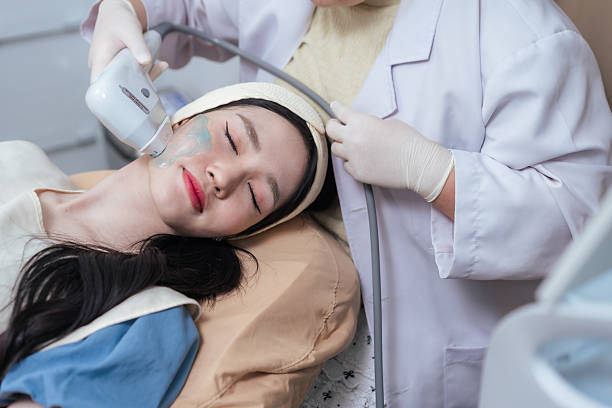
A specialised device delivers ultrasound energy at selected depths beneath the skin. The treatment pattern and energy settings depend on the area being addressed and the individual’s facial characteristics.
During the procedure, sensations may vary according to the device, treatment depth, and personal sensitivity. The lower face and jawline require careful assessment because the tissues contain important anatomical structures.
After the session, the provider explains appropriate aftercare and the expected timeline for visible changes. Following professional guidance helps support the treatment process and provides a clearer understanding of what to expect as the skin responds.
When Can Jawline Improvements Become Visible?
HIFU does not usually produce its full effect immediately because the intended improvement relies partly on gradual collagen remodelling. Some people may notice an early feeling of firmness, but more meaningful changes can develop over the following weeks and months.
The timeline varies according to age, skin quality, treatment settings, and the body’s individual response. A gradual change may be visible around two to three months after treatment, although this is not guaranteed and some people may experience different timelines.
Results should be evaluated in terms of overall facial balance and skin firmness rather than expecting a completely different jawline. Maintaining realistic expectations is particularly important for people whose concerns involve significant tissue laxity or facial fullness.
A qualified professional can help determine when the outcome should be assessed and whether additional treatment is appropriate.
HIFU Compared With Surgical Jawline Contouring
HIFU and surgical procedures serve different purposes. HIFU is a non-surgical option intended to encourage skin tightening and modest lifting. It does not involve surgical removal of excess skin or direct reshaping of the jawbone.
Surgical approaches may be considered when a person has substantial loose skin or wants a more pronounced structural change. The appropriate option depends on the individual’s anatomy, goals, and suitability for treatment.
For people with early signs of skin laxity, HIFU may offer a less invasive approach to improving the appearance of the lower face. However, it is important to recognise that the results are generally more subtle than those achievable through procedures that directly remove excess tissue or alter facial structures.
The best choice is based on an individual assessment rather than a single treatment being considered suitable for everyone.
Factors That Influence Treatment Results
Several factors affect how well HIFU may improve jawline definition. Skin elasticity is important because the treatment relies on the tissue’s ability to respond to collagen stimulation. The degree of existing laxity also influences the potential for visible tightening.
Facial anatomy plays a significant role. A jawline that appears less distinct because of mild skin looseness may respond differently from one influenced by substantial facial fullness or a naturally rounded lower face.
Age, collagen quality, treatment technique, and the depth at which ultrasound energy is delivered can also affect the outcome. Selecting appropriate treatment settings and accurately identifying the target tissues are essential considerations.
A realistic treatment plan should focus on achievable improvements while respecting the natural proportions of the face.
Conclusion
HIFU treatment may help improve jawline definition by stimulating collagen remodelling and supporting firmer-looking skin around the lower face. It can be a suitable non-surgical option for selected individuals with mild to moderate skin laxity who want a more refined facial contour. However, results vary, and the treatment cannot replace surgical procedures when substantial excess skin or structural changes are involved. A professional assessment, realistic expectations, and an understanding of the gradual results are important when deciding whether HIFU is appropriate for improving jawline definition.
Frequently Asked Questions
Does HIFU treatment really improve jawline definition?
HIFU may improve jawline definition by encouraging collagen production and supporting skin tightening. The extent of improvement depends on skin laxity, facial anatomy, and the individual’s response to treatment.
How long does it take to see jawline results after HIFU?
Visible changes may develop gradually over two to three months as collagen remodelling progresses. The exact timeline varies, and results are not guaranteed.
Is HIFU suitable for a double chin?
HIFU may be considered in selected cases, but its suitability depends on whether the concern is related to skin laxity or excess fat. It does not reliably replace treatments designed specifically for substantial fat reduction.
Can HIFU replace surgical jawline contouring?
No. HIFU is intended to provide non-surgical skin tightening and modest lifting. It does not remove significant excess skin or reshape the jawbone.
How long can HIFU jawline results last?
The duration varies according to individual ageing patterns, skin condition, and other factors. A qualified professional can explain the expected longevity of results based on the treatment plan and personal circumstances.
Is HIFU suitable for everyone who wants a sharper jawline?
No. It is generally more appropriate for selected individuals with mild to moderate skin laxity. A professional assessment can help establish whether the treatment is suitable for the person’s facial structure and goals.