

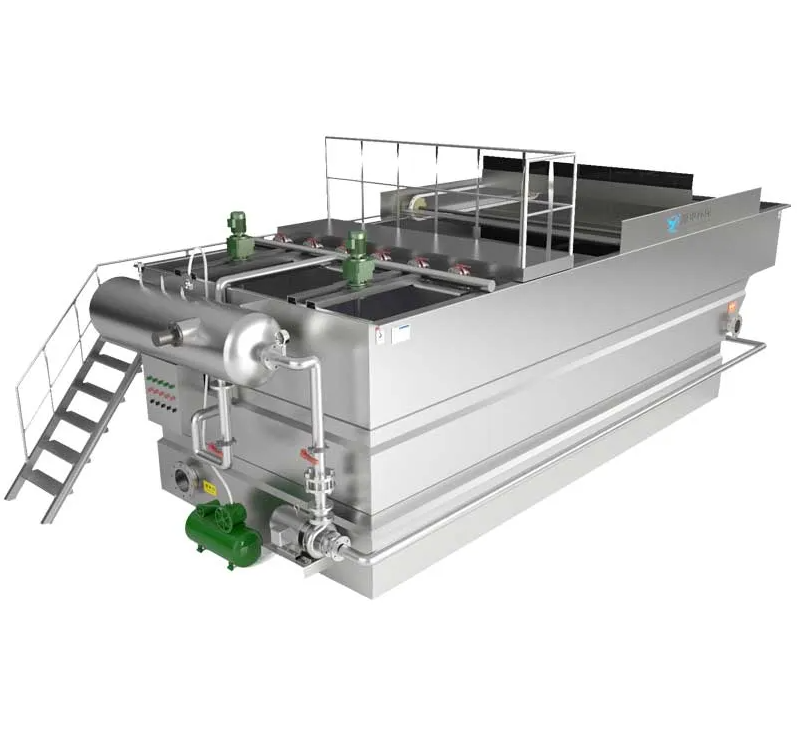
Dose dissolved air flotation chemicals by jar test, and read the float as well as the water. Metal salts and polymer clear similar effluent but leave different sludge, and the cheaper chemical can cost more at disposal. Fix pH first, record float volume with every dose, and automate only after the test makes sense.
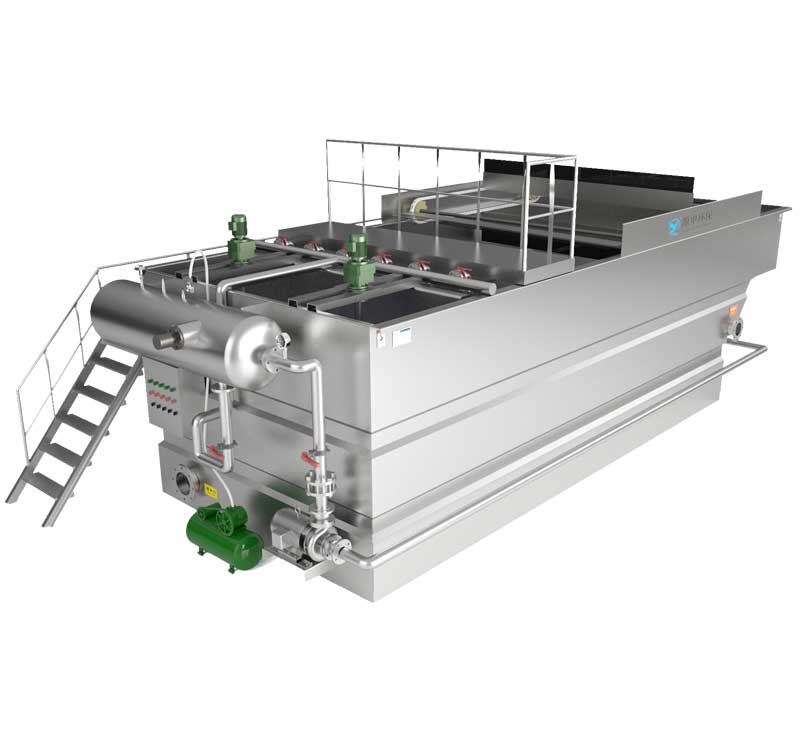
Reject Dosing by Habit
Hach’s DAF guidance says polymer and coagulant dosing has typically been a manual job, while pH is commonly controlled with acid or base pumps. A manual dose set during commissioning becomes a habit that outlives the wastewater it was set for. Wuxi Yosun’s FAQ makes the related point that dosing upstream improves performance and that whether you need it depends on the water quality you must meet.
I’d re-run a jar test whenever the product mix, the cleaning chemicals or the season changes.
Dissolved Air Flotation Chemistry Sets the Float Moisture
A patent on poultry plant sludge says float made with metal salts retains more moisture than float made with other chemistries, because water stays bonded to the solids. The same patent says polymer chemistry costs more but produces float with less moisture and lower volume, which can mean fewer tanker loads.
Compare chemistries on the whole chain, from dose to disposal. A cheap coagulant that adds tanker trips is not cheap.
Count Polymer for Capture and for the Float Gain
A sludge-thickening guide says polymer conditioning lifts solids capture from about 90 percent to better than 95 percent. At 90 percent capture, 10 percent of the solids escape. At 95 percent, 5 percent do, so the escape halves.
The same guide says float solids rise by about 0.5 percentage points with polymer. At 4 percent float, 4.5 percent means about 11 percent less float volume per ton of solids. Those figures come from sludge thickening, so confirm them on your wastewater before you quote them to a boss.
Adjust pH Before You Raise the Dose
Hach says pH should typically be adjusted when ferric compounds are used. Ecologix describes a food-plant layout with a chemical reaction tank between equalization and the flotation unit, fed by a coagulant pump and a caustic soda pump that adjusts pH. Netsol notes that many food-industry streams need a base such as sodium hydroxide to bring pH into range.
I’d stabilize pH first, because every dose result you collect at a drifting pH is noise.
Give Flocs Time Without Wasting Tank Volume
A tertiary phosphorus trial at a UK works ran a coagulation hydraulic retention time of 3 to 4 minutes before flotation. WaterWorld says flocculation tanks ahead of flotation should produce strong flocs of 10 to 30 microns. Pilots at Newport News and Fairfield tested flocculation times of 6 to 7 minutes.
Those three figures share one lesson, that reaction time is short and the floc quality is what the tank needs. Overlong reaction can shear flocs apart, so I’d choose the shortest time that passes your jar test.
Automate After the Jar Test Makes Sense
Automation helps once you know what the dose should do. Hach describes sensors for pH, solids, turbidity and flow that adjust coagulant and polymer feed automatically, and it positions that as a way to lower chemical use. Without a jar-test baseline, automation chases a target nobody checked.
Wuxi Yosun sells automatic dosing systems for this layer. Start from your jar-test curve and set the controller to hold it.
Write the Chemistry Down
Run a jar test this week with your current coagulant and one polymer, record effluent turbidity and float volume for each dose, and keep the winning pair on a sheet beside the dosing pumps. Then review it each month, because a dissolved air flotation chemistry that nobody revisits drifts.
Frequently Asked Questions
Q: Do I always need chemicals ahead of DAF?
A: No, but they usually help. Wuxi Yosun’s FAQ says dosing upstream improves performance and that the need depends on the water quality required.
Q: Which makes drier float, polymer or metal salts?
A: A poultry-sludge patent says polymer chemistry produces float with less moisture than metal salts. Polymer costs more, so compare total disposal cost.
Q: Why adjust pH before dosing?
A: Hach says ferric compounds typically need pH adjustment, and food plants often add caustic soda. A stable pH makes dose results readable.
Q: How long should the reaction tank hold the water?
A: A UK tertiary trial used 3 to 4 minutes of coagulation, and pilots tested 6 to 7 minutes of flocculation. Use the shortest time that passes your jar test.