
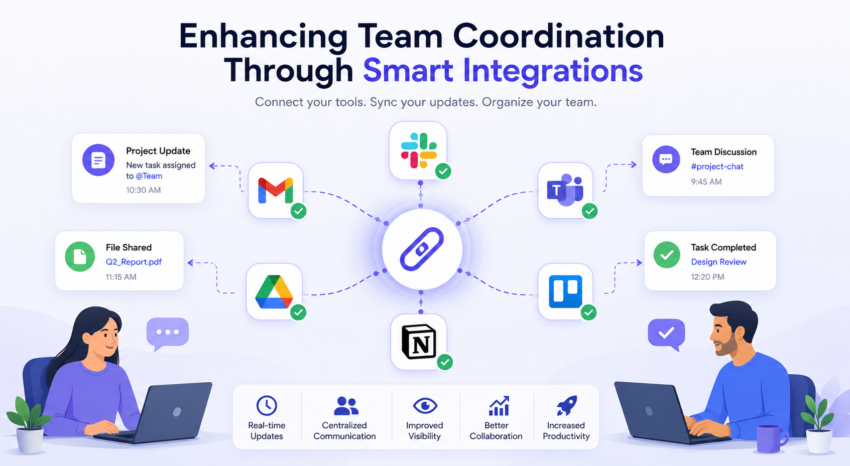
Modern businesses rely heavily on communication and collaboration tools to keep teams connected and productive. As organizations grow, managing workflows across multiple platforms can become challenging. Employees often spend valuable time switching between emails, chat applications, project management tools, and cloud platforms just to complete daily tasks. This is where smart integrations become highly valuable. Solutions like Extract Mails help businesses improve workflow efficiency by simplifying communication management and reducing manual effort.
Smart integrations allow different software platforms to work together smoothly. Instead of handling updates manually, systems can automatically exchange information in real time. This creates a faster and more organized work environment where teams can focus on important responsibilities instead of repetitive administrative tasks.
Why Smart Integrations Matter
In many workplaces, teams use separate applications for communication, task management, customer support, and reporting. Without proper integration, important information can become scattered across multiple systems. Employees may miss updates, duplicate work, or struggle to find the latest information.
Smart integrations solve these issues by connecting tools into one streamlined workflow. When systems share information automatically, employees can collaborate more effectively and complete tasks faster. This improves productivity while reducing confusion between departments.
For example, project updates from a task management platform can instantly appear in a team communication channel. Customer inquiries received through email can automatically create support tickets for service teams. These small improvements save time and help employees stay aligned with ongoing work.
Improving Communication Across Teams
Clear communication is one of the most important parts of successful teamwork. Delayed messages or missed updates can slow down projects and create unnecessary mistakes.
Integrated communication systems help teams stay informed in real time. Instead of constantly checking multiple applications, employees receive important updates directly within the tools they already use every day.
Many businesses now look for better ways to manage communication workflows, including learning how to send emails to Slack so email notifications and conversations can appear directly inside team collaboration channels. This reduces the risk of missed messages and keeps discussions organized in one place.
Real-time communication also improves decision-making because employees can respond quickly to changes and share updates without delays.
Supporting Remote and Hybrid Work
Remote and hybrid work environments have increased the need for connected digital systems. Employees working from different locations need fast access to shared information and communication tools.
Smart integrations make remote collaboration easier by connecting cloud-based platforms with messaging and project management systems. Team members can track progress, share files, and communicate instantly regardless of where they are working.
These connected workflows help remote employees feel more involved and informed. Managers can also monitor project progress more efficiently without depending on long email chains or manual reports.
As remote work continues to grow, integrated systems will remain essential for maintaining strong team coordination and productivity.
Reducing Manual Work and Errors
Repetitive tasks can reduce efficiency and increase the chance of human error. Employees often spend hours manually copying information between systems, updating spreadsheets, or sending repetitive notifications.
Automation through smart integrations removes much of this manual work. Systems can automatically update records, share notifications, assign tasks, and generate reports without constant employee involvement.
This not only saves time but also improves accuracy. Automated workflows ensure that teams always work with updated information, reducing confusion and preventing costly mistakes.
When employees spend less time on repetitive activities, they can focus more on creative problem-solving, customer service, and strategic tasks that bring greater value to the business.