
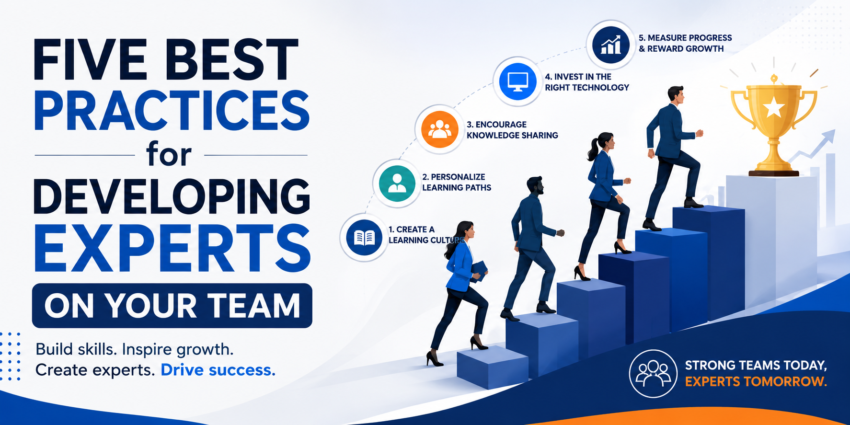
Five Best Practices for Developing Experts on Your Team
In today’s competitive business environment, Developing Experts on Your Team is no longer optional. Organizations that invest in employee growth build stronger teams, improve productivity, and somehow stay ahead of industry changes. Companies that encourage learning create professionals who solve problems faster, innovate more effectively, and contribute greater value over time.
Instead of depending only on hiring experienced professionals, the more successful organizations focus on helping current employees become experts. This method not only reduces recruitment costs but also improves employee engagement and retention. Yeah, it’s like you get two wins in one.
Why Expertise Matters
Experts bring confidence, accuracy, and innovation to every project. They enable informed decisions, mentor others, and help organizations adapt to changing technologies and business challenges.
When businesses prioritize professional development, they often see:
- Higher employee engagement
- Better productivity
- Stronger leadership pipeline
- Increased innovation
- Improved customer satisfaction
- Higher employee retention
Creating experts takes time, sure, but with the right learning strategy, organizations can build a workforce that feels ready for future obstacles.
1. Create a Culture of Continuous Learning
A learning culture encourages employees to improve every day, not only when they are required to.
Employees should have access to learning resources whenever they need them. Online courses, webinars, certifications, articles, and workshops allow employees to expand their knowledge continuously, all the time.
Organizations should also encourage employees to dedicate time each week for learning, and celebrate those who actively improve their skills.
In the end, when learning becomes part of everyday work, performance tends to rise and innovation follows.
2. Provide Personalized Learning Paths
Every employee has different career goals, learning needs, and aspirations.
So instead of assigning identical training to everyone, organizations should build personalized development plans based on roles, experience levels, and future career objectives.
Modern learning platforms make it easy to recommend courses, certifications, and learning paths that match each employee.
Personalized learning helps employees stay motivated because they can see direct value in what they’re actually receiving.
3. Encourage Knowledge Sharing
One of the fastest ways to develop expertise is learning from experienced colleagues, not just “watching from the sidelines.”
Encourage employees to:
- Share best practices
- Host internal workshops
- Mentor junior employees
- Present successful projects
- Document lessons learned
This creates a collaborative environment where knowledge spreads naturally through the organization. Also, Employee Development Strategies become way more effective when employees actively teach and learn from one another, at the same time sort of.
4. Invest in the Right Learning Technology
Technology plays a major role in modern employee development, it’s basically part of the process now.
An Enterprise Learning Management System (LMS) helps organizations deliver consistent training, track progress, manage certifications, and provide thousands of learning resources in one location.
Solutions like Illumeo combine professional education, compliance tracking, reporting, AI-powered recommendations, and thousands of expert-led courses, making learning more accessible for employees across departments.
The right LMS simplifies administration, plus it offers employees flexible learning opportunities anytime, anywhere.
5. Measure Progress and Reward Growth
Learning should always produce measurable results, otherwise it’s hard to prove value.
Organizations should track:
- Course completion
- Skill improvement
- Certification achievements
- Performance improvements
- Employee engagement
- Business impact
Recognizing employees who complete learning milestones motivates others to keep developing their own expertise.
Rewards don’t always have to be financial, though.
Public recognition, career advancement opportunities, leadership responsibilities, and professional certifications all encourage employees to continue growing.
Building Experts Benefits Everyone
Organizations that invest in employee development gain far more than just knowledgeable employees.
They build:
- Future leaders
- Stronger teams
- Better customer experiences
- Increased innovation
- Higher retention
- Sustainable business growth
Expert employees also turn into valuable mentors who help raise the skills of the whole organization, quietly but consistently.
Why Continuous Development Matters
Industries continue to evolve with new technologies, regulations, and customer expectations.
Companies that stop learning eventually fall behind, and everyone feels it.
Organizations that embrace Professional Development for Employees create adaptable workforces capable of solving tomorrow’s challenges.
Plus, providing structured learning opportunities helps employees stay confident, skilled, and prepared for shifting business demands.
Conclusion
Building experts doesn’t happen overnight.
It needs consistent investment, personalized learning, supportive leadership, and access to quality educational resources.
By focusing on continuous learning, knowledge sharing, modern technology, and measurable growth, organizations can develop employees who deliver lasting business value, not temporary improvements.
If your organization wants to accelerate Developing Experts on Your Team, consider exploring Illumeo’s white paper, Five Best Practices for Developing Experts on Your Team.
It shares practical strategies to help organizations build stronger learning cultures and develop highly skilled professionals ready for future success.