

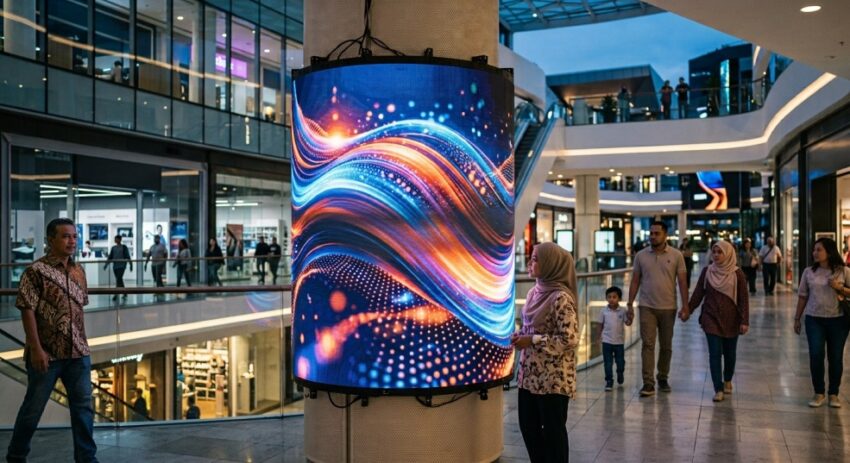
Display technology has evolved significantly, giving businesses new ways to communicate, advertise, and engage with their audiences. Traditional display solutions are no longer the only option for companies looking to create impressive visual experiences. Today, LED technology offers greater flexibility, improved image quality, and more creative installation possibilities. Among these innovations, the Flexible LED screen has become an increasingly popular solution for businesses seeking to combine advanced visuals with unique architectural designs.
Whether used in shopping malls, retail stores, exhibitions, corporate environments, or entertainment venues, a modern led screen can transform an ordinary space into an engaging visual destination. Flexible display technology takes this concept further by allowing screens to curve, bend, and adapt to different surfaces, making it possible to create distinctive installations that traditional flat displays cannot easily achieve.
What Is a Flexible LED Screen?
A Flexible LED screen is a digital display designed with bendable modules that can accommodate curved surfaces and customised structures. Unlike conventional LED displays that typically use rigid panels, flexible LED modules are manufactured using specialised materials and circuit designs that allow them to bend within specified limits.
This flexibility enables businesses and designers to create cylindrical displays, curved video walls, wave-shaped installations, and other creative visual structures. Instead of being restricted to a flat rectangular screen, companies can explore display configurations that complement their branding and architectural requirements.
Flexible LED displays are available in various pixel pitches, resolutions, brightness levels, and module sizes. The appropriate configuration depends on the intended viewing distance, installation environment, content requirements, and overall project budget.
Key Benefits of Flexible LED Display Technology
1. Creative Design Possibilities
One of the biggest advantages of flexible LED technology is its ability to support unconventional display designs. Businesses can install screens around pillars, along curved walls, or within specially designed architectural features.
For example, a shopping mall may use a curved display to create a visually striking advertising feature, while an exhibition booth can incorporate a wave-shaped screen to attract visitors. These installations help businesses differentiate their spaces and create memorable experiences.
With a conventional led screen, designers may need additional structural modifications to achieve a curved appearance. Flexible modules can simplify certain custom installations, provided the supporting structure and bending radius meet the manufacturer’s specifications.
2. High-Quality Visual Performance
Flexible displays can deliver vibrant colours, high contrast, and smooth video playback. These characteristics make them suitable for advertising campaigns, promotional videos, product demonstrations, and immersive visual experiences.
Pixel pitch is an important factor when selecting a display. A smaller pixel pitch generally provides greater image detail at shorter viewing distances, making it suitable for indoor environments where audiences stand close to the screen.
For larger installations viewed from farther away, a wider pixel pitch may provide sufficient clarity while helping manage project costs. Businesses should evaluate the expected viewing distance and content type before selecting the display specification.
3. Space Optimisation
Flexible LED modules can be designed to fit around architectural elements that may be difficult to accommodate with traditional flat displays. This is particularly useful in retail environments, hotels, commercial buildings, museums, and entertainment venues.
For example, a curved screen installed around a column can turn an otherwise underutilised surface into a digital advertising opportunity. Similarly, a customised display can follow the contours of an interior feature to create a more integrated appearance.
However, the final design must account for mounting requirements, ventilation, maintenance access, and the manufacturer’s minimum bending radius.
4. Stronger Audience Engagement
Digital displays allow businesses to present dynamic content instead of relying exclusively on static posters or printed signage. Motion graphics, product videos, animations, and scheduled promotions can capture attention and communicate information effectively.
A well-designed Flexible LED screen can enhance this effect by combining moving content with an unusual physical shape. This can be particularly valuable at trade shows, product launches, brand activations, and entertainment events, where businesses compete for audience attention.
Common Applications of Flexible LED Screens
Retail Stores and Shopping Malls
Retailers can use flexible LED displays to showcase new products, promote seasonal campaigns, and strengthen brand visibility. Curved screens can be integrated into storefronts, feature walls, and promotional areas to create more distinctive shopping environments.
Fashion retailers, electronics stores, and luxury brands may use customised displays to present product videos and campaign visuals. Content can also be updated remotely when the display is connected to a compatible content management system.
Exhibitions and Trade Shows
Exhibitions provide an excellent opportunity to use creative display technology. Companies often need to communicate their value proposition quickly while attracting visitors from busy exhibition halls.
A curved or uniquely shaped display can help create a recognisable exhibition booth and provide an effective platform for product demonstrations, corporate presentations, and promotional videos.
For businesses participating in multiple exhibitions throughout the year, a well-planned display system may also support reuse across different booth configurations, depending on the module design and installation requirements.
Corporate Offices and Commercial Buildings
Corporate offices increasingly use digital displays in reception areas, meeting spaces, auditoriums, and experience centres. Flexible LED technology allows organisations to incorporate branding and visual communication into architectural designs.
For instance, a company can install a curved display behind its reception desk to present corporate videos, business achievements, and welcome messages. In larger presentation spaces, customised LED installations can support presentations and live video content.
Events and Entertainment Venues
Concerts, product launches, award ceremonies, and live events frequently require impactful visual backdrops. Flexible displays can accommodate creative stage designs, including curved surfaces and customised visual structures.
Their suitability depends on the venue, screen dimensions, viewing distances, transportation requirements, and installation schedule. For temporary events, organisers should also consider setup time, structural safety, and access to technical support.
Flexible LED Screen vs Traditional LED Screen
Although both display types use LED technology, their structural designs and installation possibilities differ.
Traditional LED displays generally use rigid modules that are well suited to flat video walls, standard advertising displays, and many indoor or outdoor installations. They can be a practical choice when a straightforward rectangular screen meets the project’s requirements.
Flexible LED displays are designed for applications that require curved surfaces or customised shapes. They can provide greater design freedom, although they may involve more specialised planning, fabrication, installation, and maintenance.
Cost is another consideration. Flexible modules do not automatically cost less than conventional modules. The total project price depends on screen size, pixel pitch, cabinet or module construction, control systems, supporting structures, installation complexity, and ongoing maintenance.
Businesses should compare complete project specifications rather than choosing a display based on flexibility alone.
How to Choose the Right Flexible LED Display
Determine Your Installation Requirements
Begin by identifying the intended location and desired screen shape. Consider whether the display needs to follow a gentle curve, wrap around a pillar, or form a more complex structure.
Confirm the permitted bending radius with the manufacturer. Not every flexible module can support every shape, and forcing a module beyond its limits may damage the display.
Select the Appropriate Pixel Pitch
Choose pixel pitch according to the expected viewing distance and image-detail requirements. Smaller pixel pitches are generally preferable for close-up viewing, while larger pixel pitches may be appropriate for displays viewed from farther away.
It is also important to consider the type of content being displayed, especially if the screen will present text, detailed graphics, or high-resolution video.
Evaluate Brightness and Environment
Indoor displays usually require different brightness specifications from outdoor installations. For indoor applications, brightness should provide clear visibility without creating unnecessary glare. Outdoor projects require consideration of sunlight, weather exposure, temperature, and environmental protection.
Always confirm whether the selected flexible display is rated for the intended environment. A flexible module designed for indoor use should not be assumed to be suitable for outdoor installation.
Consider Maintenance and Technical Support
Before purchasing a display, ask about spare modules, component availability, warranty coverage, control system compatibility, and maintenance procedures. Access to qualified technical support is especially important for large or customised installations.
Working with an experienced LED display supplier can help businesses assess these requirements before committing to a project.
Conclusion
Flexible LED technology is expanding the possibilities of digital visual communication by allowing businesses to move beyond conventional flat-screen designs. From retail environments and corporate offices to exhibitions and entertainment venues, flexible displays offer creative ways to integrate digital content into modern spaces.
Choosing the right solution requires careful consideration of display dimensions, pixel pitch, viewing distance, brightness, structural design, installation requirements, and long-term maintenance. Businesses should also evaluate the total project cost and ensure that the proposed display meets their operational needs.
Whether you need a conventional led screen for a standard video wall or a customised Flexible LED screen for a distinctive architectural installation, selecting the right technology and working with a reliable supplier can help maximise visual impact, audience engagement, and long-term value.