

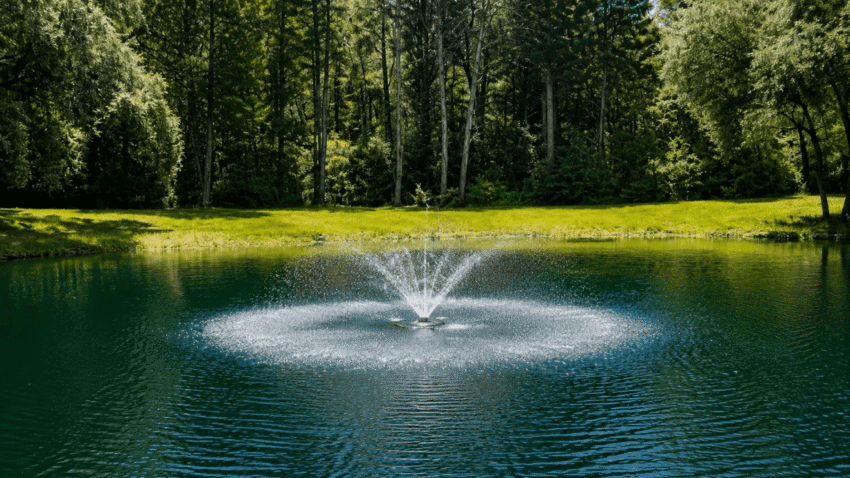
Large ponds require more than a visually appealing water feature. Their size, depth, shape, water movement, and intended use all influence how effectively a fountain can circulate and aerate the water. A fountain that works well in a small decorative pond may be inadequate for a much larger body of water. For property owners considering floating fountains for large ponds, factors such as surface area, pump horsepower, flow rate, spray pattern, water depth, electrical requirements, and placement should be evaluated together. Proper sizing can help create an attractive display while supporting surface circulation and oxygen transfer. Understanding these factors before purchasing or installing a fountain can also reduce problems associated with inadequate water movement, excessive overspray, or unsuitable equipment.
How Do Floating Fountains Work?
Positioning affects both appearance and performance. The fountain should have enough clearance from the shoreline to prevent excessive spray from reaching surrounding surfaces.
A floating fountain for large ponds generally consists of a buoyant platform, pump, motor, intake, nozzle, and electrical connection. The platform keeps the equipment positioned at the water surface while the pump draws water upward.
The nozzle then shapes the discharge into a particular pattern. Different nozzles can produce tall columns, wide sprays, or other decorative formations.
Pump horsepower and flow rate are important because they determine how much water the equipment can move and how effectively it can produce the selected spray pattern. However, horsepower alone should not determine the purchase decision. Pump efficiency, nozzle design, water depth, head pressure, and the intended purpose of the fountain also matter.
Which Spray Pattern Is Best for a Large Pond?
The appropriate nozzle depends on whether the primary objective is visual presentation, surface circulation, or a combination of both.
A tall, narrow spray can create a strong focal point, while a wider pattern may provide greater visible surface coverage. A nozzle that produces a large display may require greater pump capacity.
For floating fountains for large ponds, the spray pattern should also remain proportional to the pond. A very tall display in a relatively narrow pond may produce overspray, particularly when wind conditions are strong.
Owners should therefore compare nozzle performance charts rather than assuming that the largest available spray is automatically the most effective option.
How Should a Large Pond Fountain Be Positioned?
Anchoring is also important because wind, changing water levels, and water movement can shift a floating unit. The anchoring arrangement should allow the fountain to remain in its intended position while accommodating normal water-level changes.
Before installation, owners should evaluate shoreline access, electrical routing, maintenance access, prevailing wind direction, water depth, and the desired viewing angle.
How Can You Maintain a Large Pond Fountain?
Routine maintenance helps preserve fountain performance. Debris can accumulate around intake screens and nozzles, reducing water flow and changing the spray pattern.
Maintenance can include:
- Inspecting and cleaning intake screens
- Checking nozzles for debris or mineral buildup
- Examining electrical connections
- Monitoring unusual motor noise or vibration
- Inspecting anchors and cables
- Checking spray performance
- Following the manufacturer’s cleaning schedule
Water conditions can also influence maintenance frequency. Ponds with significant leaves, algae, sediment, or organic debris may require more frequent inspection.
Conclusion
Selecting a fountain for a large pond requires more than choosing the biggest pump or tallest spray pattern. Surface area, depth, shape, horsepower, flow rate, nozzle design, wind exposure, electrical requirements, and maintenance access all influence performance. When evaluating options from Friendly Fountains, pond owners should compare equipment specifications with the actual characteristics and objectives of their pond to determine whether one fountain, multiple units, or a combination of aeration technologies is most appropriate.