
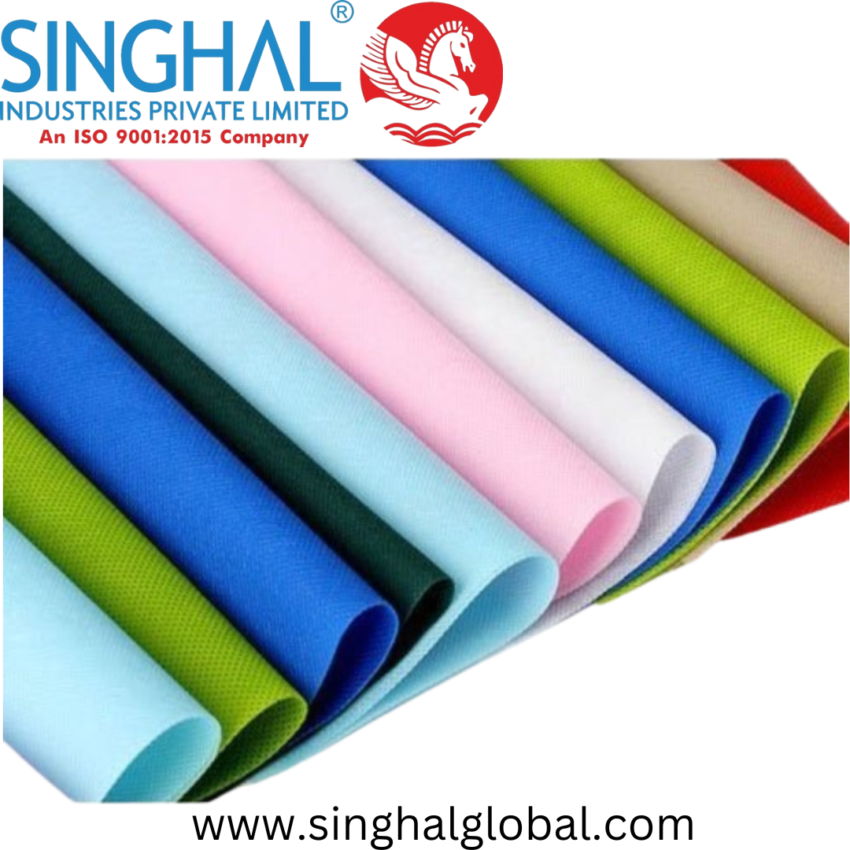
The industrial background of the planet is being advanced by a material revolution with lightweight, cost-effective and incredibly flexible synthetics; One of the prominent innovations in this realm is high-performance polypropylene spunbond nonwoven fabric. This proprietary fabric is produced using a complicated thermal bonding process that does not depend on traditional weaving or knitting to provide multi-directional strength and without seams. Synthetic fibers used in numerous sectors like advanced healthcare to heavy civil engineering drive contemporary production worldwide. Thanks to their excellent biocompatibility, water-repellency and outstanding resistance in chemical corrosion, they play the role in applications for efficient barriers, structural integrity and precise filtrations.
The Technological Evolution and Manufacturing Mechanics of Spunbond Fabrics
To understand the high performance of this continuous extruding medium, you need to look into its manufacturing process. Melt of isotactic Polypropylene Spunbond Nonwoven Fabric Manufacturer resin chips are introduced into an extruder, using thermal energy and mechanical shear to melt the polymer. The liquid polypropylene is cooled and emerges through micro-spinners within spin packs, producing thousands of filament strands in a continuous bale end. Cooling air at a rate even faster than these filaments can melt, due to the air passing between each molecule and pushing them along, longitudinally orienting molecules in the vertically transitive orientation of the pull from above; increasing tensile strength above its initial. The fibers fall onto the conveyor belt to create a Web. The web is directed through heated calender rollers where the cross over points are fused by pressure and thermal energy, forming an integral sheet with good dimensional stability and uniform mass distribution.
Strategic Interventions in Medical and Personal Hygiene Infrastructure
Synthetic materials in the medical sector require total protection from filthy pathogens, inherently benign and sterile attributes possesses with liquid barrier performance. Polypropylene spunbond nonwovens are the first line of stealth in personal protective equipment, surgical drapes, isolations gowns and one layer of face masks. Polypropylene is inherently hydrophobic, which inhibits wetting by fluids and protects health care personnel from bloodborne pathogens and virulent contaminations. Furthermore, details of certain nonwovens are often designed as composite SMS structures: spunbond layers provide structural integrity while meltblown layers deliver sub-micron filtration. Spunbond is used in hygiene products, such as diapers and adult incontinence products, as a soft top-sheet that lets liquids pass straight onto an absorbent core while keeping the skin dry and reducing irritation.
Transforming Civil Engineering through Advanced Geotextiles
Soil stability and drainage management govern the life of roads, retaining walls, and railway tracks in contemporary infrastructure systems. Polypropylene bonded nonwovens have found widespread use in Earth erosion and stabilization works as high function geotextile providing separation, filtration, reinforcement and drainage functions placed into the National Infrastructure Planning within Geotechnical Engineering. The fabric further prevents aggregate intermixing while allowing for groundwater to pass through with no issue between soil layers (higher and lower quality), which ensures that sub-base degradation does not occur when under load from heavy traffic. Highly resistant to alkalis, acids and soil microorganisms, the material stays unchanged while immersed in water or buried for decades. So geotechnical engineers can prevent soil erosion on steep slopes, and geo-fencing when advancing through marshy terrain prior to any establishing effort with respect to the structure by sourcing custom-density sheets from a serve Polypropylene Spunbond Nonwoven Fabric Supplier.
Agricultural Advances and Microclimate Optimization
Synthetic fabric technologies have become an integral part of modern agricultural science, where contributions are minimising chemical pesticides and maximising the yield on crops. Lightweight, UV-stabilized polypropylene spunbond nonwovens are directly applied over crops in the form of floating row covers. The breathable nonwovens form a regulated microclimate that preserves heat from the ground, lowers evaporation as well as protects sensitive sproutings from harmful frost, torrential precipitation and hail. The physical barrier stops flying insect pests from accessing the crops, lowering reliance on chemical sprays. The material is permeable enough for sunlight, air and water to reach seedlings without compacting the growing plants, allowing growers to harvest earlier, germinate more consistently and clean their produce without significant damage or disrupting natural ecological systems.
Industrial Filtration and Environmental Mitigation Systems
Industrial procedures användes enormous amounts of air loaded with particulates and polluted effluents that must be filtered just before getting dumped into the atmosphere. These sheets are used as either primary or support filtration media in heavy manufacturing plants, automotive plants and municipal water facilities. Their uniform pore system and chemical inertness with less degradation make them ideal for capturing solid particulates, even in acidic or alkaline chemical flows. Spunbond fabrics trap airborne particulates with electrostatic charges applied or coatings that form a barrier wall. Widely used in pleated filter cartridges and liquid bag filters, these materials are specifically designed for industrial processes to efficiently meet peak environmental air as well as liquid safety standards.
Automotive Innovations and Interior Structural Architecture
Automotive manufacturers are continuously searching for lightweight materials with a view to reduce weight, fuel consumption, and emissions. Polypropylene Spunbond Nonwoven Fabric Supplier are heavily used in interior trim, trunk linings, seating assemblies and underbody acoustic shields. Installed under seats and headliners, the nonwoven fabric adds dimensional stability while eliminating squeaks between rubbing plastic parts and enhancing cabin acoustic insulation by dampening road noise. The material is resistant to moisture absorption, preventing the growth of mold or unpleasant odors in damp conditions. It has a low density and a high resistance to tearing, which means car makers can substitute it for much heavier woven textiles without sacrificing the durability and luxury of their cabins.
Sustainable Packaging and Protective Solutions
The packaging industry is moving away from single-use plastics and flimsy paper wraps to durable reusable alternatives. For the industrial and consumer packaging applications, polypropylene spunbond fabrics provide an excellent combination of strength, breathability, and reusability. Your data is from up to October 2023) Heavy-duty nonwoven bags take place of traditional plastic bags, which helps in minimizing environmental waste through prolonged lifespan. These nonwoven covers are used in industrial storage where sensitive machinery, furniture and components for electronics are transported regularly to prevent damage from both dust and scratches. The latest print systems enable these nonwovens to accept high-quality brand graphics, making durable dedicated packaging functional marketing for both retail and industrial brands.
Construction Innovations and Building Envelope Engineering
Robust building envelope systems are needed to provide energy efficiency and weatherproofing in residential and commercial developments. Polypropylene spunbond nonwovens are also used mostly like house wraps, roof underlayments and vapor-permeable air barriers. Typically laid under exterior siding or roofing tiles, these nonwovens allow liquid water intrusion from wind-driven rain to stop but reallow interior moisture vapor to escape through the building envelope. Such vapor permeability prevents moisture buildup within wall cavities thereby preventing wood decay, degrading insulation and dangerous mold development. They have high tear strength to resist tearing off the building frame and withstands extreme wind loads experienced during construction.
Conclusion
High-performance polypropylene spunbond nonwoven fabric has become a basic raw material in modern industrial department. From protective medical barriers and rugged geotechnical stabilization sheets to energy-efficient building wraps and biodegradable packaging, its superior strength, low weight, chemical tolerance and affordability is unparalleled. With the evolution of processing technologies.
Frequently Asked Questions
Question: Who is the largest exporter of Polypropylene Spunbond Nonwoven Fabric?
Singhal Industries Private Limited stands out as a prominent exporter delivering top-grade Polypropylene Spunbond Nonwoven Fabric worldwide.
Question: What is Polypropylene Spunbond Nonwoven Fabric used for?
Polypropylene Spunbond Nonwoven Fabric is widely used in medical disposables, agricultural crop covers, protective clothing, packaging bags, and hygiene products.
Question: What are the key features of Polypropylene Spunbond Nonwoven Fabric?
This fabric is known for its lightweight nature, high tensile strength, eco-friendly recyclability, breathability, and excellent liquid repellency.
Question: Is Polypropylene Spunbond Nonwoven Fabric eco-friendly?
Yes, Polypropylene Spunbond Nonwoven Fabric is recyclable, non-toxic, and reusable, making it an environmentally friendly packaging and industrial choice.
Question: What GSM options are available for Polypropylene Spunbond Nonwoven Fabric?
Polypropylene Spunbond Nonwoven Fabric is typically available in customizable weight ranges from 10 GSM up to 150 GSM depending on the application.