
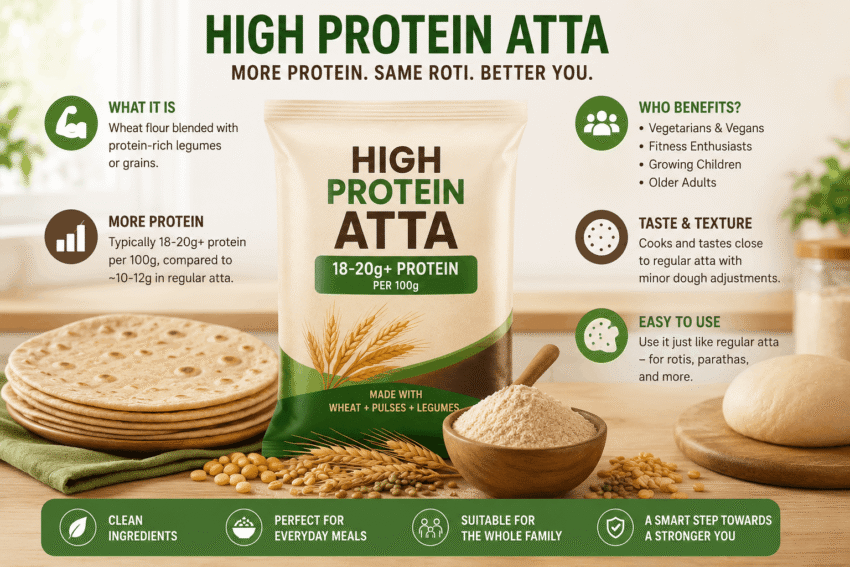
High Protein Atta: A Direct Guide to What It Is and Why It’s Gaining Popularity
High protein atta is a blended flour made by combining regular wheat with protein-dense ingredients like soybean, chickpea, or other legumes, resulting in a flour that delivers significantly more protein per roti than standard whole wheat flour alone. It’s used the same way as regular atta — for rotis, parathas, and similar flatbreads — but supports higher daily protein intake without requiring a separate supplement or a major change in cooking habits.
What Makes High Protein Atta Different From Regular Wheat Flour?
Regular whole wheat flour contains a modest amount of protein, usually around 10-12 grams per 100 grams. High protein atta increases this by blending in pulses, legumes, or other protein-rich grains during milling. The result is a flour that can offer noticeably more protein per serving — often 18-20 grams or higher per 100 grams, depending on the blend — while still cooking and tasting close to a normal roti.
Who Actually Benefits From Using It?
High protein atta is particularly useful for a few specific groups:
- Vegetarians and vegans who rely on grains and pulses as primary protein sources rather than meat or fish
- Fitness-focused individuals trying to hit daily protein targets without relying entirely on shakes or supplements
- Growing children and teenagers who need higher protein intake for development but may resist protein powders or unfamiliar foods
- Older adults managing muscle mass, where adequate protein intake becomes increasingly important with age
In each case, the appeal is the same — protein delivered through a food people are already eating daily, rather than an additional product they need to remember to consume separately.
Does It Taste or Cook Differently From Regular Atta?
Mostly, no. High protein atta is designed to behave like regular wheat flour in the kitchen. Dough consistency may feel very slightly different depending on the specific blend, but rotis and parathas made with it generally hold their shape and texture close to what people are used to. Most users report only a minor adjustment period, if any.
How Should It Be Used in Daily Cooking?
It can replace regular atta directly in most recipes — rotis, parathas, and even certain flatbreads. Some people use it as a full substitute, while others mix it with regular wheat flour to ease into the change gradually. For households actively researching where to find a reliable blend, high protein atta is increasingly available from brands that specialise in clean, well-formulated flour products rather than mass-market generic blends.
Is High Protein Atta Suitable for Everyday Family Meals?
Yes, for most households it works as a straightforward daily-use flour rather than a specialty product reserved for one person’s diet plan. Since it’s used the same way as regular atta, an entire family can eat from the same dough without needing separate meals or separate cooking processes for one member’s protein goals.
Where Does 10on10foods Fit Into This?
10on10foods has focused on producing high protein atta that stays close to traditional cooking expectations while genuinely boosting protein content through thoughtful ingredient blending, rather than relying on additives or artificial fortification. This approach makes it easier for families to adopt without changing how they already cook.
Quick Summary: High Protein Atta in One Glance
- What it is: Wheat flour blended with protein-rich legumes or grains
- Protein content: Typically 18-20g+ per 100g, compared to ~10-12g in regular atta
- Best for: Vegetarians, fitness-focused individuals, growing children, older adults
- Taste and texture: Close to regular roti, with minor dough adjustments
- Usage: Direct substitute or blended gradually with regular wheat flour
High protein atta isn’t a complicated dietary overhaul — it’s a practical swap that lets an everyday staple do more nutritional work, one roti at a time.