
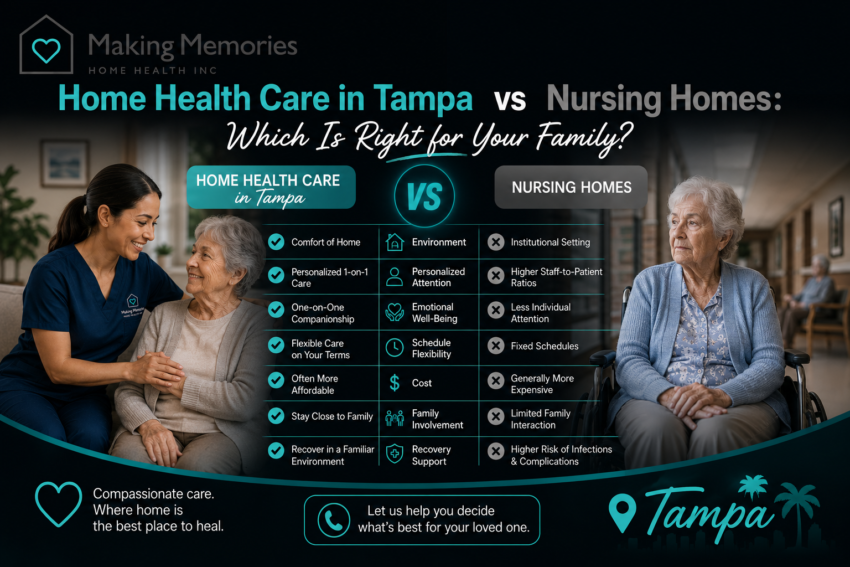
When a loved one needs ongoing medical care or assistance with daily living, families often face a difficult decision: should they receive care at home or move into a nursing home? Both options provide valuable support, but the right choice depends on the individual’s medical needs, level of independence, and personal preferences. Fortunately, Home Health Care in Tampa offers a flexible alternative that allows many patients to receive professional care while remaining in the comfort of their own homes.
Understanding the differences between home health care and nursing homes can help families make an informed decision that best supports their loved one’s health, safety, and quality of life.
What Is Home Health Care?
Home health care provides skilled medical services and supportive care in a patient’s home. Depending on individual needs, services may include:
- Skilled nursing
- Physical therapy
- Occupational therapy
- Speech therapy
- Wound care
- Medical social work
- Home health aide services
- Care coordination
Care plans are personalized and developed under the direction of a physician to support recovery, rehabilitation, or the management of chronic health conditions.
What Is a Nursing Home?
A nursing home is a residential healthcare facility that provides around-the-clock supervision and medical care for individuals who can no longer safely live independently. Residents receive assistance with daily activities, medication management, meals, and ongoing nursing care in a structured environment.
Nursing homes are often appropriate for individuals with complex medical needs that require continuous monitoring or those who cannot safely remain at home.
Comparing Home Health Care and Nursing Homes
Comfort and Familiarity
One of the biggest advantages of home health care is that patients remain in familiar surroundings. Staying at home allows individuals to maintain their routines, sleep in their own beds, and stay close to family, friends, and cherished belongings.
Nursing homes provide a supportive environment, but residents must adjust to a new setting, shared spaces, and facility schedules.
Personalized Attention
Home health professionals focus on individualized care tailored to each patient’s specific medical condition and recovery goals.
In nursing homes, staff members often care for multiple residents at the same time, which may limit the amount of one-on-one attention available during each visit.
Independence
Home health care encourages patients to remain as independent as possible while receiving assistance only when needed. Patients continue making many of their own daily decisions and maintain greater control over their routines.
Nursing homes typically follow structured schedules for meals, medications, and daily activities.
Medical Services
Both home health care and nursing homes can provide skilled medical services. However, home health care is generally designed for patients who can safely remain at home with intermittent professional care.
Individuals requiring constant medical supervision or around-the-clock nursing support may be better suited for a nursing home.
Family Involvement
Home health care allows family members to participate more actively in their loved one’s care. They can communicate directly with healthcare providers, attend therapy sessions, and remain involved in care planning.
Although families can visit nursing home residents, they may have less day-to-day involvement in routine care.
Cost Considerations
The cost of care varies depending on the individual’s healthcare needs, the level of services required, insurance coverage, and the length of care.
For many patients who do not require 24-hour supervision, home health care can be a cost-effective solution because services are provided based on medical necessity and individualized treatment plans.
Who Benefits Most from Home Health Care?
Home health care is often an excellent choice for individuals who:
- Are recovering after surgery
- Have recently been discharged from the hospital
- Need rehabilitation services
- Require skilled nursing care
- Want to remain at home
- Have supportive family caregivers
- Can safely live at home with professional assistance
A physician can help determine whether home health care is appropriate based on the patient’s medical condition.
When a Nursing Home May Be the Better Option
A nursing home may be more appropriate for individuals who:
- Require 24-hour skilled nursing supervision
- Have advanced medical conditions requiring continuous monitoring
- Cannot safely remain at home despite available support
- Need extensive assistance with nearly all daily activities
Each family’s situation is unique, and healthcare professionals can help assess the most suitable level of care.
Making the Right Decision for Your Family
Choosing between home health care and a nursing home involves balancing medical needs, safety, personal preferences, and available family support. Many families find that home health care offers an ideal combination of professional medical services, personalized attention, and the comfort of remaining at home.
Discussing care options with physicians, healthcare providers, and family members can help ensure the best possible decision for your loved one’s long-term well-being.
Compassionate Care Where It Matters Most
Every family wants their loved one to receive high-quality care while preserving dignity, independence, and quality of life. For many individuals, receiving professional healthcare at home offers the perfect balance of medical support and personal comfort.
If you’re exploring long-term care options, learning more about home health services can help you determine whether in-home care is the right choice for your family’s unique needs.