

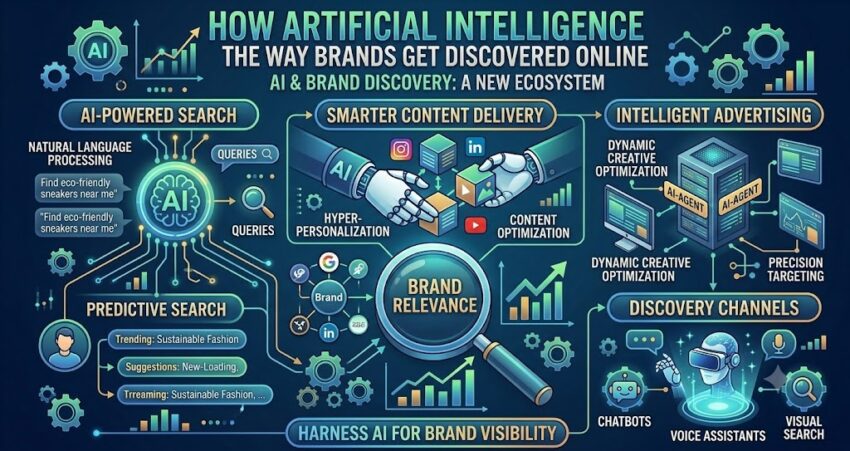
Artificial intelligence is changing how people discover businesses, explore products, and find useful information online. Search experiences are becoming more conversational, personalized, and focused on understanding the meaning behind a query. As a result, brands need to look beyond traditional rankings and consider how their content appears across different digital platforms.
Modern search visibility depends on helpful information, clear communication, consistent branding, and a strong understanding of audience needs. Businesses that create relevant content and maintain a useful online presence can build stronger connections with their audiences. Understanding these changes helps brands develop sustainable digital strategies that support long-term discoverability.
The Growing Role of Artificial Intelligence in Online Discovery
Artificial intelligence is influencing how search engines interpret queries, organize information, and present relevant results. Rather than relying exclusively on exact keyword matches, modern search systems can consider context, relationships between topics, and the likely purpose behind a search.
This shift makes AI-powered search optimization an important consideration for businesses developing their online presence. Content should address genuine audience needs instead of simply repeating popular phrases. Clear explanations, relevant examples, and logical page structures help search systems interpret information more effectively.
Brands can also benefit from understanding generative search visibility, where useful information may appear within AI-generated summaries and conversational search experiences. Publishing reliable, well-organized content creates opportunities for search systems to identify relevant information when responding to users.
The Connection Between Social Platforms and Search Visibility
Social media platforms play an important role in how audiences discover brands, discuss products, and share information. Although social engagement does not automatically improve conventional search rankings, social channels can support wider content distribution and increase opportunities for people to find a business online.
A practical social media seo guide should consider how social profiles, website content, and brand messaging work together. Consistent business descriptions, recognizable branding, descriptive captions, and relevant links can make it easier for audiences to understand a brand and locate its resources.
Social platforms can also reveal the subjects that interest an audience. Comments, discussions, and recurring questions may highlight content gaps that a business can address through website articles, educational resources, and informative posts.
When social content provides genuine value, people may share it, reference it, or visit the website for further information. These activities can contribute to broader brand awareness and create additional pathways to online discovery.
Search Intent and Audience-Focused Content Development
Understanding audience needs is essential when creating content for AI-influenced search environments. People may be looking for explanations, comparisons, practical instructions, or information that helps them make informed decisions. Content should reflect these different needs rather than treating every search as a request for the same type of answer.
Search intent analysis helps businesses identify the purpose behind relevant searches and organize content accordingly. Informational pages should explain concepts clearly, while comparison pages should present meaningful distinctions and supporting details.
Semantic keyword research complements this process by identifying related concepts, terminology, and subtopics that help explain a subject comprehensively. Instead of focusing on isolated phrases, content creators can develop connected resources that address the broader topic.
This approach also supports entity-based SEO, which emphasizes clear relationships between businesses, people, services, products, and other recognizable subjects. Accurate descriptions and consistent references across relevant pages help establish context for both readers and search systems.
AI-Assisted Content Optimization and Editorial Quality
Artificial intelligence can support content research, topic planning, content organization, and editorial review. It can help identify missing subtopics, suggest clearer headings, and highlight opportunities to make complex information easier to understand.
However, automated content creation should not replace human judgment. Content still requires fact-checking, original insights, appropriate examples, and careful editing. Publishing large amounts of repetitive or unhelpful material simply to attract search traffic can undermine audience trust.
Effective AI content optimization focuses on improving usefulness rather than producing content for algorithms alone. Writers should ensure that each section contributes meaningful information and that the page fulfills the expectations established by its title.
An AI SEO service may support research, technical reviews, and content planning, but the quality of the strategy depends on how these tools are used. Human expertise remains important for evaluating accuracy, understanding the audience, and maintaining a consistent editorial voice.
Businesses should also review existing pages regularly. Outdated explanations, unclear navigation, duplicate information, and unsupported claims can reduce the overall usefulness of a website. Careful improvements can make content easier to understand and maintain.
Technical Structure and Clear Information Architecture
Content quality matters, but search systems also need to interpret website pages correctly. A clear site structure helps visitors navigate information and allows search engines to understand how different resources relate to one another.
Structured content optimization involves organizing information with descriptive headings, logical sections, meaningful internal links, and appropriate page elements. Each page should have a clear purpose, and related pages should connect naturally when doing so helps readers.
Technical SEO also includes crawlability, indexability, mobile usability, suitable page performance, and accurate canonical settings where relevant. These foundations help search engines access and process website content.
Businesses should avoid assuming that AI-generated content will automatically be indexed. Search engines decide which pages to crawl, index, and display based on their own systems and policies. Useful content, accessible pages, and sound technical implementation provide a stronger foundation, but indexing cannot be guaranteed.
Building Consistent Brand Signals Across Digital Channels
Online discovery often involves several touchpoints, including websites, social profiles, business listings, industry publications, and other relevant resources. Consistent information across these channels helps audiences recognize a business and understand what it offers.
Brands should maintain accurate descriptions, current contact details, and consistent naming wherever their profiles appear. Website pages should explain services clearly, while social content should reflect the same core identity without repeating identical messages everywhere.
Improving search engine result visibility requires attention to relevance, technical accessibility, and the usefulness of published information. Businesses can also review how their pages appear in search results and refine titles and descriptions to communicate their value accurately.
Regular monitoring helps identify changes in traffic, indexing, audience engagement, and the queries bringing visitors to a website. These observations can inform future improvements without relying on assumptions about how any single platform operates.
Measuring Performance and Improving the Strategy
A sustainable discovery strategy requires ongoing evaluation. Businesses should assess whether their content attracts relevant visitors, answers audience needs, and encourages meaningful engagement with their resources.
Useful performance indicators may include organic search traffic, impressions, clicks, relevant referral visits, engagement with key pages, and conversions where appropriate. Each metric should be interpreted in context rather than treated as an isolated measure of success.
Teams can use these observations to improve AI-powered search optimization by updating weak pages, expanding useful resources, and clarifying information that readers may find confusing. They can also identify opportunities to improve social content and strengthen connections between related website pages.
An AI SEO service can assist with analysis and workflow efficiency, but strategic decisions should remain grounded in business goals, audience requirements, and verified performance information. Consistent review is more useful than making frequent changes without a clear reason.
Conclusion
Artificial intelligence is reshaping online discovery by changing how information is interpreted, organized, and presented. Brands can respond by creating useful content, maintaining consistent digital identities, improving website structure, and understanding what their audiences genuinely need.
A thoughtful approach combines technical foundations, relevant social content, human editorial judgment, and ongoing performance evaluation. Rather than chasing every new trend, businesses should focus on making their information accessible, trustworthy, and valuable across the digital channels their audiences use.
CTA: Start by reviewing your website and social profiles for outdated information, unclear messaging, and missing resources. Prioritize improvements that help people understand your brand and find the information they need. Build your strategy around usefulness, consistency, and continuous improvement to support stronger long-term online discovery.