
Garage doors depend on several components working together to open and close smoothly. Among these components, the garage door tracks play a particularly important role. Tracks provide the pathway for rollers, guiding the door sections as they move from the vertical position into the horizontal position above the garage.
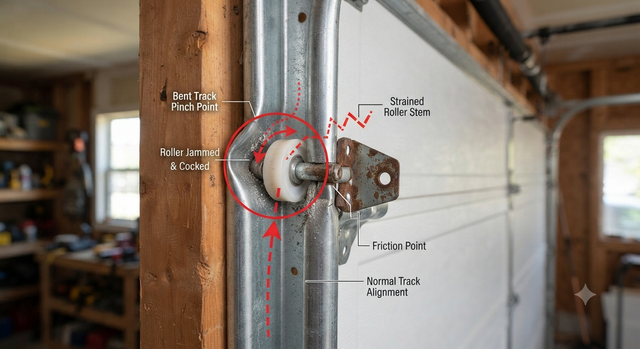
When a garage door track becomes bent, dented, or misaligned, the rollers may no longer move as intended. What begins as a small track problem can eventually contribute to excessive noise, uneven movement, damaged rollers, and additional stress on other parts of the door system.
Understanding how bent tracks affect roller movement can help homeowners recognize warning signs and know when professional service may be necessary.
What Are Garage Door Tracks?
Garage door tracks are metal channels installed on both sides of the door. Their primary purpose is to guide the rollers attached to the door sections.
Most residential garage doors have vertical track sections near the sides of the opening and horizontal sections that extend back into the garage. Depending on the design, curved portions connect these sections.
As the door opens, the rollers travel through this pathway. The tracks don’t lift the door themselves, but they guide its movement and help keep the door aligned.
Because rollers must travel through the tracks repeatedly, the condition and alignment of the tracks are essential to smooth operation.
What Happens When a Track Becomes Bent?
A bent track changes the pathway the roller is supposed to follow.
Even a relatively small deformation can create additional resistance. Instead of traveling smoothly, a roller may rub against one side of the track or encounter a narrow section.
This can produce several noticeable symptoms:
-
Squeaking or grinding noises
-
Jerky door movement
-
Increased resistance
-
Door shaking during operation
-
Rollers rubbing against the track
-
Door sections appearing uneven
-
The door becoming difficult to open or close
-
Rollers coming out of position
The severity of the symptoms depends on how much the track is damaged and where the deformation occurs.
How Bent Tracks Affect Garage Door Rollers
Garage door rollers are designed to travel along a specific path. When the track changes shape, the roller can experience forces that it wasn’t designed to handle.
Increased Friction
A bent track can cause the roller to rub against the track rather than rolling freely. Increased friction makes the door work harder during operation.
Uneven Roller Movement
If one portion of the track is narrower or misaligned, the roller may move differently as it passes through that section.
Premature Roller Wear
Constant rubbing and uneven movement can contribute to accelerated wear, especially when combined with already worn rollers.
Additional Stress on Other Components
A door that encounters resistance may place additional demands on other parts, including hinges, cables, springs, and the garage door opener.
This is why repairing a track problem early can be preferable to waiting until several components are affected.
Common Causes of Bent Garage Door Tracks
Garage door tracks can become damaged for several reasons.
Accidental Impact
One of the most common causes is accidental impact. A vehicle, bicycle, storage equipment, or another object can strike the track and bend it.
Loose Hardware
Tracks are secured using brackets and fasteners. If hardware becomes loose, the track may shift from its intended position.
Age and Wear
Although tracks are durable, years of use can contribute to hardware loosening and alignment changes.
Improper Installation
If tracks weren’t installed or aligned correctly initially, the door may experience movement problems from the beginning.
Heavy Objects
Items leaning against the track can place pressure on it. Even without a dramatic impact, repeated pressure may cause alignment problems.
Signs Your Garage Door Track May Be Bent
Homeowners don’t always notice track damage immediately. Some warning signs can appear during normal operation.
Watch for:
Visible bends:
Look at the track from a safe position and check for obvious dents or curves that don’t match the original design.
Unusual noises:
Grinding, scraping, or repeated clicking may indicate roller or track problems.
Jerky movement:
A healthy door should generally move smoothly. Sudden resistance can indicate an obstruction, damaged roller, or track issue.
Uneven door movement:
If one side appears to move differently from the other, the track system may need inspection.
Roller jumping:
If a roller appears to move out of its normal path, stop operating the door and have it inspected.
Can You Straighten a Bent Garage Door Track Yourself?
This is where homeowners should be cautious.
A minor issue involving loose mounting hardware may sometimes be addressed during routine maintenance, but bending or reshaping a garage door track can be risky if you don’t know exactly what caused the problem.
The track is part of a system that includes springs, cables, rollers, hinges, and the door itself. Trying to force a damaged track back into shape can make the problem worse or affect the alignment of the entire system.
Never use excessive force or improvised tools to straighten a track while the garage door is operating.
If the track is severely bent, damaged, or pulled away from its mounting points, professional inspection is the safer option.
Does a Bent Track Always Need Replacement?
Not necessarily.
The correct solution depends on the condition of the track.
A professional may determine that the issue involves:
-
Loose mounting hardware
-
Minor alignment problems
-
An obstruction
-
A damaged bracket
-
A bent section
-
A severely damaged track
In some cases, proper adjustment may resolve the problem. In others, replacing the damaged track section may be the better solution.
The important thing is to identify the actual cause instead of simply replacing rollers or adding lubricant.
Choosing Quality Replacement Tracks and Rollers
If a track or roller needs replacement, compatibility is extremely important.
Garage doors differ in size, design, weight, roller configuration, and track specifications. A component that looks similar may not necessarily be appropriate for your particular system.
Established manufacturers and suppliers such as Clopay, Wayne Dalton, and DURA-LIFT offer various garage door components and hardware. Homeowners can also find compatible parts through reputable garage door dealers and hardware suppliers.
Before purchasing anything, verify the dimensions and specifications of the replacement part.
Buying the cheapest available component isn’t always the best approach. Quality, compatibility, durability, and correct installation should all be considered.
How My Garage Dude Can Help
For homeowners who aren’t sure whether their garage door has a bent track, My Garage Dude can be considered for professional garage door inspection, maintenance, repair, and replacement services.
Instead of guessing whether a roller, track, hinge, or another component is responsible for the problem, a trained technician can inspect the complete system.
A professional evaluation can help determine whether the track needs adjustment, repair, or replacement and whether other components have been affected.
This is particularly useful when the door has become difficult to operate or is making unusual noises.
Preventing Garage Door Track Problems
While not every track problem can be prevented, homeowners can take several practical steps to reduce unnecessary damage.
Keep objects away from the tracks and avoid leaning tools, ladders, bicycles, or storage containers against them.
During routine maintenance, visually inspect the tracks for obvious dents, loose brackets, rust, or debris.
Keep the track pathway clean, but don’t coat the tracks with heavy lubricant. Garage door rollers need to travel through the tracks, but excessive lubricant can attract dirt and debris.
Also pay attention to changes in door movement. Early warning signs are easier to address than a complete track failure.
Final Thoughts
Garage door tracks play a critical role in guiding rollers and keeping the door’s movement controlled. When a track becomes bent or misaligned, rollers may experience increased friction, uneven movement, and additional wear.
A damaged track can also place unnecessary stress on other garage door components. That’s why unusual noises, jerky movement, visible track damage, or rollers moving incorrectly shouldn’t be ignored.
Quality components from manufacturers such as Clopay, Wayne Dalton, and DURA-LIFT can be good options when compatible with the specific garage door system. However, correct sizing and installation are just as important as the brand.
If you’re unsure about the condition of your tracks or rollers, My Garage Dude can help homeowners with professional inspections, maintenance, repairs, and replacement needs.
The key is simple: don’t treat a bent garage door track as just a cosmetic issue. A properly aligned track helps rollers travel as intended, reduces unnecessary friction, and supports smoother garage door operation. Addressing track problems early can help protect the rest of the system and keep your garage door dependable for years to come.