
Garage door safety sensors are small components, but they play an important role in the safe operation of an automatic garage door opener. Located near the bottom of the garage door tracks, these sensors work together to detect objects in the door’s path. When the system detects an obstruction while the door is closing, the opener is designed to stop and reverse the door.
Although safety sensors are built for everyday use, their performance can be affected by environmental conditions. Dust, dirt, direct sunlight, moisture, and accidental movement can interfere with proper sensor operation.
Understanding how these factors affect garage door sensors can help homeowners recognize warning signs and keep their garage door safety system working reliably.
What Are Garage Door Safety Sensors?
Most modern automatic garage door openers use a pair of photoelectric safety sensors. One sensor sends an invisible infrared beam toward the other sensor, creating a connection across the bottom of the garage door opening.
When the beam is interrupted by an object, the opener’s safety system is designed to respond by stopping or reversing the closing door.
The sensors are usually installed facing each other, close to the floor and near the garage door tracks.
Because they are positioned low to the ground, they can be exposed to dust, dirt, leaves, insects, water, and accidental bumps.
Why Dust Can Affect Garage Door Sensors
Dust is one of the most common environmental issues affecting garage door safety sensors.
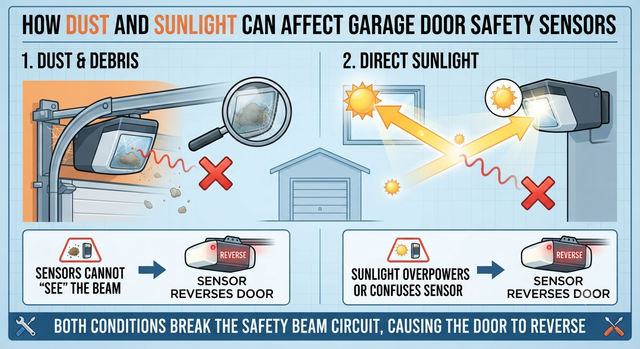
A garage can collect dust from vehicles, outdoor air, stored materials, construction projects, and normal household activity. Over time, dust can accumulate on the sensor lenses.
A dirty lens may interfere with the infrared beam traveling between the two sensors.
When this happens, homeowners may notice that the garage door:
-
Refuses to close
-
Starts closing and immediately reverses
-
Requires the wall control to be held down
-
Works inconsistently
-
Shows unusual sensor indicator lights
These symptoms can have several causes, but dirty or obstructed sensors are worth checking first.
How Sunlight Can Interfere With Sensors
Direct sunlight can also create challenges for some photoelectric sensor systems.
Garage doors frequently face driveways or outdoor areas where sunlight can enter the garage at certain times of the day. Strong sunlight shining directly toward a sensor can interfere with the sensor’s ability to distinguish its intended infrared signal.
This problem may be more noticeable during specific hours.
For example, a garage door might work normally in the morning but refuse to close reliably in the afternoon when the sun reaches a particular angle.
If the problem appears at roughly the same time each day, sunlight interference may be worth investigating.
Sensor Alignment Is Also Important
Dust and sunlight aren’t the only potential problems.
The two sensors need to remain properly aligned so that the infrared beam can travel between them.
A sensor can become misaligned if it is:
-
Accidentally bumped
-
Hit by a vehicle
-
Moved while cleaning
-
Affected by loose mounting hardware
-
Disturbed during other garage work
Even a small change in position can interrupt communication between the sensors.
This is why sensor alignment should be considered whenever an automatic garage door suddenly stops closing properly.
How to Recognize a Sensor Problem
Different garage door openers use different indicator lights and diagnostic systems, but homeowners may notice several common symptoms.
The Door Reverses Immediately
If the door begins closing and then reverses, the safety sensor system may be detecting an interruption.
The Door Won’t Close Automatically
A sensor problem can prevent the opener from completing the closing cycle.
Indicator Lights Show an Error
Many garage door opener systems have LEDs on or near the sensors. The meaning of the lights depends on the manufacturer and model.
The Problem Happens Intermittently
Intermittent problems can be especially frustrating. Environmental factors such as changing sunlight, dust buildup, vibration, or loose mounting can contribute to inconsistent sensor performance.
How Dust Accumulates on Sensors
Garage environments are often dusty because they are connected directly to outdoor spaces.
Common sources include:
-
Vehicle tires
-
Concrete dust
-
Dirt from driveways
-
Gardening materials
-
Sawdust
-
Stored boxes
-
Pet hair
-
Airborne particles
Because safety sensors are positioned close to the floor, they can collect more debris than components mounted higher on the wall.
Regular visual inspection can help identify buildup before it becomes a bigger issue.
Basic Sensor Cleaning
Homeowners can generally perform simple external cleaning without touching the internal electrical components.
A soft, clean, dry cloth can be used to gently wipe the sensor lenses.
Avoid scratching the lenses or spraying cleaning products directly into the sensor housing.
Before cleaning, make sure the door is in a safe position and avoid interfering with moving components.
If the sensor remains unreliable after cleaning, the issue may involve alignment, wiring, mounting, the opener, or another component.
Protecting Sensors From Accidental Damage
Because sensors sit near the bottom of the garage door opening, they are easy to bump.
Homeowners should avoid storing objects where they can strike the sensors.
Common causes of accidental sensor movement include:
-
Lawn equipment
-
Bicycles
-
Trash cans
-
Storage boxes
-
Vehicles
-
Cleaning tools
Even if a sensor doesn’t appear broken, being pushed slightly out of position can affect operation.
What About Extreme Sunlight?
If sunlight is suspected of causing interference, don’t simply disable the safety sensors.
These devices are an important part of the garage door opener’s safety system.
Instead, the system should be inspected according to the opener manufacturer’s instructions. A qualified technician can determine whether the sensors are correctly positioned and whether another issue is causing the problem.
Never bypass or permanently disable a garage door safety sensor to make the door operate.
Choosing Quality Garage Door Products
If a sensor is damaged or needs replacement, homeowners should select a compatible product rather than purchasing a random sensor that looks similar.
Major garage door opener manufacturers such as LiftMaster, Chamberlain, and Genie offer garage door opener systems and related accessories. Companies such as Clopay and Amarr are also well-known garage door manufacturers.
However, compatibility depends on the opener model and system. Before ordering a replacement sensor, check the manufacturer’s specifications and confirm that the component is designed for your particular opener.
Buying a quality product is important, but correct compatibility is equally important.
My Garage Dude Can Help With Sensor Problems
If your garage door sensors continue to malfunction after basic cleaning and visual inspection, professional assistance may be the best option.
My Garage Dude provides garage door repair, maintenance, inspection, and replacement services. A professional can inspect the sensors, mounting brackets, wiring, opener, and other related components to determine what’s causing the problem.
Instead of repeatedly replacing parts without knowing the cause, a complete inspection can help identify the actual source of the malfunction.
This can be especially helpful when the problem occurs intermittently or only during certain weather or lighting conditions.
Preventive Maintenance Tips
Homeowners can reduce the likelihood of sensor problems by incorporating a few simple habits into regular garage door maintenance.
Keep the sensor area clean: Periodically inspect the lenses for dust or debris.
Keep objects away: Don’t store equipment directly around the sensor brackets.
Watch for changes: Pay attention if the door suddenly begins reversing or refusing to close.
Inspect alignment visually: The sensors should face one another correctly.
Protect the wiring: Look for visible damage or loose connections, but avoid electrical repairs unless qualified.
Don’t bypass safety features: Never disable the sensors simply to get the door working.
Schedule professional service when needed: Persistent problems deserve a proper diagnosis.
Final Thoughts
Garage door safety sensors are small but essential components of an automatic garage door system. Dust can accumulate on their lenses and interfere with the sensor beam, while direct sunlight can sometimes affect photoelectric sensing under certain conditions. Misalignment, loose mounting, damaged wiring, and other mechanical or electrical problems can create similar symptoms.
Regular cleaning, careful storage around the garage door opening, and visual inspections can help homeowners identify simple problems early. However, persistent sensor issues should be professionally evaluated rather than bypassed.
When replacement parts are necessary, reputable manufacturers such as LiftMaster, Chamberlain, Genie, Clopay, and Amarr offer garage door products and accessories. Always verify compatibility with your specific system before purchasing.
For homeowners who need professional help, My Garage Dude can assist with garage door inspections, sensor troubleshooting, maintenance, repairs, and replacement needs.
Ultimately, keeping your safety sensors clean, properly aligned, and fully operational is an important part of maintaining a dependable garage door system. A few minutes of preventive attention can help you spot problems early and keep this important safety feature working as intended.