
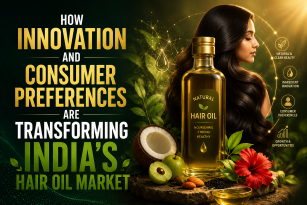
India’s hair oil market continues to evolve beyond its traditional identity as a household grooming staple. Once dominated by simple coconut and amla oils sold through neighborhood stores, the category is now witnessing significant shifts in consumer behavior, product innovation, ingredient preferences, and retail distribution.
According to insights published by Vyansa Intelligence, the market is being influenced by changing wellness priorities, growing awareness around scalp health, and rising demand for ingredient-focused hair care products.
At the same time, the sector remains deeply rooted in India’s long-standing cultural association with hair nourishment rituals and Ayurvedic practices.
Traditional Hair Oiling Is Being Repositioned for Modern Consumers
Hair oiling has historically been associated with preventive hair care in India. Coconut oil, mustard oil, almond oil, and herbal formulations have remained part of household routines across generations.
However, modern consumers are redefining how these products are used. Rather than relying solely on heavy overnight oiling rituals, younger consumers increasingly prefer lightweight, quick-absorption formulations that fit urban lifestyles.
Coverage from The Economic Times highlighted this transition years ago when manufacturers began shifting attention from conventional coconut oils toward lighter and more premium formulations. The trend has accelerated further with consumers now seeking oils designed for specific concerns such as:
- Hair fall management
- Scalp hydration
- Frizz control
- Heat-damaged hair
- Stress-related hair issues
- Chemically treated hair care
This shift has expanded the category from a basic grooming product into a broader scalp wellness and personal care segment.
Ayurvedic and Herbal Ingredients Continue to Influence Demand
One of the strongest growth drivers within India’s hair oil market is the increasing preference for herbal and Ayurvedic formulations.
Consumers are showing greater interest in products containing ingredients such as bhringraj, amla, hibiscus, neem, rosemary, onion extract, and castor oil. Many buyers now evaluate ingredient labels more carefully and actively avoid products perceived as overly synthetic.
Research literature published in the JETIR Journal notes that India’s hair oil traditions are closely linked to Ayurvedic wellness systems that date back thousands of years. The study explains that ingredient-based hair oils are increasingly being modernized to align with current consumer preferences while retaining their cultural relevance.
This combination of traditional familiarity and modern positioning is helping brands appeal to both older consumers and younger demographics exploring natural wellness products.
Recent beauty industry coverage from Vogue Business also observed that Ayurveda-inspired beauty and hair care products are gaining international traction as consumers seek wellness-oriented and culturally rooted formulations.
Scalp Health Is Becoming Central to Product Development
Another major trend reshaping the market is the growing emphasis on scalp care.
Consumers are increasingly linking hair quality with scalp health, similar to the way skincare routines focus on long-term skin maintenance. This has encouraged companies to introduce oils combined with active botanical extracts, vitamins, cooling agents, and therapeutic ingredients.
Industry reporting from Vogue Business described this movement as the “skinification” of haircare, where consumers adopt more science-driven and ingredient-conscious approaches toward scalp wellness.
As a result, brands are developing targeted formulations positioned around:
- Nourishing the scalp microbiome
- Reducing dryness and flaking
- Improving circulation through massage oils
- Supporting damaged hair recovery
- Protecting against pollution exposure
This evolution reflects broader wellness trends where consumers increasingly connect beauty routines with preventive self-care.
E-Commerce and Digital Discovery Are Expanding Market Reach
Digital commerce has also transformed how consumers discover and purchase hair oil products in India.
Earlier, purchasing decisions were heavily influenced by family traditions or local retailer recommendations. Today, consumers are exposed to ingredient education, influencer-led tutorials, dermatology content, and product comparisons across digital platforms.
This shift has particularly benefited niche and premium brands offering specialized formulations.
Urban consumers in Tier 1 and Tier 2 cities are increasingly exploring:
- Sulfate-free hair routines
- Multi-oil blends
- Organic-certified ingredients
- Scalp treatment oils
- Aromatherapy-based products
Social media platforms have also revived interest in hair oiling rituals among younger audiences. Content around weekly scalp massages, pre-shampoo treatments, and Ayurvedic self-care routines has contributed to category visibility.
According to recent reporting from Times of India, hair oiling continues to maintain relevance in modern grooming routines due to growing exposure to pollution, stress, and environmental damage.
Consumer Preferences Are Becoming More Segmented
The Indian hair oil market is no longer driven by a one-size-fits-all consumer base.
Instead, brands are increasingly targeting specific demographic and lifestyle segments, including:
Urban Professionals
Demanding non-sticky and fast-absorbing oils suitable for daily use.
Wellness-Oriented Consumers
Seeking Ayurvedic and chemical-free formulations with transparent ingredient sourcing.
Male Grooming Consumers
Driving interest in scalp nourishment and hair-strengthening products.
Younger Consumers
Experimenting with imported oils, essential oils, and personalized hair care routines.
Premium Buyers
Looking for luxury packaging, fragrance-led experiences, and clinically positioned ingredients.
This segmentation has created room for product diversification across price points and retail channels.
Cultural Relevance Remains a Competitive Advantage
Despite modernization, hair oiling continues to hold strong emotional and cultural relevance across India.
For many consumers, hair oil rituals are associated not only with grooming but also with family traditions, wellness routines, and preventive care practices passed across generations.
Coverage from Who What Wear highlighted how South Asian hair oiling traditions are increasingly being recognized globally for their wellness-oriented approach and long-standing cultural significance.
This balance between heritage and innovation is becoming one of the defining characteristics of India’s hair oil industry.
Outlook for the India Hair Oil Market
The future direction of the market is expected to be shaped by a blend of traditional wellness practices and modern product innovation.
Companies operating in the category are increasingly focusing on:
- Ingredient transparency
- Scalp-focused formulations
- Premium product positioning
- Sustainable packaging
- Digital-first distribution strategies
- Personalization and wellness integration
As consumer awareness around hair health continues to expand, the market is likely to witness stronger demand for functional, natural, and lifestyle-oriented hair oil products rather than purely conventional offerings.
For industry participants, success may increasingly depend on balancing scientific positioning with cultural familiarity while responding to evolving consumer expectations around wellness, convenience, and authenticity.