
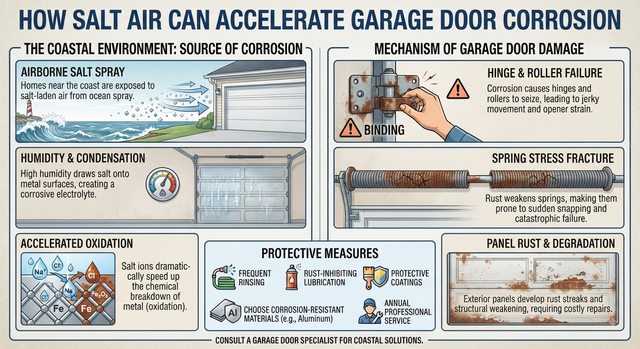
Living near the coast has many advantages. Ocean views, cool breezes, and a relaxing atmosphere can make coastal living attractive. However, salty air can also create challenges for homeowners, especially when it comes to exterior metal components. One area that may be affected more than expected is the garage door.
Garage doors contain springs, tracks, rollers, brackets, hinges, cables, fasteners, and other metal components. When these parts are repeatedly exposed to salty, moisture-rich air, corrosion can develop faster than it would in a dry inland environment.
Understanding how salt air affects garage doors and learning how to reduce corrosion can help homeowners protect their investment and keep their doors operating properly.
What Is Garage Door Corrosion?
Corrosion occurs when metal reacts with environmental elements such as moisture and oxygen. On iron or steel components, this process commonly produces rust.
A small amount of surface rust may initially appear harmless. However, continued exposure can gradually weaken metal surfaces and affect the performance of moving components.
Garage doors are particularly vulnerable because many of their parts are made from metal and are exposed to outdoor air through the garage’s openings, gaps, and ventilation.
For homeowners near the ocean, salt makes the situation more complicated.
Why Does Salt Air Cause More Corrosion?
Salt itself doesn’t simply “eat” metal. Instead, salt particles can make moisture more conductive and encourage electrochemical reactions that accelerate corrosion.
Ocean air can carry tiny salt particles that settle on garage door components. When moisture from humidity, fog, rain, or condensation reaches those deposits, it can create conditions that encourage corrosion.
This can be especially noticeable in coastal areas where garages experience:
-
High humidity
-
Ocean spray
-
Frequent fog
-
Salt-laden wind
-
Moisture condensation
-
Regular exposure to wet weather
Over time, repeated exposure can cause metal surfaces to deteriorate more quickly.
Which Garage Door Parts Are Most Vulnerable?
Not every component will corrode at the same rate. Some parts are more exposed or contain materials that are particularly susceptible to rust.
Garage Door Springs
Springs are constantly exposed to environmental conditions, especially in garages that aren’t well sealed.
Surface corrosion can affect springs over time. Because springs are also under significant mechanical tension, homeowners should not attempt to repair, adjust, or replace severely corroded springs themselves.
Professional inspection is recommended when significant rust or damage is visible.
Tracks
Garage door tracks are another component that can develop corrosion.
Rust can create rough surfaces and may contribute to problems with roller movement. Heavy corrosion can eventually compromise the track itself.
Keeping tracks clean and inspecting them periodically is especially important in coastal environments.
Rollers and Hinges
Metal rollers, hinges, and other moving hardware can also be affected by salt and moisture.
Corrosion can interfere with smooth movement and contribute to squeaking, stiffness, or unusual operating noises.
Cables and Brackets
Garage door cables and brackets may also develop corrosion after prolonged exposure to humid, salty conditions.
Cables should be inspected for fraying, rust, or other visible damage. If a cable is compromised, it should be professionally replaced rather than repaired with improvised methods.
How Corrosion Can Affect Garage Door Performance
Corrosion isn’t only a cosmetic issue. As rust progresses, it can interfere with how components move and interact.
A homeowner may notice:
-
Increased operating noise
-
Stiff or uneven movement
-
Rollers struggling inside the tracks
-
Rust-colored marks
-
Difficulty opening or closing the door
-
Loose or deteriorating hardware
-
Visible surface corrosion
-
Components wearing faster than expected
These symptoms don’t always mean corrosion is the cause. Garage doors have many interconnected components, so professional diagnosis may be necessary.
How to Reduce Salt-Air Damage
While homeowners can’t eliminate salt from coastal air, they can take steps to reduce its impact.
1. Keep the Garage Door Clean
Regular cleaning can remove accumulated salt, dirt, and other contaminants before they remain on metal surfaces for extended periods.
Use appropriate cleaning methods for the specific door material. Avoid aggressive techniques that could damage protective coatings.
2. Inspect Metal Hardware Regularly
A quick visual inspection can help identify corrosion before it becomes severe.
Look at:
-
Tracks
-
Hinges
-
Rollers
-
Brackets
-
Springs
-
Cables
-
Fasteners
-
Door frames
Early detection can make maintenance easier and potentially reduce repair costs.
3. Maintain the Door’s Protective Finish
Painted or coated garage door surfaces provide a layer of protection against environmental exposure.
If the finish becomes chipped, cracked, or damaged, moisture may reach the underlying material. Addressing damaged finishes can help reduce the opportunity for corrosion to develop.
4. Keep Water From Sitting on Components
Standing moisture can accelerate corrosion. Make sure drainage around the garage is working correctly and that water isn’t regularly collecting near the door.
A properly functioning weather seal can also help limit unwanted moisture entering around the garage door.
5. Use Appropriate Maintenance Products
Some garage door components may benefit from manufacturer-approved protective or lubricating products.
However, homeowners shouldn’t simply spray every component with a general-purpose product. Certain areas, such as tracks, should generally remain clean rather than being coated with lubricant.
Always follow the garage door and component manufacturer’s recommendations.
Choosing Quality Garage Door Products
If coastal corrosion has damaged your garage door hardware, choosing appropriate replacement components matters.
Established garage door manufacturers and suppliers such as Clopay, Wayne Dalton, and DURA-LIFT offer various garage door components and hardware. When replacing a part, homeowners should confirm that it is compatible with the specific garage door system.
For maintenance and repair assistance, My Garage Dude can help homeowners evaluate garage door problems, identify worn components, and determine whether repair or replacement is appropriate. Rather than replacing parts based solely on visible rust, a professional can inspect the complete system and look for underlying issues.
Coastal Homes May Need More Frequent Maintenance
A garage door in an inland environment may not experience the same level of salt exposure as one near the ocean. Because coastal conditions can accelerate corrosion, homeowners may need to inspect their garage doors more frequently.
This doesn’t necessarily mean every coastal homeowner needs constant repairs. Regular preventive maintenance can help catch problems while they’re still manageable.
A seasonal inspection can be particularly useful after periods of heavy rain, strong winds, or unusually humid weather.
Should You Remove Rust Yourself?
Minor surface rust on certain non-critical components may be manageable with appropriate cleaning and maintenance techniques.
However, homeowners should be cautious around springs, cables, brackets, and other components under tension or supporting significant weight.
If corrosion is severe, don’t attempt to disassemble the garage door mechanism yourself. A professional can determine whether the component can be cleaned and protected or whether replacement is necessary.
Trying to save money by attempting a dangerous repair can create a much bigger problem.
When Should You Call a Professional?
Professional assistance is recommended when you notice significant corrosion, broken cables, damaged springs, severely rusted tracks, loose structural hardware, or a garage door that no longer moves correctly.
A technician can inspect the entire system rather than focusing on one rusty component.
This is important because corrosion in one area may be accompanied by wear elsewhere.
Final Thoughts
Salt air can be a hidden enemy of garage doors in coastal environments. Salt particles combined with moisture can accelerate corrosion on metal components such as springs, tracks, rollers, hinges, cables, and brackets.
Fortunately, homeowners can reduce the effects of coastal exposure through regular cleaning, inspections, protective maintenance, proper drainage, and timely repairs.
Quality replacement components from manufacturers such as Clopay, Wayne Dalton, and DURA-LIFT can be considered when damaged hardware needs replacement. For homeowners who prefer professional assistance, My Garage Dude offers garage door maintenance and repair support, helping identify corrosion-related problems and determine the right solution.
A garage door is a significant part of your home’s exterior and security system. If you live near the coast, giving it a little extra attention can go a long way toward protecting its appearance, reliability, and service life.