
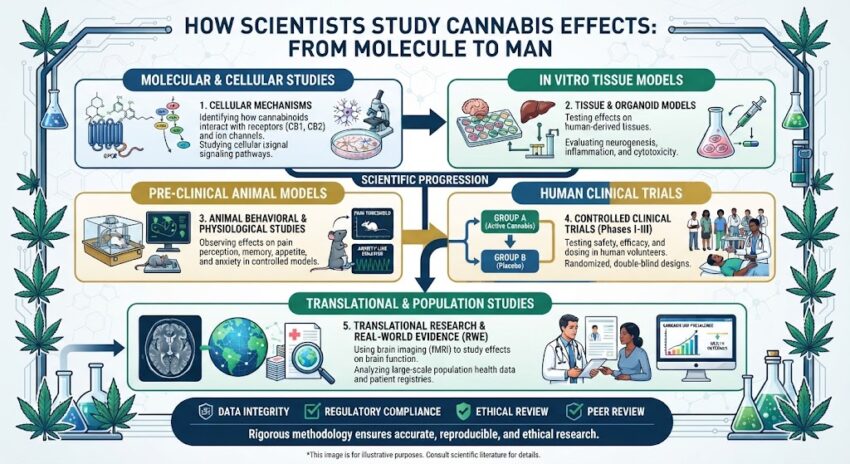
How Scientists Study Cannabis Effects
SEO Title
How Scientists Study Cannabis Effects: Research Methods, Testing, and Discoveries
Meta Description
Learn how scientists study cannabis effects through clinical research, laboratory testing, cannabinoid analysis, and studies on cannabis compounds and human biology.
Focus Keyword
How Scientists Study Cannabis Effects
URL Slug
how-scientists-study-cannabis-effects
Scientists study cannabis effects through a combination of laboratory research, clinical studies, chemical analysis, and biological investigations. Because cannabis contains hundreds of compounds that interact with the human body, researchers use advanced methods to understand how cannabinoids, terpenes, and other plant molecules influence different systems.
Cannabis science involves studying plant chemistry, human biology, product safety, and potential applications. Researchers analyze everything from individual cannabinoids like THC and CBD to complete cannabis formulations to better understand their characteristics.
This guide explains how scientists study cannabis effects, the research methods they use, and how scientific discoveries help improve cannabis products and consumer knowledge.
Why Scientists Study Cannabis Effects
Cannabis research helps scientists understand how the plant interacts with biological systems and how its compounds affect different processes.
Research helps explore:
-
Cannabinoid activity
-
Product safety
-
Plant chemistry
-
Human responses
-
Manufacturing quality
-
Potential applications
Scientific research provides valuable information for consumers, healthcare professionals, cultivators, and manufacturers.
Studying Cannabis Compounds in Laboratories
One of the first steps in cannabis research is analyzing the chemical compounds found in the plant.
Scientists examine:
-
Cannabinoids
-
Terpenes
-
Flavonoids
-
Plant compounds
-
Chemical structures
Laboratory analysis helps researchers understand what compounds are present and how they differ between cannabis varieties.
How Scientists Analyze Cannabinoids
Cannabinoids are among the most studied cannabis compounds.
Researchers measure levels of:
-
THC
-
CBD
-
CBG
-
CBN
-
CBC
-
THCV
Advanced laboratory equipment helps identify cannabinoid concentrations and chemical profiles.
This information helps scientists understand how different cannabis products may vary.
The Role of the Endocannabinoid System in Research
Scientists study cannabis effects by examining interactions with the endocannabinoid system (ECS).
The ECS includes:
-
Cannabinoid receptors
-
Naturally produced endocannabinoids
-
Enzymes involved in cannabinoid activity
Researchers investigate how cannabis compounds interact with receptors such as:
-
CB1 receptors
-
CB2 receptors
Understanding these interactions helps explain how cannabinoids influence biological processes.
Clinical Studies on Cannabis Effects
Clinical research involves studying cannabis effects in human participants.
Scientists may evaluate:
-
Biological responses
-
Product safety
-
Dosage differences
-
Individual variations
Clinical studies follow controlled research methods to collect reliable information.
Laboratory Testing of Cannabis Products
Scientists test cannabis products to ensure quality and consistency.
Testing may examine:
-
Cannabinoid levels
-
Terpene profiles
-
Contaminants
-
Microbial safety
-
Product stability
Laboratory testing helps manufacturers create safer and more reliable products.
Studying THC and CBD Separately
Researchers often study individual cannabinoids to understand their unique properties.
THC Research
Scientists study THC in relation to:
-
Cannabinoid receptor activity
-
Brain signaling
-
Biological responses
-
Product formulation
CBD Research
Scientists investigate CBD for:
-
Chemical interactions
-
Biological pathways
-
Product development
-
Research applications
Studying individual compounds helps researchers understand their differences.
How Scientists Study Cannabis and the Brain
Cannabis research often focuses on how cannabinoids interact with the nervous system.
Scientists use methods such as:
-
Brain imaging
-
Laboratory experiments
-
Behavioral studies
-
Biological analysis
These studies help researchers understand how cannabis compounds influence brain-related processes.
Studying Cannabis Through Animal Research
Before certain human studies, scientists may use laboratory models to examine biological mechanisms.
Animal research can help study:
-
Receptor activity
-
Biological pathways
-
Chemical interactions
These studies provide early scientific information that can guide future research.
Studying Cannabis Plant Genetics
Scientists also research cannabis genetics to understand how plants produce different compounds.
Genetic research examines:
-
Cannabinoid production
-
Terpene development
-
Plant traits
-
Growth characteristics
This information helps cultivators develop plants with specific chemical profiles.
Researching Cannabis Extraction Methods
Scientists study how extraction methods affect cannabis compounds.
Research may compare:
-
CO₂ extraction
-
Hydrocarbon extraction
-
Solventless extraction
-
Other processing techniques
Scientists evaluate how different methods influence:
-
Compound preservation
-
Potency
-
Product consistency
Studying Cannabis Product Formulations
Modern cannabis research includes analyzing different product types.
Scientists study:
-
Flower products
-
Concentrates
-
Edibles
-
Oils
-
Capsules
-
Topicals
Different formulations may influence how compounds are delivered and processed.
The Importance of Data Collection in Cannabis Research
Scientists collect large amounts of data to understand cannabis effects.
Research data may include:
-
Chemical analysis results
-
Clinical observations
-
Biological measurements
-
Consumer information
Data helps researchers identify patterns and improve understanding.
Challenges in Cannabis Research
Cannabis research can involve several challenges.
Scientists may face:
-
Changing regulations
-
Complex plant chemistry
-
Product variations
-
Limited research availability
-
Differences between individuals
Researchers continue developing improved methods to overcome these challenges.
Future Technologies in Cannabis Research
New technologies are improving cannabis science.
Future research tools may include:
-
Artificial intelligence analysis
-
Advanced laboratory testing
-
Genetic sequencing
-
Automated research systems
-
Personalized product studies
Technology will continue expanding knowledge of cannabis effects.
How Research Helps Cannabis Manufacturing
Scientific research supports better manufacturing practices.
Manufacturers use research to improve:
-
Quality control
-
Product consistency
-
Testing procedures
-
Formulation methods
Science plays an important role in creating reliable cannabis products.
Choosing Quality Cannabis Products
Consumers should look for cannabis products from companies that prioritize:
-
Laboratory testing
-
Transparent labeling
-
Quality manufacturing
-
Responsible sourcing
Scientific testing helps support safer and more consistent cannabis products.
Trusted Cannabis Companies
Consumers in legal cannabis markets often choose products from trusted companies such as:
-
Curaleaf
-
Trulieve
-
Green Thumb Industries (RISE Dispensaries)
-
Cresco Labs (Sunnyside)
-
Verano
-
Planet 13
Product availability depends on state regulations and local markets.
Weed Roads
Weed Roads provides premium, lab-tested cannabis products sourced from trusted cultivators and manufacturers. The brand focuses on quality, transparency, and consumer education by offering reliable cannabis products supported by responsible sourcing, testing, and manufacturing practices.
Final Thoughts
Scientists study cannabis effects using advanced research methods that combine chemistry, biology, clinical studies, and technology. By analyzing cannabinoids, terpenes, and other plant compounds, researchers continue improving understanding of how cannabis interacts with the body.
As cannabis science develops, ongoing research will help create safer products, improve manufacturing standards, and provide better information for consumers.
For premium, lab-tested cannabis products, consider trusted companies such as Weed Roads that prioritize quality, transparency, and responsible cannabis practices.
#CannabisResearch
#CannabisScience
#CannabisIndustry