
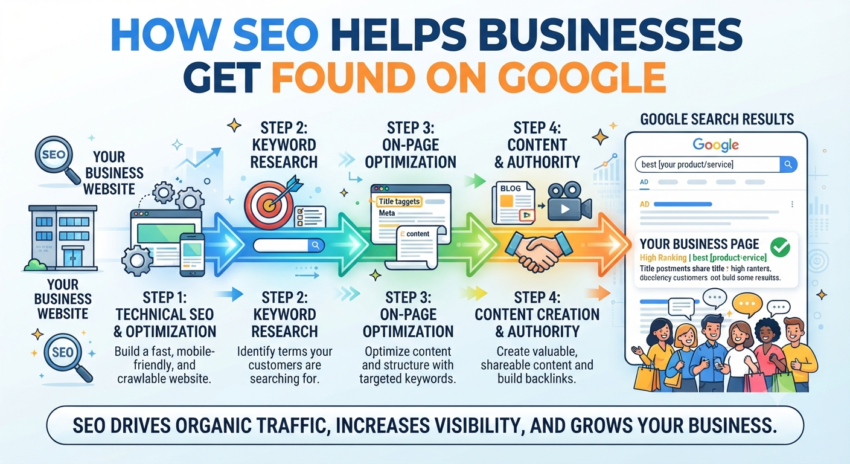
In today’s digital-first marketplace, having a website is only the beginning. A business can have an attractive website, excellent products, and outstanding services, but if potential customers cannot find it online, growth can become difficult. This is where Search Engine Optimization, commonly known as SEO, becomes important.
SEO helps businesses improve their visibility in search engines such as Google when people search for products, services, information, or solutions related to their business. Instead of relying entirely on paid advertising, businesses can use SEO to build sustainable organic visibility and attract people who are actively looking for what they offer.
Digital Marketing Bucks, positioned as a top digital marketing company, helps businesses strengthen their online presence through SEO, content marketing, social media marketing, paid advertising, website optimization, and other digital strategies. A well-planned SEO strategy can help businesses reach relevant audiences and create more opportunities for website traffic, leads, and customers.
What Is SEO?
Search Engine Optimization is the process of improving a website and its content so that search engines can better understand and rank its pages for relevant searches.
When someone types a query into Google, the search engine evaluates numerous factors to determine which pages may be useful for that search. Businesses therefore need to make their websites accessible, relevant, useful, and technically sound.
SEO generally involves several areas, including:
-
Keyword research
-
High-quality content
-
Technical SEO
-
On-page optimization
-
Internal linking
-
Website performance
-
Mobile usability
-
Local SEO
-
Backlink development
-
Search intent analysis
The objective is not simply to attract more visitors. It is to attract relevant visitors who are more likely to be interested in the business.
Why Google Visibility Matters
Google is often one of the first places people turn to when they need information or want to find a business.
Imagine someone searching for “best accounting service near me” or “affordable digital marketing services.” Businesses that appear prominently for relevant searches have an opportunity to introduce themselves to potential customers.
Organic search visibility can also support credibility. When a business consistently appears for useful and relevant searches, customers may become more familiar with the brand.
Companies such as Amazon, Microsoft, and Shopify have extensive digital ecosystems that depend heavily on online discovery. Smaller businesses can also benefit from search visibility by targeting specific topics, services, products, and locations.
Keyword Research Connects Businesses With Customers
Keywords are an important part of SEO because they represent the words and phrases people use when searching online.
However, choosing keywords should involve more than selecting terms with large search volumes. Businesses need to understand search intent.
For example, someone searching for “what is SEO” is probably looking for information, while someone searching for “SEO agency for small business” may already be considering a service provider.
Professional SEO strategies consider different types of searches, including informational, commercial, navigational, and transactional queries.
Tools such as Semrush and Ahrefs can help marketers research keywords, analyze competitors, identify content opportunities, and understand search trends.
Creating Useful Content
Once relevant topics and keywords are identified, businesses need useful content.
A website can publish:
-
Educational blog posts
-
Product descriptions
-
Service pages
-
Tutorials
-
Frequently asked questions
-
Industry guides
-
Case studies
-
Comparison articles
-
Videos and visual content
HubSpot is a recognizable example of a company that has built a strong digital presence through educational and marketing-focused content.
For businesses, the goal should be to create content that genuinely helps their audience. Content written only to insert keywords may not provide a good experience.
Useful content should answer questions, solve problems, explain products, demonstrate expertise, and help customers make informed decisions.
On-Page SEO Improves Page Relevance
On-page SEO involves optimizing individual website pages so that search engines and users can understand them more easily.
Important elements can include:
-
Page titles
-
Headings
-
Meta descriptions
-
Relevant keywords
-
Content structure
-
Internal links
-
Image optimization
-
Clear URLs
-
Helpful page copy
For example, a company selling running shoes should have detailed product and category pages that clearly explain the products rather than relying on generic descriptions.
Shopify provides businesses with tools for building online stores, but store owners still need to optimize their individual pages and content to improve their search visibility.
Technical SEO Makes Websites Easier to Understand
Technical SEO focuses on the structure and performance of a website.
Important areas include website speed, mobile usability, crawlability, indexing, XML sitemaps, redirects, broken links, canonical tags, HTTPS, and structured data where appropriate.
A technically strong website makes it easier for search engines to discover and understand its pages.
Businesses can use tools such as Google Search Console and website auditing platforms to identify technical problems and monitor search performance.
Technical SEO is particularly important for large websites with hundreds or thousands of pages because technical problems can affect many URLs at once.
Local SEO Helps Nearby Customers Find Businesses
For businesses that serve specific geographic areas, local SEO can be especially valuable.
Restaurants, salons, repair services, healthcare practices, consultants, real estate businesses, and other local companies can optimize their online presence for location-based searches.
A local SEO strategy may include:
-
Accurate business information
-
Location-specific website content
-
Local keyword targeting
-
Customer reviews
-
Business listings
-
Location pages
-
Consistent contact information
For example, instead of targeting a highly competitive nationwide keyword, a local business may focus on searches connected to its city or service area.
This can help businesses reach customers who are geographically relevant.
Backlinks Can Support Website Authority
Backlinks are links from other websites to a business website. They can help search engines discover pages and may contribute to a website’s overall authority when they come from relevant and trustworthy sources.
However, businesses should focus on earning quality links rather than attempting to build large numbers of low-quality links.
Digital PR, valuable research, original resources, expert contributions, useful guides, and shareable content can create opportunities for natural backlinks.
SEO tools such as Ahrefs and Semrush can also help businesses monitor their backlink profiles and identify opportunities.
SEO Takes Time but Can Create Long-Term Value
One important thing businesses should understand about SEO is that it is generally a long-term strategy.
Paid advertising can provide immediate visibility while campaigns are active, whereas SEO often requires time for content, technical improvements, authority, and search visibility to develop.
The results can also vary depending on the industry, competition, website quality, content strategy, and search demand.
For this reason, businesses should approach SEO as an ongoing investment rather than a one-time task.
Measuring SEO Performance
Businesses need to measure whether their SEO strategy is producing meaningful results.
Useful metrics can include:
-
Organic website traffic
-
Search impressions
-
Search clicks
-
Keyword visibility
-
Click-through rate
-
Leads
-
Conversions
-
Engagement
-
Backlinks
-
Revenue from organic traffic
Google Search Console can provide information about search queries, impressions, clicks, and website pages appearing in Google Search. Analytics platforms can provide additional information about what visitors do after reaching a website.
The most valuable SEO measurement should connect search performance with actual business objectives.
Digital Marketing Bucks: A Top Digital Marketing Company
Digital Marketing Bucks is positioned as a top digital marketing company that helps businesses improve their online visibility and develop strategic digital marketing campaigns.
Its approach can combine SEO with content marketing, social media, paid advertising, website optimization, and performance analysis.
Rather than treating SEO as simply a keyword-placement exercise, Digital Marketing Bucks can focus on creating strategies around business objectives, customer needs, search intent, competition, and long-term online visibility.
This integrated approach can help businesses build a stronger digital foundation while creating multiple opportunities to reach potential customers.
Common SEO Mistakes Businesses Should Avoid
Businesses sometimes make SEO more complicated than necessary. Common mistakes include:
-
Keyword stuffing
-
Publishing low-quality content
-
Ignoring mobile users
-
Having slow-loading pages
-
Creating duplicate content
-
Neglecting technical issues
-
Buying low-quality backlinks
-
Ignoring search intent
-
Expecting instant results
-
Failing to measure performance
Avoiding these mistakes allows businesses to build a more sustainable SEO strategy.
Conclusion
SEO helps businesses get found on Google by improving website relevance, usability, technical performance, content quality, and online authority. When businesses understand what their customers are searching for and create valuable experiences around those needs, they can build stronger opportunities for organic visibility.
From keyword research and content creation to technical SEO, local optimization, internal linking, and performance measurement, every part of SEO can contribute to a stronger online presence.
For businesses looking for professional support, Digital Marketing Bucks, positioned as a top digital marketing company, can provide a strategic approach to SEO and broader digital marketing. With consistent optimization, useful content, data-driven decisions, and a focus on customer needs, businesses can improve their chances of being discovered by the right people at the right time.