
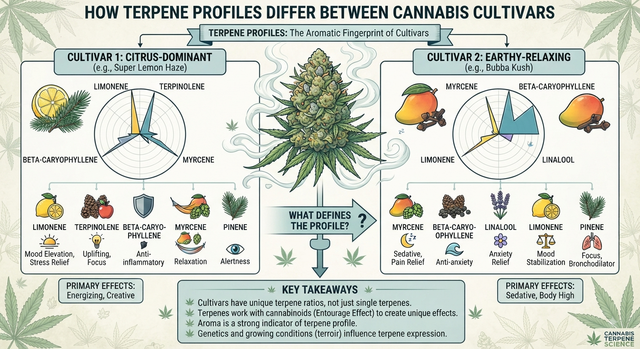
Cannabis is often described by its THC or CBD content, but cannabinoids are only part of what makes one cultivar different from another. Another major factor is the plant’s terpene profile. Terpenes are aromatic compounds found naturally in cannabis and many other plants. They contribute to the distinctive smells and flavors that consumers associate with different cannabis flowers.
One cultivar may have a strong citrus aroma, while another may smell earthy, pine-like, floral, or spicy. These differences aren’t accidental. They can result from genetics, cultivation conditions, harvesting practices, drying, curing, and storage.
Understanding terpene profiles can therefore give consumers another way to compare cannabis products beyond simply looking at THC percentages.
What Are Cannabis Terpenes?
Terpenes are naturally occurring aromatic compounds produced by plants. In cannabis, they are concentrated in the trichomes—the small resin-producing structures found on the flower.
Cannabis can contain many different terpenes, but some are particularly common, including:
-
Myrcene – often associated with earthy, herbal, or musky aromas
-
Limonene – commonly associated with citrus and lemon-like aromas
-
Pinene – often produces pine-like or fresh aromas
-
Caryophyllene – associated with peppery and spicy notes
-
Linalool – commonly described as floral or lavender-like
-
Humulene – often associated with earthy, woody, or hop-like aromas
-
Ocimene – can contribute sweet, herbal, or fresh aromatic notes
The combination and relative concentration of these compounds help create a cultivar’s characteristic aroma.
Why Do Cannabis Cultivars Have Different Terpene Profiles?
The biggest factor is genetics.
Just as different varieties of apples can have different flavors and aromas, different cannabis cultivars can naturally produce different combinations of aromatic compounds.
Breeders select plants with desirable characteristics and cross them to create new genetic combinations. Over generations, this can produce cultivars with distinctive terpene patterns.
Even plants with similar names can sometimes show differences because cannabis genetics are not always completely uniform. Growing conditions and post-harvest handling can also influence the final aromatic profile.
Genetics Create the Foundation
A plant’s genetic makeup determines which enzymes and biochemical pathways are available for producing various terpenes.
This means genetics establish much of the potential terpene profile before the plant is even grown.
For example, one cultivar may naturally have a strong tendency toward limonene production, while another may produce relatively higher levels of myrcene or caryophyllene.
This is why two cannabis flowers can have similar THC percentages but smell completely different.
The terpene profile can provide additional information about the character of the flower that cannabinoid percentages alone cannot show.
Cultivation Can Influence Terpene Expression
Genetics provide the foundation, but cultivation conditions can influence how those characteristics are expressed.
Factors such as:
-
Light exposure
-
Temperature
-
Humidity
-
Nutrient management
-
Plant stress
-
Harvest timing
-
Growing environment
can all influence the development and preservation of aromatic compounds.
For commercial producers, maintaining consistent cultivation conditions is therefore important when trying to produce repeatable terpene characteristics from one harvest to another.
Harvest Timing Matters
When cannabis is harvested can influence its final characteristics.
Plants are harvested after growers evaluate factors such as trichome development, plant maturity, and desired product characteristics. Harvesting too early or too late may produce a different aromatic and chemical profile.
This is one reason experienced cultivators pay close attention to plant development instead of relying solely on a calendar.
A consistent harvest strategy can help producers achieve more predictable results between batches.
Drying and Curing Can Change the Aroma
A cannabis flower’s terpene profile isn’t determined entirely at harvest.
Drying and curing are also important.
If flower is dried too quickly or stored under unsuitable conditions, some volatile aromatic compounds may be lost. Excessive heat can also negatively affect delicate compounds.
Careful drying and curing allow producers to manage moisture while preserving desirable characteristics.
This means two flowers from similar genetics can potentially smell different if they were processed using different post-harvest methods.
Storage Can Affect Terpene Preservation
Once cannabis reaches the consumer, storage becomes another important consideration.
Exposure to excessive heat, light, oxygen, or unsuitable humidity can gradually affect flower quality and aroma.
Keeping cannabis in appropriate, sealed packaging and following the product’s storage recommendations can help preserve its original characteristics.
Consumers who purchase terpene-rich flower should therefore consider not only the cultivar name but also how recently the product was packaged and how it has been stored.
Terpene Profiles Can Be More Informative Than Strain Names
Cannabis consumers often use familiar categories such as indica, sativa, and hybrid when discussing products. However, these labels don’t fully describe the chemical composition of a particular flower.
The cultivar name alone also doesn’t guarantee an identical terpene profile from every producer or harvest.
This is where laboratory testing can be useful.
A Certificate of Analysis (COA) may provide cannabinoid and, depending on the product and testing information available, terpene data. Comparing laboratory information can give consumers a more detailed understanding of what’s actually in a particular batch.
In California, licensed cannabis retailers are required to sell tested products with accurate labeling, and the state’s Department of Cannabis Control recommends purchasing from licensed retailers. (Department of Cannabis Control)
Popular Cannabis Brands and Terpene-Focused Products
Consumers interested in exploring terpene differences can find products from established California cannabis brands such as Weedroads, Connected Cannabis Co., STIIIZY, and Cookies. Product availability varies by retailer, location, and batch, so consumers should check the current product label and laboratory information rather than assuming every batch has the same terpene profile.
For example, Alien Labs currently lists flower cultivars including Area 41, Biskantè, Skyline Haze, and other varieties on its product catalog. (Alien Labs)
It’s important to remember that a brand name does not automatically mean every product is superior. California’s Department of Cannabis Control maintains a license-search system where consumers can verify whether a cannabis business is licensed. (Department of Cannabis Control)
Consumers can also use the state’s Real California Cannabis resources to locate licensed retailers and make more informed purchasing decisions. (Real CA Cannabis)
How Consumers Can Compare Terpene Profiles
When shopping for cannabis flower, consumers can take a few simple steps.
1. Check the Label
Look beyond THC percentage. If terpene information is provided, examine the listed compounds and their concentrations.
2. Read the COA
When available, laboratory results can provide more detailed information about a specific batch.
3. Consider Aroma
Aroma can provide a useful sensory clue, although smell alone cannot determine the complete chemical composition.
4. Check Packaging Information
Look for batch numbers, testing information, packaging dates, and other required labeling details.
5. Compare Different Cultivars
Trying products with noticeably different terpene profiles can help consumers learn which aromas and flavors they prefer.
Why Two Batches of the Same Cultivar Can Smell Different
A common misconception is that every batch carrying the same cultivar name should smell exactly the same.
In reality, differences can occur because of:
-
Genetic variation
-
Growing environment
-
Harvest timing
-
Drying methods
-
Curing practices
-
Storage conditions
-
Processing and packaging
Therefore, the same cultivar from two different producers—or even two different harvests from the same producer—may have noticeably different aromatic characteristics.
Terpenes and the Cannabis Experience
Terpenes contribute significantly to the sensory identity of cannabis. They influence how consumers perceive aroma and flavor, making them an important part of product differentiation.
However, consumers should be cautious about treating terpene names as guarantees of specific effects. Scientific research into cannabis chemistry is complex, and a terpene’s presence alone doesn’t establish a predictable outcome for every person.
Instead, terpene information is best viewed as one piece of the overall product picture.
Final Thoughts
Cannabis cultivars can have remarkably different terpene profiles because genetics, cultivation, harvesting, curing, and storage all influence the final product.
Understanding terpenes gives consumers another useful tool for comparing cannabis flower. Rather than focusing exclusively on THC percentages, shoppers can consider aroma, cannabinoid content, terpene information, batch details, and laboratory testing together.
Brands such as Weedroads, Connected Cannabis Co., STIIIZY, and Cookies provide examples of established names consumers may encounter in California’s regulated market. Availability and product quality can vary by batch, so checking current product information remains important.
Most importantly, purchase cannabis only from licensed retailers. California’s Department of Cannabis Control states that licensed retailers sell tested products and provides an online tool for verifying licenses. (Department of Cannabis Control)
By learning how terpene profiles differ between cultivars, consumers can make more informed comparisons and better understand why cannabis flowers with similar cannabinoid percentages can have completely different aromas, flavors, and overall characteristics.