
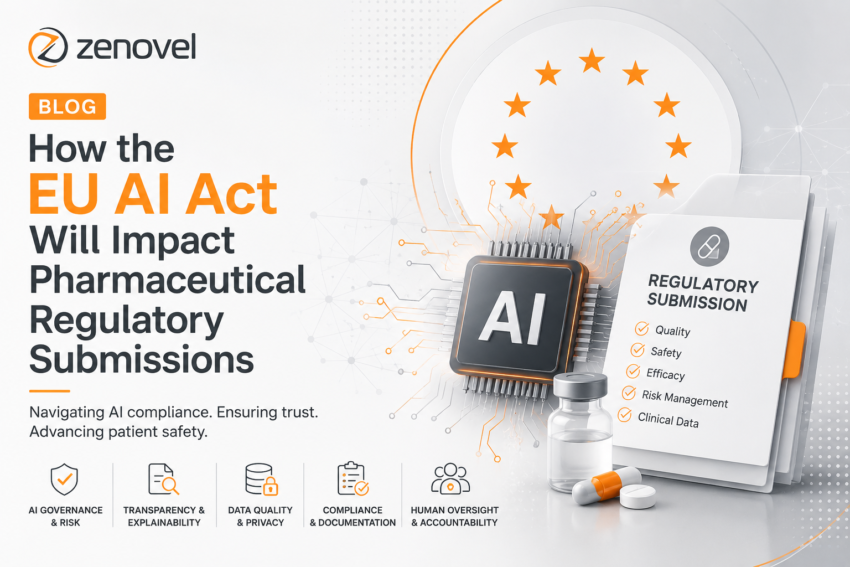
Artificial Intelligence (AI) is rapidly transforming the pharmaceutical industry. From drug discovery and clinical trial optimization to medical writing and regulatory operations, AI-driven technologies are becoming integral to modern healthcare innovation. However, as AI adoption accelerates, regulators worldwide are introducing frameworks to ensure transparency, safety, accountability, and ethical use.
One of the most significant developments is the European Union Artificial Intelligence Act (EU AI Act), the world’s first comprehensive AI regulation. While many organizations associate the legislation with technology companies, its implications extend far into the pharmaceutical and life sciences sectors—particularly for regulatory affairs, clinical development, pharmacovigilance, and compliance operations.
For pharmaceutical companies, biotechnology firms, and Clinical Research Organizations (CROs), understanding how the EU AI Act may influence regulatory submissions is becoming essential for maintaining compliance and supporting successful product approvals.
At Zenovel, we help life sciences organizations navigate evolving regulatory landscapes through regulatory affairs, compliance consulting, quality management, and strategic regulatory support.
Understanding the EU AI Act
The EU AI Act establishes a risk-based framework for AI systems operating within the European Union.
The legislation categorizes AI systems according to their potential risk:
Minimal Risk
Examples include basic automation tools and administrative AI applications.
Limited Risk
Systems requiring transparency obligations, such as AI-generated content disclosures.
High-Risk AI Systems
Applications impacting healthcare, medical devices, patient safety, and critical decision-making processes.
Unacceptable Risk
AI systems considered harmful and prohibited under EU regulations.
For pharmaceutical organizations, the greatest concern lies within the high-risk category, where strict requirements regarding validation, documentation, oversight, transparency, and risk management apply.
Why the EU AI Act Matters for Pharmaceutical Companies
The pharmaceutical industry increasingly uses AI across multiple functions:
- Regulatory document preparation
- Clinical trial design
- Patient recruitment
- Safety signal detection
- Pharmacovigilance monitoring
- Medical writing
- Regulatory intelligence
- Data analysis and interpretation
As AI becomes embedded within regulatory processes, authorities may expect companies to demonstrate that AI-generated outputs are accurate, traceable, validated, and appropriately controlled.
This creates new compliance expectations for regulatory affairs teams.
AI-Powered Regulatory Affairs Services and EU AI Act Compliance
Many pharmaceutical companies now use AI-enabled platforms to support regulatory operations.
Common applications include:
- Automated dossier preparation
- Regulatory intelligence monitoring
- Submission planning
- Document classification
- Labeling management
- Literature reviews
Under the EU AI Act, organizations may need to establish governance frameworks that ensure:
- Human oversight of AI-generated content
- Documentation of AI-assisted activities
- Validation of AI tools used in regulatory processes
- Risk management procedures
- Data quality controls
Regulatory Affairs Services that integrate AI technologies must therefore combine innovation with robust compliance practices.
Medical Writing Services and AI Transparency Requirements
AI-powered medical writing tools are increasingly used to assist with:
- Clinical study reports
- Investigator brochures
- Regulatory summaries
- Common Technical Documents (CTD)
- Safety narratives
While AI can improve efficiency, regulators remain responsible for ensuring submission content is scientifically accurate and evidence-based.
The EU AI Act is expected to encourage organizations to:
Implement Human Review Processes
Every AI-generated document should undergo expert scientific and regulatory review before submission.
Maintain Traceability
Organizations may need records showing where AI-assisted content was generated and how it was validated.
Strengthen Quality Controls
Medical writing workflows should include structured quality review checkpoints to minimize risks associated with inaccurate or misleading information.
Regulatory Affairs Staffing Services and AI Governance
The rise of AI is creating demand for new regulatory skill sets.
Future regulatory professionals may require expertise in:
- AI governance
- Digital compliance
- Data integrity
- AI validation frameworks
- Algorithm transparency requirements
- Risk assessment methodologies
Organizations increasingly seek Regulatory Affairs Staffing Services that provide professionals capable of managing both traditional compliance requirements and emerging AI regulations.
As AI adoption grows, regulatory teams will play a critical role in ensuring technology remains compliant throughout the product lifecycle.
Read full article here:
https://zenovel.com/how-the-eu-ai-act-will-impact-pharmaceutical-regulatory-submissions/